
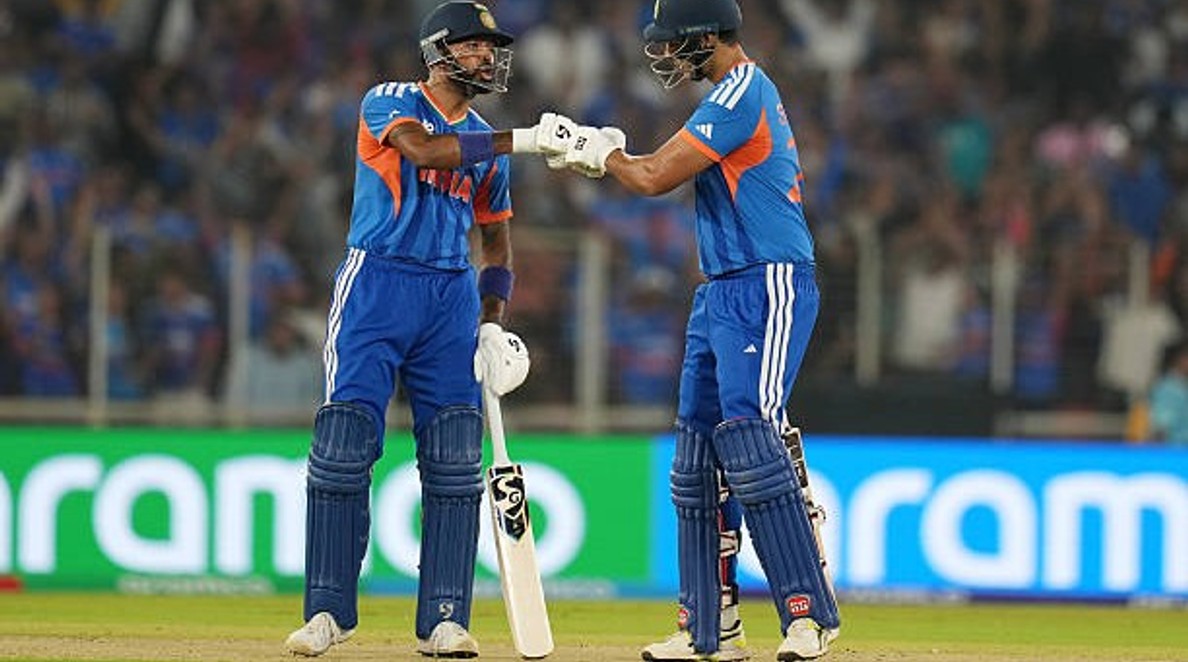
The story of Shivam Dube, who reportedly boarded a 3AC train unnoticed by the public, has quickly gained traction among his supporters. This tale highlights his down-to-earth persona, which has become a significant talking point across newspapers and television channels following India’s triumph in the ICC Men’s T20 World Cup 2026 championship. While the narrative of his discreet train journey has captured headlines, Dube’s crucial contributions to the team’s victory have often been overlooked. His role in securing the championship deserves greater recognition, as he has now cemented his status as a two-time World Cup winner, becoming a vital figure for both casual followers and devoted cricket enthusiasts.
Despite playing a pivotal role in India clinching the ICC Men’s T20 World Cup 2024 Final, Dube faced considerable criticism. His strike rate in the 2025 Indian Premier League season had dipped to 132, a stark contrast to the 162 he achieved the previous season. Commentators pointed to his struggles against pace bowling, his limited footwork, and his perceived vulnerability against mystery spinners. However, the current situation paints a vastly different picture. Dube has systematically silenced these critiques with compelling performances. Crucially, he has provided India with a valuable sixth bowling option, significantly enhancing the team’s overall balance and depth.
Hardik Pandya is widely acknowledged for his exceptional all-round abilities, rightfully earning his place among the premier all-rounders of his era. The Indian team views him as an indispensable asset, a cornerstone of their strongest playing XI. The necessity of including both Pandya and Jasprit Bumrah in the squad for upcoming matches is undeniable, given their consistent importance. However, Shivam Dube’s World Cup performance has surpassed all conventional expectations. While he may not possess Pandya’s sheer pace or the variety of his bowling techniques, Dube has demonstrated that his batting prowess can complement Pandya’s contributions, offering a different, yet equally valuable, dimension to the team.
Dube’s most impactful contributions to the tournament stemmed from his astute assessment of game situations with the bat. He consistently entered the fray without the luxury of a pre-established strong batting foundation. His role was often to either shore up the innings or provide quick scoring impetus to meet the team’s objectives. This context significantly elevates the importance of his tournament performances.
The tournament witnessed only one genuine batting failure for Dube, which ironically became a significant moment of resilience. In a match where almost all Indian players struggled, barring Suryakumar Yadav, Dube’s 23 runs from 16 balls were instrumental in pushing India’s total past the 200-run mark, rescuing the team from a precarious position against the Namibia national cricket team.
On a Colombo pitch that made batting exceptionally difficult after the powerplay, particularly against the Pakistan national cricket team, Dube delivered a batting breakthrough. His 27 runs from 17 balls were crucial. The encounter against the Netherlands national cricket team truly showcased his capabilities. With India at 69 for 3 after nine overs, Dube arrived at the crease, understood the game’s demands, and unleashed an aggressive middle-overs assault. His blistering 66 runs from 31 balls, laced with four boundaries and six sixes, coupled with two crucial wickets, marked one of the finest all-round performances by an Indian player in the tournament.
The Super 8s and knockout stages, periods where pressure often exposes players’ limitations, saw Dube reach his most critical phase. He demonstrated significant growth and maturity. His 42 off 37 balls against the South Africa national cricket team, though in a lost cause, did more than just add runs to the scoreboard. His presence prevented a complete batting collapse that could have led to a disastrous defeat.
Dube was required to deliver his best in the subsequent high-stakes matches. His behind-the-scenes efforts yielded results that proved pivotal. In the virtual quarter-final against the West Indies cricket team, while Sanju Samson was amassing a remarkable 97, Dube’s contribution was equally vital. He made the chase more manageable by smashing two boundaries against Shamar Joseph in the 19th over. Jasprit Bumrah himself acknowledged the significance of these shots, identifying them as turning points in the game.
In the semi-final against England, Dube scored a match-winning 43 runs from 25 balls, helping India secure a seven-run victory. He specifically targeted Adil Rashid, England’s primary bowling threat. Dube, known for his prowess against spin, effectively countered one of the tournament’s most accomplished spinners. His 26 runs from just eight deliveries against Rashid were instrumental in India posting 255, the highest total in a men’s T20 World Cup final. This performance warrants recognition that extends beyond a mere acknowledgement of his supporting role.
Shivam Dube’s Unseen Impact at the T20 World Cup 2026
Shivam Dube accomplished feats that often eluded the casual observer:
Statistical Prowess with Deeper Value: His tally of 235 runs at a strike rate nearing 170 is impressive on paper. However, the true value of his contribution lies in its strategic depth. Dube provided India with invaluable tactical flexibility. He allowed the team to field an additional specialist batter while maintaining their bowling capacity, especially as his bowling effectiveness could be inconsistent at times. While there were indeed expensive overs with the ball, and captains sometimes opted against using him in specific matchups, his overall impact was profound.
Bowling Improvements Under Guidance: The diligent work he put in with bowling coach Morne Morkel yielded tangible results. Dube developed a potent combination of wide yorkers and slower deliveries, proving challenging for numerous batters. A prime example of his bowling impact came when he dismissed Dewald Brevis at a crucial juncture, breaking a threatening 97-run partnership between Brevis and David Miller.
Evolving Batting Technique: Observers noted a clear enhancement in Dube’s batting. Previously, his approach was often perceived as one-dimensional, particularly against fast bowlers and mystery spinners who could restrict his movement. He demonstrated greater adaptability, accessing multiple playing areas. His height allowed him to effectively defend good-length deliveries, a shot many batters find difficult to execute. His ability to hit straight down the ground or through the mid-wicket region represents his strongest offensive capability. While Dube’s batting style might lack conventional elegance, there’s an undeniable sense of anticipation when he swings his bat; fans often expect a boundary rather than a simple catch.


