Mysterious Boom Rattles New England: Likely a Meteor, Experts Say
A powerful sonic boom that sent residents across New England scrambling for answers and looking to the sky on Saturday afternoon was almost certainly caused by a meteor, according to meteorological experts. The loud, concussive sound, which reportedly shook homes, prompted a flurry of calls to local police departments.
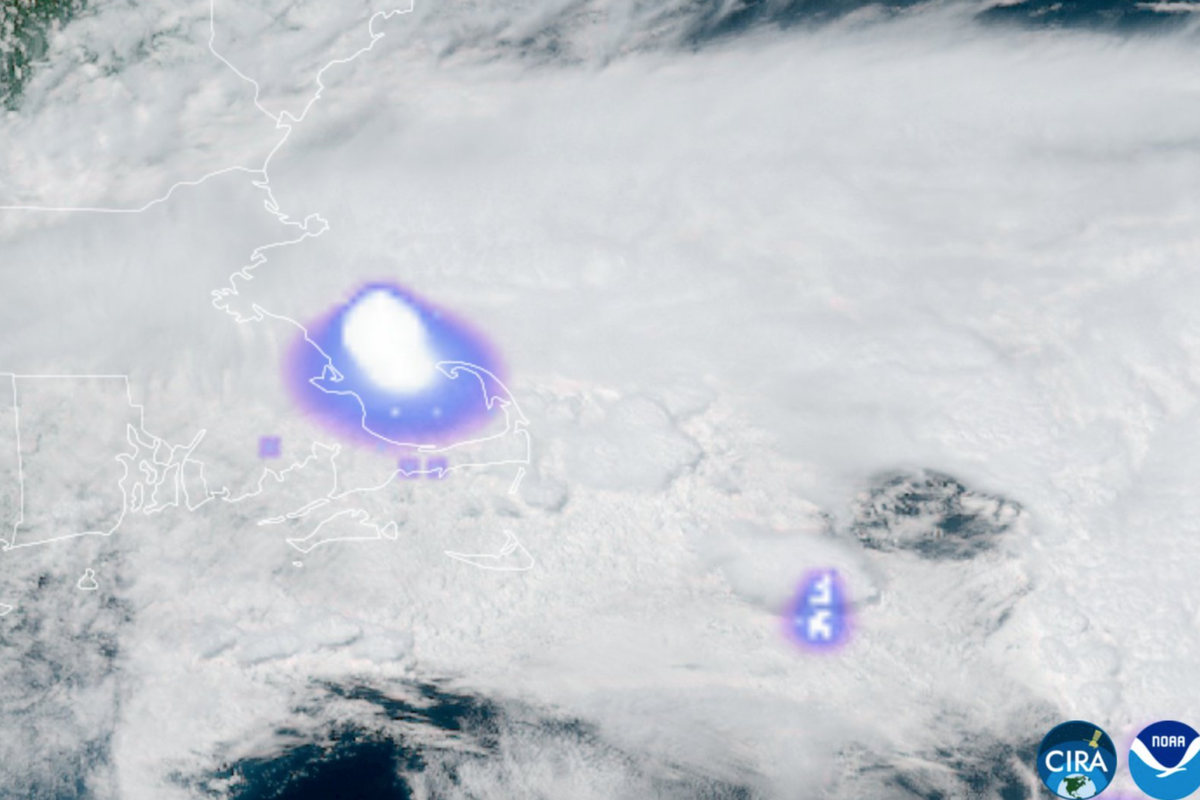
Initial reports described a significant explosion originating from the atmosphere. Meteorologists, analysing satellite data, quickly identified the likely culprit. Pamela Gardner, a meteorologist with NBC 10, noted on social media platform X that the “GLM from GOES 19 shows possible meteor or bolide entering the atmosphere.” She further clarified that there were no indications of lightning from current storm activity or seismic activity from the U.S. Geological Survey (USGS).
Eric Fisher, Chief Meteorologist at WBZ-TV, echoed this assessment, attributing the phenomenon to a meteor. He explained in an Instagram video that when a meteor enters Earth’s atmosphere and explodes, it can register on lightning-mapping technology. “Basically, when [a meteor] enters the atmosphere and explodes, it shows up as lightning,” Fisher stated. “So in our lightning mapper… you can see exactly where that came in.” This technological observation provides strong evidence for the extraterrestrial origin of the boom.
The widespread nature of the sound was confirmed by local officials. Wrentham Police Chief Bill McGrath reported that the “explosion was heard and felt throughout New England, shaking homes and causing many people to be justifiably concerned.” Thankfully, McGrath added that there were no reports of damage or injuries in Wrentham, nor had they received any reports of injuries across the wider region. Social media buzzed with accounts from residents who felt their homes vibrate during the startling rumble.
Understanding the Science Behind the Sonic Boom
The American Meteor Society provides a clear explanation of how meteors can generate such powerful sonic booms. As these celestial bodies hurtle through space, they encounter Earth’s atmosphere. The immense friction caused by this interaction leads to their vaporization, often creating a dazzling streak of light across the night sky.
- Speed and Atmospheric Entry: Meteors travel at incredible speeds, ranging from approximately 25,000 to 160,000 miles per hour (11 to 72 kilometres per second).
- Vaporisation and Light Trails: The intense friction causes them to heat up rapidly and begin to burn and vaporise, producing the visible streak.
- Pressure Waves and Sonic Booms: If a meteor penetrates the atmosphere with sufficient force and speed, it can create significant pressure waves. These waves propagate outwards, much like the shockwave from a supersonic aircraft, resulting in the audible sonic boom that people experience on the ground.
The exact fate of the object that caused Saturday’s boom remains uncertain. It is unclear whether any part of the meteor survived its fiery descent to reach the Earth’s surface or if it was entirely consumed and disintegrated within the atmosphere.
A Pattern of Atmospheric Events?
This incident in New England is not an isolated event. A similar sonic boom was reported in the Carolinas on the preceding Thursday. The USGS confirmed that this earlier event was not an earthquake, but its precise origin has not yet been definitively identified. The recurrence of these unexplained atmospheric booms highlights the dynamic nature of our planet’s interaction with space.