
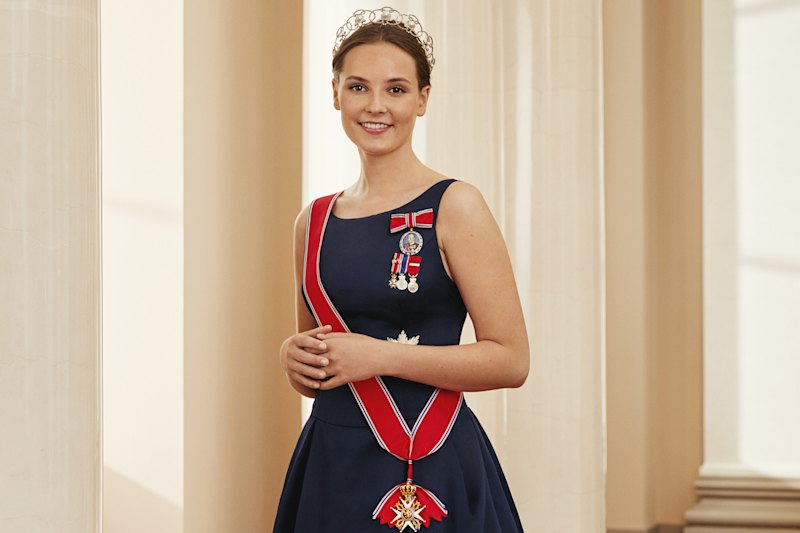
Crown Princess Mette-Marit’s Grave Illness and a Royal’s Return Home
The weight of responsibility and personal turmoil is a heavy burden for anyone, but for Princess Ingrid Alexandra of Norway, the future queen, these challenges have become an overwhelming reality. At just 22, she finds herself navigating what is arguably the most demanding period of her young life. Words expressing profound distress, “I’m going crazy. When is enough?”, shared on her private Instagram account and subsequently leaked, have brought her inner struggles into the public domain. These poignant statements reveal the depth of her turmoil as her family confronts an unprecedented storm of scandal, intense scrutiny, and deep-seated shame.
Seeking respite from the clamour back home, Princess Ingrid Alexandra relocated to Australia in July of the previous year, choosing to pursue her studies at Sydney University. The intention behind this move was for her to experience three years of relative anonymity, living the life of a “regular” student. This period was envisioned as crucial preparation for her most significant undertaking: safeguarding Norway’s monarchy from potential collapse and ensuring its future. However, this carefully laid plan has encountered a significant and heartbreaking setback. Princess Ingrid Alexandra is now returning to Norway to be by her mother’s side as she battles a severe illness. Crown Prince Haakon, her father, confirmed this development to Norwegian media while undertaking a state visit in Japan.
“She plans to come home soon,” Crown Prince Haakon stated, explaining, “It has to do with the family situation. She wants to be with her mother.”
Princess Ingrid Alexandra’s mother, Crown Princess Mette-Marit, suffers from a chronic lung condition and is a candidate for a lung transplant. Her health has deteriorated rapidly in recent weeks, exceeding her medical team’s expectations.
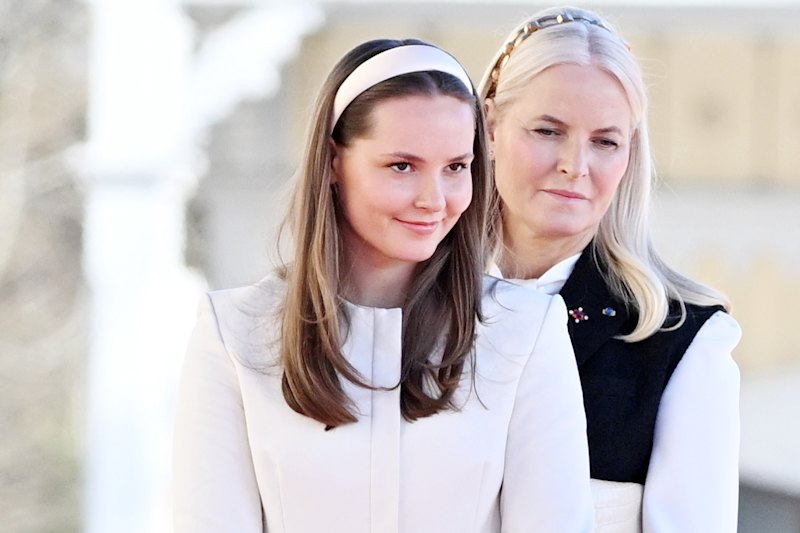
Crown Princess Mette-Marit has begun using a nasal breathing tube connected to an oxygen tank during public engagements, a stark and visible indicator of her declining health. Crown Prince Haakon is cutting his visit to Japan short by a day to return home and be with his wife. He recently expressed his concern, telling the media, “The Crown Princess is seriously ill and I think she has gotten a little worse lately, so I am worried about her health.”
The Norwegian Royal House has remained tight-lipped regarding Princess Ingrid Alexandra’s departure from Australia and has not provided a specific timeline for her return. Crown Prince Haakon indicated that his daughter “has plans to complete her studies in Australia,” but added, “how long she will stay home, we will have to come back to that.”
A Monarchy Under Siege
What is undeniably clear is that the young princess is returning to a monarchy grappling with profound internal turmoil. Over the past two years, Norway’s royal family has found itself under an unwelcome global spotlight, generating headlines for all the wrong reasons.
The monarchy is contending with a series of serious health concerns. Her grandfather, King Harald V, now 89, has faced multiple hospitalisations. Meanwhile, Queen Sonja, 88, Princess Ingrid Alexandra’s grandmother, recently received treatment for heart failure but has remarkably already resumed her official duties.
Beyond the health challenges, Crown Princess Mette-Marit’s past association with Jeffrey Epstein, revealed through documents released by the US Justice Department, casts a disturbing shadow over her husband, Crown Prince Haakon’s, future reign. A recent poll indicated that nearly half of Norwegians now deem Crown Princess Mette-Marit unsuitable for the role of Queen. The 52-year-old has issued two apologies, describing her contact with Epstein as a lapse in “poor judgment” and admitting it was “simply embarrassing.” In a television interview, she claimed to have been “manipulated and deceived” by him.
Adding to the King’s troubles is his outspoken daughter, Princess Märtha. Alongside her American husband, Shaman Durek Verrett, she leveraged their royal connections in the 2025 Netflix documentary Rebel Royals, reigniting calls for her to be stripped of her titles.
However, the most deeply troubling issue for Princess Ingrid Alexandra and the Norwegian monarchy is the criminal trial of her half-brother, Marius Borg Høiby.
Høiby, 29, is Crown Princess Mette-Marit’s son from a previous relationship. He was very young when his mother married Norway’s Crown Prince. Although he has never held a royal title or performed official duties, Høiby was raised alongside Princess Ingrid Alexandra and her younger brother, Prince Sverre Magnus, 20, at the family’s private royal estate, Skaugum. He grew up immersed in the royal sphere, attending events with the King and Queen and the Crown Prince couple over the years.
The verdict in Høiby’s case is expected from an Oslo court on June 15, following a seven-week trial. He denies the most serious charges, which include four counts of rape and assault.
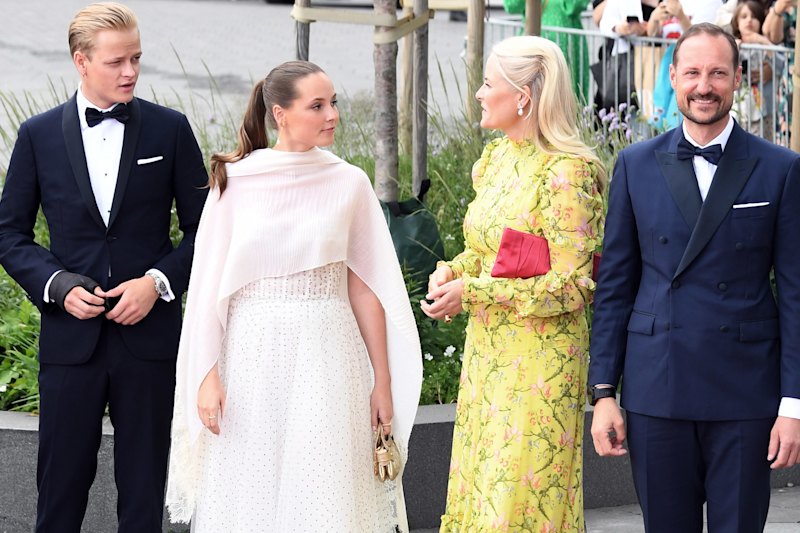
Høiby has pleaded guilty to lesser offences, including drug possession, traffic violations, and breaching a restraining order. Prosecutors are seeking a seven-year prison sentence, while his legal team is advocating for a lighter penalty, arguing that Høiby has endured immense media pressure due to his royal connections, which they contend has unduly influenced public perception of the case. He was first arrested in August 2024, becoming the first member of Norway’s royal family to face criminal charges.

The trial has predictably dominated news cycles across Scandinavia and thrust the Norwegian monarchy into the global spotlight. Coupled with the other controversies plaguing the institution, this criminal trial has undeniably cast a pall over the latter years of King Harald’s 35-year reign and significantly damaged the royal family’s reputation.
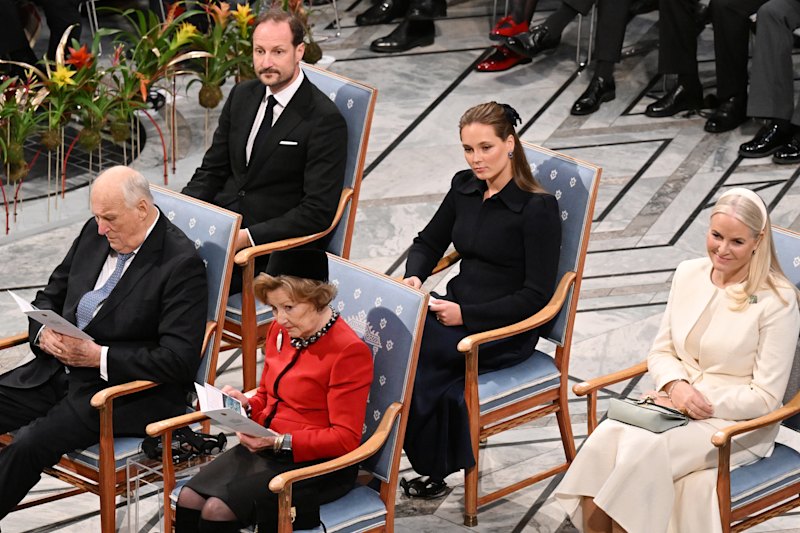
Despite these challenges, public affection for King Harald remains strong, with an approval rating of nine out of ten. Support for the Norwegian monarchy, which stood at 70 per cent late last year, had fallen to a historic low of 60 per cent by February, a direct consequence of the issues confronting its prominent members. Kristi Marie Skrede, a royal correspondent for Norway’s national broadcaster NRK, previously remarked, “Some people say this is the beginning of the end. There are people saying King Harald should be the last king.” There have even been speculative suggestions of bypassing Crown Prince Haakon in the line of succession in favour of his daughter, however improbable this may seem.
When the time comes for Princess Ingrid Alexandra to ascend the throne, she will make history as Norway’s first queen regnant in over 600 years. Whether the monarchy can recover from these escalating scandals remains to be seen, and it may well fall to Princess Ingrid Alexandra to restore the royal family’s standing with the public. This is a monumental task, and her time in Australia is proving to be an invaluable period of character development and learning for the young princess. Anyone who has studied or worked far from home during those formative adult years understands the profound impact such experiences can have.
In her first-ever interview with Norwegian media, conducted from Sydney University in November, Princess Ingrid Alexandra admitted she had been “so sheltered” in Norway. Despite her position as the eventual heir, she began undertaking regular public engagements in Norway in mid-2025.
However, her move to Australia was not an act of evasion. Recently, she made her first public appearance in her adopted country, joining Sydney’s Norwegian community in celebrating its national day, Constitution Day, on May 17. Observing the princess during what was her most high-profile engagement outside of Norway to date, I witnessed a quietly confident and relaxed young woman who is clearly still adjusting to her burgeoning public profile.
Moments after her arrival at the park, where 400 Norwegian-Australians eagerly awaited a glimpse of their princess, Ingrid Alexandra appeared slightly hesitant about her positioning. While royals often take the lead in official engagements, it is not uncommon for them to be guided by event organisers. Princess Ingrid Alexandra soon settled, standing poised as she listened to speeches. She later engaged in amiable conversation with NSW Governor Margaret Beazley and Norway’s Ambassador to Australia Anne Grete Riise, both considerably her senior. She smiled and laughed appropriately, spending over 30 minutes mingling with the crowds, crouching to speak with children, and sharing anecdotes about life back home, her student experiences, and her time in Australia thus far.
Ingrid Alexandra’s engagement that day undoubtedly represented a rite of passage, as all “first appearances” do for royals navigating their increasing roles in the public eye. On the other side of the world, her family was marking their national holiday in Oslo. Crown Princess Mette-Marit, despite her worsening illness, bravely wore her nasal breathing tube and continued with official duties, demonstrating the unwavering commitment to royal responsibilities even amidst profound personal difficulty.
Given the upheaval back home, one might question why the princess chose to study in Australia, so far from Norway during a time when her family arguably needs her presence more than ever. Crown Princess Mette-Marit herself spent six months at Wangaratta High School in Victoria during her late teens in 1992, a period that may have influenced her daughter’s decision to choose Australia. Princess Ingrid Alexandra is also an accomplished surfer, and Australia’s renowned beaches likely played a role in enticing her Down Under.
Australia has a history of hosting future monarchs. King Charles III of Britain, for instance, was sent to rural Victoria in 1966 after his schooling at Gordonstoun in Scotland. At 17, Charles spent two terms at Timbertop, part of Geelong Grammar, an experience he later described as “by far the best part” of his education and “a life-shaping and life-affirming opportunity.”
Princess Ingrid Alexandra’s experience at Sydney University contrasts significantly with Charles’ more rugged bush experience. She resides on campus at the prestigious St Andrew’s College, occupying a private room with a shared bathroom, with annual fees approximating $44,000. Crucially for the princess, living on campus offers an authentic university experience, a stark departure from the privileged life she has known growing up on the family’s private royal estate just outside Oslo.
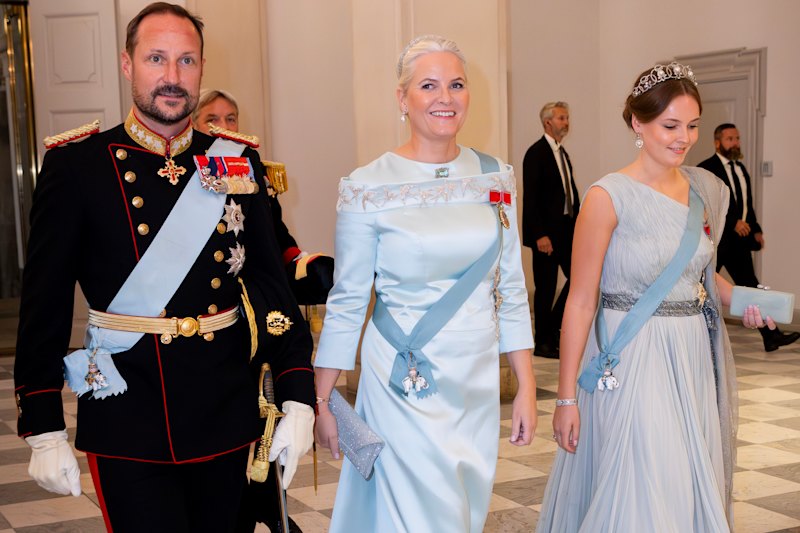
“I think she is happy to be [in Australia], far away from all the problems,” Skrede commented. “It gives her the possibility to concentrate on her studies and to concentrate on being a young woman and spending time with her friends. She wants to be Ingrid. She’s not ready to be an official person yet. Choosing to move so far away when they really need her there, that tells us that it’s important for her to be free as Ingrid.”
The duration of Princess Ingrid Alexandra’s freedom cannot be predicted. Her grandfather, Europe’s longest-serving monarch, is 89 and was hospitalised in February with an infection. He received a pacemaker in 2024, after which King Harald reduced his official duties due to his age and health. His wife was fitted with a pacemaker in 2025.
Princess Ingrid Alexandra’s destiny, as second in line to the throne, is to become Queen of Norway. When that time arrives, she will join a growing cohort of female European leaders. Five of the eight major royal houses across the region will soon be headed by women. The House of Glücksburg has ruled Norway since 1905, and its monarchy boasts a lineage stretching back over 1,000 years, making it one of Europe’s oldest. It is possible that this young princess, still finding her footing, will be instrumental in carrying the institution of monarchy into the future.
Princess Ingrid Alexandra has thus far demonstrated a remarkable capacity to step into the spotlight amidst extraordinary pressures, maintaining a brave facade while representing her country and navigating student life in a foreign land. Her departure now, so soon after her arrival last year, is entirely understandable. It is difficult not to sympathise with the princess, facing the grave illness of her mother from afar and the impending long prison sentence for her half-brother.
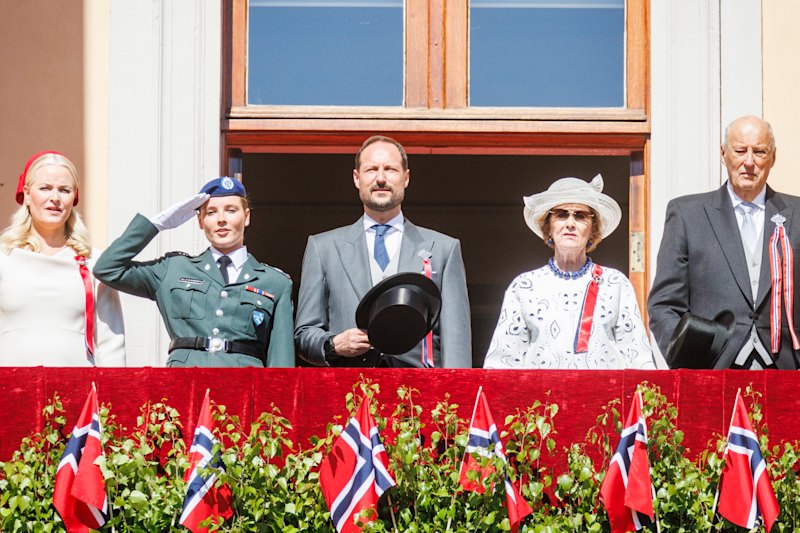
The princess has also had to contend with the threat of a stalker, with her security detail intercepting a suspicious letter addressed to her on campus. A 63-year-old man from Glebe has since been issued with an apprehended violence order and is due to appear in court.
However, based on observations during her first public appearance in Australia and from a distance, Princess Ingrid Alexandra possesses considerable potential to serve her country. It is hoped that her time in Australia – the months she has already spent here and her eventual return – will provide her with the space and freedom to mature, solidifying her position as Norway’s future head of state and a significant figure on the global stage.


