
New Approach to Dealing with Sanctuary Cities
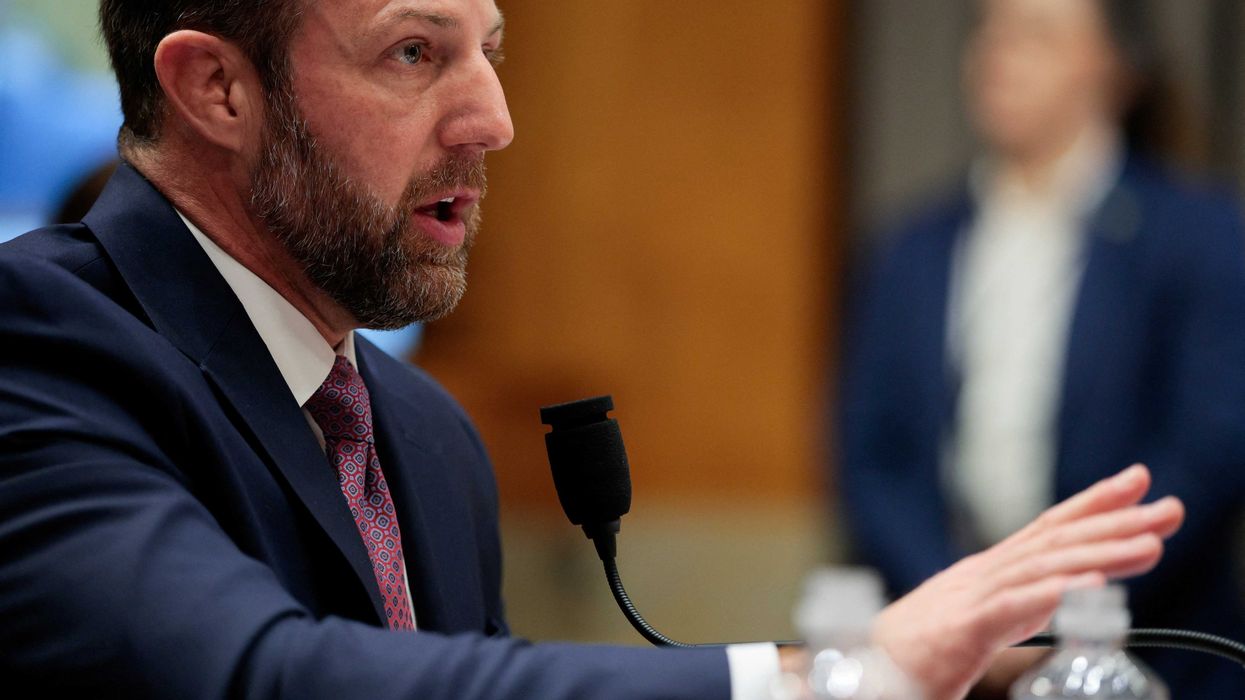
In a recent interview on Fox News, newly-appointed Homeland Security Secretary Markwayne Mullin introduced a controversial idea for addressing cities that refuse to assist Immigration and Customs Enforcement (ICE) in rounding up residents for mass deportation. His proposal involves removing staffing from international ports of entry in these cities.
Mullin stated, “I believe sanctuary cities is not lawful.” He further explained that some of these cities have international airports and questioned whether they should be processing customs into their city. “We need to have a really hard look at that,” he added.
When asked if this meant that large cities with airports could lose their customs services, Mullin responded, “I’m going to be forced to make tough decisions.” He also mentioned that this could serve as a form of retaliation against cities whose lawmakers have obstructed funding for the Department of Homeland Security (DHS) during the ongoing debate over ICE reforms.
Reactions and Criticisms
Mullin’s comments quickly sparked widespread backlash on social media. Experts highlighted that he does not have the legal authority to implement such measures. David J. Bier, Director of Immigration Studies for the libertarian Cato Institute, wrote, “In case you [were] wondering if he wasn’t going to be a complete corrupt partisan official like Noem.”
Jamie Dupree, a congressional reporter, noted, “There is no statutory authority allowing those resources to be withheld by the feds.” She also pointed out that courts have repeatedly ruled against similar efforts by the Trump administration to penalize ‘sanctuary’ cities.
Thomas Kennedy, a policy analyst at the Florida Immigrant Coalition, expressed strong disapproval, stating, “These people are absolutely nuts.” He added, “They are willing to nuke the economy of large metropolitan centers for a political agenda repulsive to 70+ percent of the population.”
Legal and Political Implications
The proposal raises significant legal and political questions. Critics argue that it could have far-reaching consequences for major metropolitan areas that rely heavily on international trade and travel. The potential loss of customs staff at airports could disrupt operations and impact the local economy.
Moreover, the idea of using federal resources as leverage against cities that do not comply with certain policies is seen as a dangerous precedent. It could lead to a broader conflict between federal and local governments, potentially undermining the cooperative relationship needed to address complex issues like immigration and border security.
Public and Political Response
The public reaction to Mullin’s remarks has been largely negative. Many citizens and advocacy groups have voiced concerns about the potential harm to communities and the lack of legal basis for such actions. Politicians from both parties have also criticized the approach, highlighting the need for more constructive solutions.
Some lawmakers have called for greater transparency and accountability in the Department of Homeland Security, emphasizing the importance of following established legal procedures. Others have urged the administration to focus on bipartisan efforts to address immigration challenges rather than implementing divisive policies.
Conclusion
Mullin’s proposal has ignited a heated debate about the role of federal agencies in dealing with sanctuary cities and the potential consequences of such actions. While the administration may see it as a way to enforce compliance, critics argue that it is an overreach that could cause significant harm. As the situation develops, it will be important to monitor how this issue unfolds and what impact it has on both policy and public opinion.


