Survivors of the devastating Bundibugyo strain of the Ebola virus, a strain for which no approved medicine or vaccine currently exists, have bravely shared their harrowing experiences. The Democratic Republic of Congo is currently grappling with a significant outbreak, with official figures indicating at least 282 confirmed cases. The nation’s Ministry of Health reports that the vast majority of these cases, a staggering 264, are concentrated within the eastern Ituri province.
This outbreak, which began several weeks ago, has led to over 1,000 suspected infections being reported. Government data paints a grim picture, revealing that the disease has now infiltrated 22 distinct health zones spread across three eastern provinces.
Despite the concerted efforts of the World Health Organization (WHO) to highlight progress, including the crucial delivery of new supplies to under-resourced health centres, substantial challenges continue to impede containment efforts. The Congolese Ministry of Health has identified several critical hurdles in bringing this crisis in the remote region under control. These include the absolute necessity of early detection, the rapid isolation of confirmed cases, rigorous contact tracing to prevent further spread, ensuring safe and dignified burials for those who succumb to the virus, and significantly strengthening infection prevention and control measures within medical facilities.
In a significant development, the Coalition for Epidemic Preparedness Innovations announced on Monday its commitment of up to $62 million to fast-track the development of three experimental vaccines specifically targeting the Bundibugyo strain. These promising vaccine candidates are being developed by the International AIDS Vaccine Initiative, Moderna, and the University of Oxford.
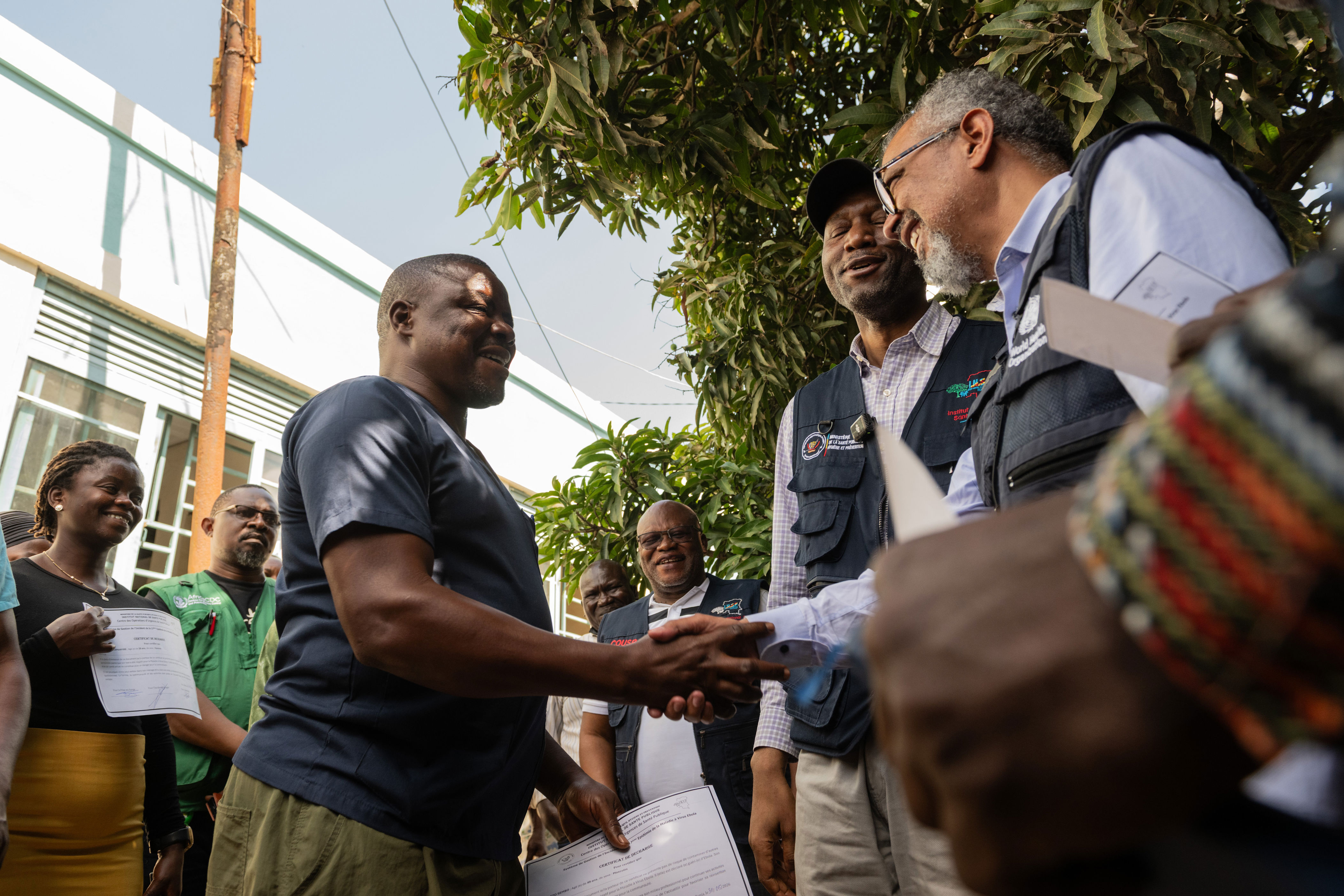
The frontline health workers have been, and continue to be, at an exceptionally high risk throughout this outbreak. The WHO recently paid tribute to five of these dedicated individuals who have recovered from the virus, honouring them as survivors during a visit by Director-General Tedros Adhanom Ghebreyesus. The visit coincided with the official opening of a new Ebola treatment centre in Bunia, the capital of Ituri province.
Stories of Resilience and Recovery
Among those who have bravely faced and overcome the Bundibugyo strain is Baraka Bulambulu, a dedicated nurse. He recounted his overwhelming sense of relief and joy after his final Ebola tests returned negative results.
“Coming out of this illness alive is an indescribable joy,” Mr Bulambulu stated, his face alight with a wide grin, embodying the profound sense of victory over the disease.
Ezo Étienne, another nurse who has recovered, shared his chilling account of how he realised he had contracted the virus. He began experiencing dizziness while diligently checking on his patients.
“I called the team and told them, ‘Something’s wrong here,’” he recalled, his voice tinged with the memory of that critical moment. “I decided to rest for a bit, and a few minutes later I started vomiting.”
Understanding the Transmission and Treatment
The Ebola virus is known to spread through close contact with the bodily fluids of sick or deceased patients. The WHO has emphasised that current treatment strategies have primarily focused on managing and alleviating patients’ symptoms, as direct cures are not yet available for this specific strain.
Dr. Tedros, addressing the recovering health workers, conveyed a powerful message of hope. “Your courage gives hope and your living story that this outbreak can be stopped,” he told them on Sunday, acknowledging their resilience as a beacon for others.
Overcoming Obstacles to Containment
Despite the immense challenges, including the persistent threats posed by armed groups and the understandable anger and suspicion directed towards health workers by some wary residents, these recoveries represent a significant triumph. Dr. Dieudonne Mwamba Kazadi, director-general of Congo’s National Institute of Public Health, underscored the importance of these victories.
“It’s a strong message that it is possible to recover from Ebola when seeking care early in a dedicated health facility,” he added, highlighting the critical role of timely medical intervention.
Regional Impact and Rare Strain
The neighbouring country of Uganda has not been untouched by this outbreak, reporting nine cases of Ebola. In an effort to curb the spread of the virus, Uganda has taken the step of closing its border with Congo. While both Congo and Uganda have a history of experiencing more than 20 Ebola outbreaks, the Bundibugyo virus strain itself has been notably rare, making this current situation particularly concerning.
The ongoing efforts to combat this outbreak underscore the critical need for continued international support, rapid vaccine development, and unwavering dedication from healthcare professionals on the ground. The stories of survivors serve as a powerful reminder of the human cost of such epidemics and the resilience of the human spirit in the face of overwhelming adversity.
Posting terkait:

Chord dan Lirik Lagu Everything U Are – Hindia: Cerita Kita Sama
Online dating has become an increasingly popular way to meet new people, and for those interested in Latin women dating, the options have never been more abundant. Connecting with Slavic penpal women online starts with choosing where to look. The digital world offers countless opportunities to connect with latina singles from various backgrounds, but knowing when to transition from online chats to an actual meeting is crucial for building meaningful relationships. Many people find themselves wondering how long they should communicate online before meeting in person, and this decision can significantly impact the success of their connection. While some platforms specialize in helping you meet single latin ladies online, the real journey begins when you decide to take your virtual interaction to the next level.