Luxury Resort’s Helicopter Flight Proposal Sparks Neighbourly Outcry
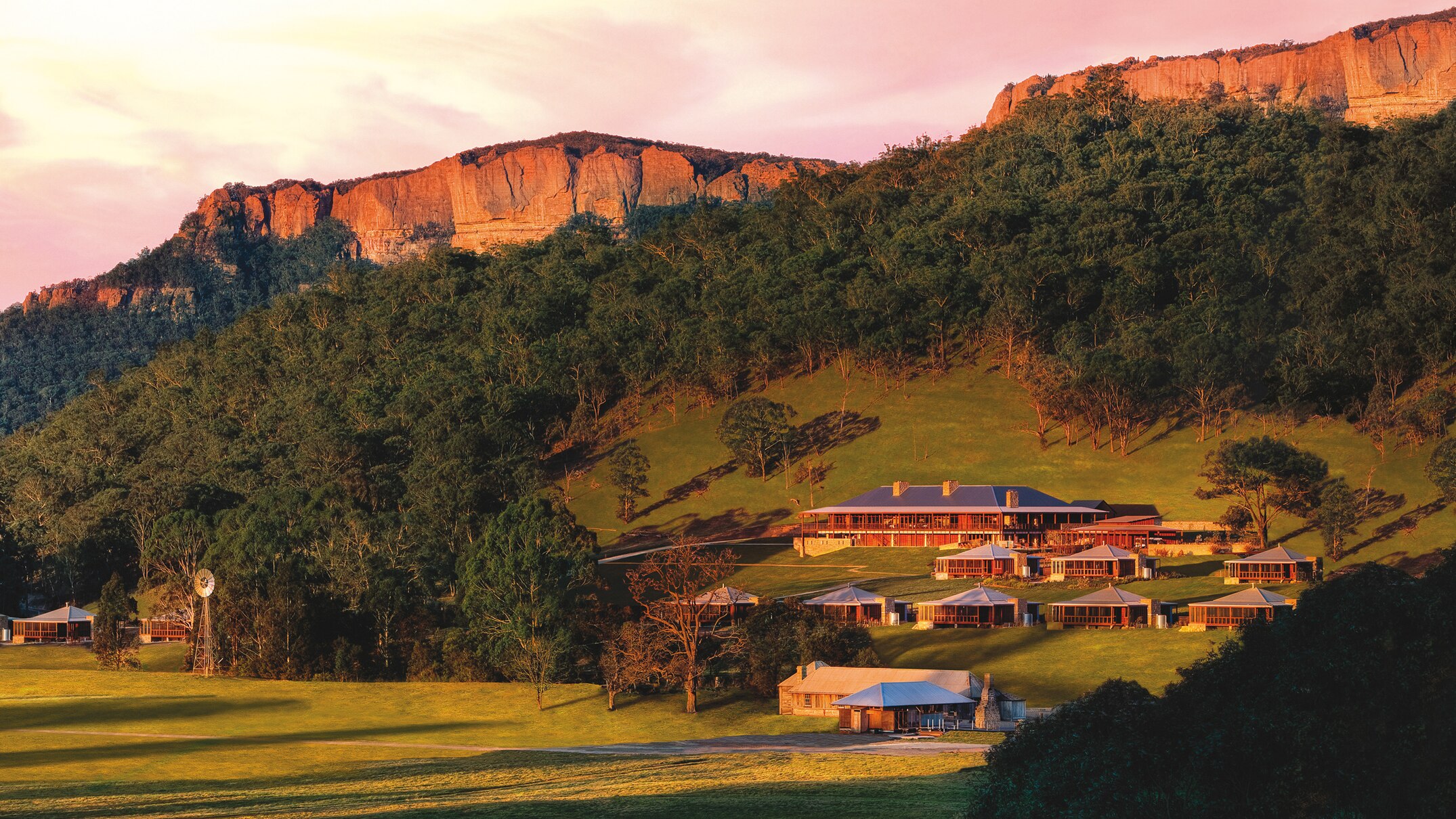
A proposal by a high-end resort nestled near the picturesque Blue Mountains to significantly ramp up its helicopter operations has drawn sharp criticism from local residents and environmental groups, who have labelled the plans as “excessive” and “entirely unwarranted.” The luxury establishment, owned by Emirates, is seeking government approval to increase the number of helicopter trips to its Wolgan Valley site, located near Lithgow, from a current maximum of 28 per week to a staggering 210.
This proposed surge in flights equates to a helicopter traversing the valley and its surrounding national parks every 22 minutes, a frequency that has neighbours concerned about the impact on their peace, the local environment, and the very character of the region.
The Resort’s Reopening Dilemma
The Wolgan Valley resort has been temporarily closed for the past three years. Its sole road access was shut down due to instability, forcing a hiatus in operations. Emirates has previously indicated that the resort would reopen later this year, with initial plans focusing on four-wheel-drive access only.
However, the company’s recent application to the New South Wales government argues that the substantial increase in helicopter flights is “critical” for the site’s reopening. The resort claims that these additional flights would enable it to welcome guests at a minimum viable capacity of 68 people at a time. Emirates has stated that once the two-wheel-drive access to the valley is restored, which is anticipated later this year, they intend to permanently reduce the maximum number of weekly helicopter flights to 100.
Neighbours Unite Against the Proposal
The public consultation period for the proposal has seen an overwhelming response from the community. Out of 130 submissions lodged, only a single individual from Sydney expressed support for the increased helicopter traffic.
The Wolgan Valley Association (WVA), a prominent local organisation, has voiced strong opposition. In its submission, the WVA highlighted that the proposed flights would “significantly” disrupt the community, its delicate ecosystem, and its established character. While acknowledging the need for some increased access during the road closure, the WVA stated:
- “The WVA is open to supporting a modest increase to flights into the resort while two-wheel-drive access remains cut off. However, the current proposal is considered excessive and unwarranted.”
The association further expressed pride in having Emirates as a neighbour and a desire to see the resort thrive. However, they cautioned against a permanent escalation in helicopter activity.
"In the longer term, [it] may actually be counter to the commercial interests of the resort to the extent that they diminish the reputation of the Valley as a place of quiet and solitude, two defining features of wilderness."
The WVA also highlighted concerns about the noise pollution, predicting that residents would be subjected to noise levels “well beyond” anything experienced in the past two decades.
Noise Pollution: A Growing Concern
The potential noise impacts of the increased helicopter traffic have been a major point of contention. Acoustics engineer and University of New South Wales PhD candidate, Ben Jancovich, conducted an independent analysis. He noted that the resort’s own modelling failed to account for the noise impacts on popular rock climbing areas and bushwalking trails situated along the proposed flight paths.
Mr. Jancovich’s computer simulations, applied to cliffs at well-known climbing spots, indicated noise levels of up to 64 decibels per fly-by. He described this as “really loud,” comparing it to the sound of “standing immediately next to a leaf blower.” The resort’s own data suggested that the highest cliff points under the flight path could experience sounds approaching 80 decibels.
Critically, Mr. Jancovich pointed out that the resort’s modelling did not accurately reflect how these noise levels would be perceived by users of the Gardens of Stone State Conservation Area and nearby National Parks.
"A whole tonne of helicopters buzzing that area all day long is going to significantly detract from the user amenity for outdoor recreation people."
Neil Monteith, representing the Blue Mountains chapter of the Australian Climbing Association, echoed these concerns, highlighting that the noise posed not just an annoyance but a potential safety hazard for climbers.
"Often, we might be 10, 20 or even 50 metres apart on a rope and you're relying on saying to someone, 'Take me off belay,' or 'Watch me, I'm about to do something that's scary.' With a huge loud helicopter noise going over the top, that would obviously make that kind of communication impossible."
He further warned that the increased flights could deter visitors from accessing the cliffs altogether.
"If you're camping out there and you've got helicopters roaring across two or three times an hour, it's a totally unappealing place to be camping and climbing. It's like someone building a freeway right next to a rock climbing area."
Environmental Impact on Threatened Species
The New South Wales National Parks and Wildlife Service (NPWS) has also raised red flags regarding the proposal’s potential impact on threatened species. Their submission noted that the application had not adequately considered the effects on local wildlife, including the brush-tailed rock wallaby, the little eagle, and the eastern pygmy possum. The NPWS warned of a potential for increased disturbance to animal abundance, movement patterns, and flight paths due to the helicopter activity.
The resort’s application had suggested that noise levels beyond the helipad and cliffs would be comparable to the natural background noise of national parks, likening it to the sounds of frogs, crickets, and birds. However, the NPWS submission strongly refuted this assertion, stating:
"Helicopter noise levels are simply not comparable, as it is prolonged and loud."
Resort Responds Amidst Dialogue
In response to the widespread concerns, a spokesperson for Emirates stated that while helicopter access is “important” for the resort’s operations, it would not be a “show stopper” if the proposal were not approved.
"We are in close dialogue with the valley community and National Parks on the final flight paths and flight frequency, and will re-evaluate our application accordingly."
The resort’s willingness to engage in dialogue suggests a potential for compromise, but the intensity of local opposition indicates that a significant adjustment to the current proposal will likely be necessary. The future of the Wolgan Valley’s tranquility and its unique environmental assets hangs in the balance as this high-stakes application progresses.