
The Booing of the Bulldog: A Rugby League Vendetta
The roar of the crowd can be a fickle beast, often dishing out its ire for reasons both justified and, at times, downright unfair. While prejudiced, misdirected, or boorish booing is sadly common in the sporting arena, there’s one transgression that typically earns a special kind of condemnation: club betrayal. On Saturday, exactly twelve months since his departure from the Wests Tigers, Lachlan Galvin found himself on the receiving end of this intense scrutiny at CommBank Stadium.
Every time the young playmaker touched the ball for the Canterbury-Bankstown Bulldogs, the air was thick with the sound of Tigers supporters expressing their discontent. Given Galvin’s significant involvement throughout the match – a testament to his ambition, touching the ball a remarkable 83 times – the burning question was whether the Tigers faithful could sustain their vocal barrage for the entire eighty minutes.
Galvin’s alleged crime? Breaking his contract and walking out on a struggling club that had given him his debut. He left mid-season, seeking greener pastures with a high-flying team where he believed a premiership was a more attainable prize. While his youth and susceptibility to external influences might elicit some sympathy, and his evident commitment to performing each week is commendable, for many in the rugby league fraternity, a player who deserts their club mid-contract earns a special place in the annals of rugby league infamy.
What adds a layer of peculiar irony to this scenario is the trajectory of both the Tigers and the Bulldogs since Galvin’s high-profile defection. One might expect Tigers fans to be celebrating their perceived good fortune, yet the animosity on display suggests otherwise.
Saturday’s performance saw Galvin once again demonstrating ambition and involvement, but crucially, faltering when the pressure intensified. The past twelve months have subtly, yet significantly, revealed that Galvin, at least for now, may not be the transcendent talent he was initially hyped to be. This revelation, however, is not necessarily a reflection of his character but rather a commentary on the often-unpredictable nature of player development. In fact, his arrival at the Bulldogs disrupted a previously harmonious team dynamic, leading one to ponder if it’s the Bulldogs’ faithful who should be expressing their frustration.
The boos did eventually subside late in an otherwise entertaining contest, particularly when the Bulldogs found themselves in attacking positions and the Tigers’ fans found their voices momentarily silenced by the tension. Yet, even then, both Galvin and his teammates fumbled their crucial last-tackle options. While the Tigers’ supporters might have been experiencing a quiet sense of vindication, it was a sentiment that failed to translate into a significant vocal outpouring.
A New Generation of Playmakers Emerges
Amidst the drama surrounding Galvin and the perceived over-emphasis on his personal narrative, the NRL is quietly cultivating a new wave of exceptional young playmakers. These emerging talents, often in their early twenties, are demonstrating maturity and skill well beyond their years, threatening to redefine the landscape of the game.
Among the standout talents are:
- Isaiya Katoa (Dolphins): Already showing flashes of brilliance and leadership.
- Ethan Strange (Canberra Raiders): His recent performances have solidified his status as a genuine star.
- Joey Walsh (Manly Sea Eagles): A dynamic and exciting player with significant potential.
- Liam Sutton (North Queensland Cowboys): Another young gun making his mark.
These players join established young stars like Sam Walker (Sydney Roosters), who, at just 23 years old, is already a fixture at the top level of the game.
Ethan Strange, in particular, has been a revelation. His commanding performance in the recent State of Origin opener and his consistent displays for the Raiders over the past year underscore his arrival as a bona fide NRL star. While New South Wales coach Laurie Daley may opt for a more conservative selection for the next Origin clash, potentially reinstating Mitchell Moses and utilising Strange from the bench, doing so would be at his own considerable risk.
Statistical Curiosities and Dominant Performances
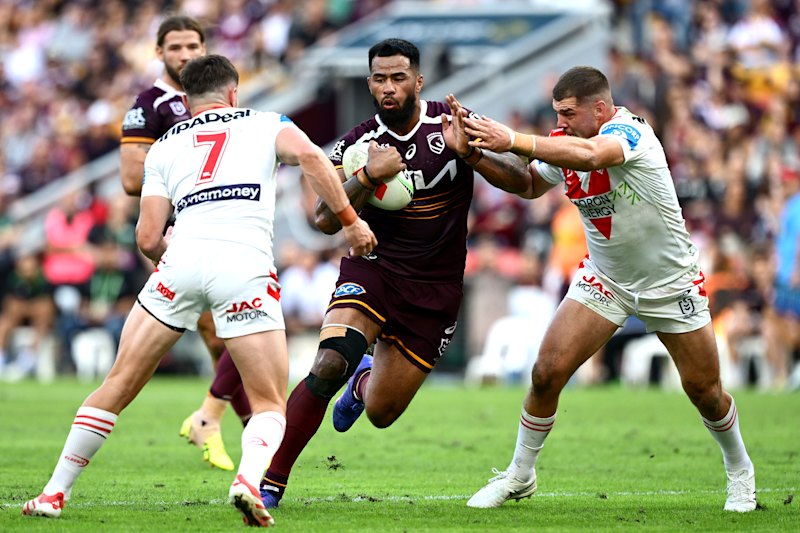
The Dragons’ upset victory over the Brisbane Broncos on Sunday was not just a surprising result; it also offered a fascinating statistical anomaly for the avid fan. The final scoreline of 30-26 mirrored the outcomes of matches between the same two clubs in both 2025 and 2024. Adding to the intrigue, all three of these contests were held at Suncorp Stadium and resulted in unexpected wins for the Dragons. It’s a remarkable coincidence that might have some searching for four-leaf clovers on the halfway line.
Beyond the statistical quirk, the Broncos’ performance in that match highlighted a concerning lack of cohesion. They appeared less flat and more uncoordinated, with individual players seemingly pursuing their own agendas rather than operating as a unified team. Reece Walsh, often a dynamic force, was noted as one of the offenders, a factor that may explain his omission from the Origin squad.
In stark contrast, Payne Haas delivered an absolutely monumental performance. Returning from injury, Haas played the entire eighty minutes, making an incredible 23 runs for 281 metres and registering 33 tackles. Despite his individual brilliance, however, the overall impression was that, like many of his teammates, he was attempting to single-handedly carry the team, a strategy that ultimately proved insufficient.
A Tale of Two Fullbacks: Tedesco vs. Edwards
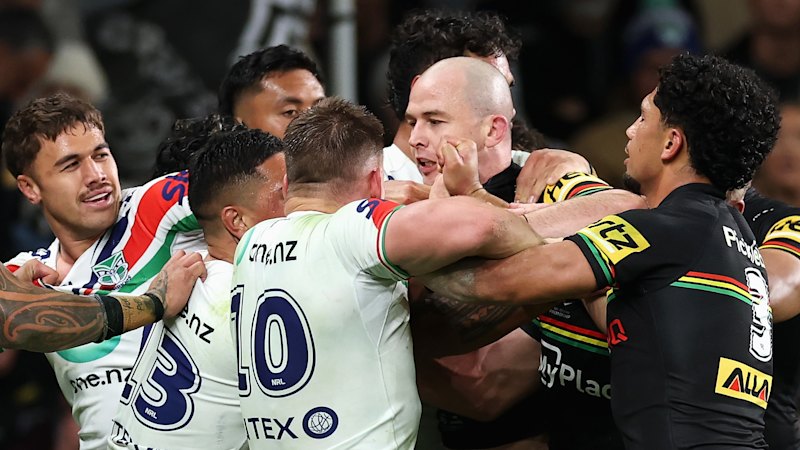
The recent clash between the Penrith Panthers and the New Zealand Warriors, a potential grand final preview, coupled with the Sydney Roosters’ loss to Melbourne, has brought into sharp focus the selection dilemmas facing Laurie Daley in his role as NSW coach. There’s a palpable sense that Daley’s decision-making is currently out of sync with the prevailing form and fortunes of key players.
Consider the case of the fullbacks. A year ago, with James Tedesco in scintillating form and Dylan Edwards battling injuries, Daley opted for Edwards. Fast forward to the present, and the narrative has dramatically shifted. Tedesco’s performances for the Roosters have been inconsistent, and while he produced a moment of late magic in his Origin appearance, it masked an otherwise ordinary game.
Meanwhile, Dylan Edwards is enjoying a career-defining season. On Sunday, in the absence of key players like Nathan Cleary and Isaah Yeo, Edwards orchestrated the Panthers’ victory with the assuredness of a seasoned maestro. Yet, despite this compelling evidence, Daley is expected to select Tedesco for the upcoming Origin match. For the second consecutive year, it appears Daley is selecting the right player, but at the wrong time in their respective careers.
Round 13: A Resurgence of Thrilling Encounters
The recent round of NRL fixtures, particularly Round 13, has been a welcome return to the kind of exhilarating, closely contested football that fans have come to love. Of the seven games played over the weekend, a remarkable five were decided by six points or fewer.
This stark contrast to previous weeks, where seemingly unassailable leads and lopsided scores were becoming commonplace, begs the question: what has changed? Have teams finally reached peak mid-season fitness, successfully adapted to the new rule interpretations, or has the perceived imbalance in the competition been rectified?
Whatever the underlying reasons, the contests in Round 13, following the drama of the Origin opener, delivered the kind of high-octane, nail-biting rugby league that captures the imagination. This resurgence in quality and competitiveness couldn’t come at a better time, coinciding with the ongoing negotiations for a new broadcast deal, a sweet alignment of sporting excitement and commercial opportunity.


