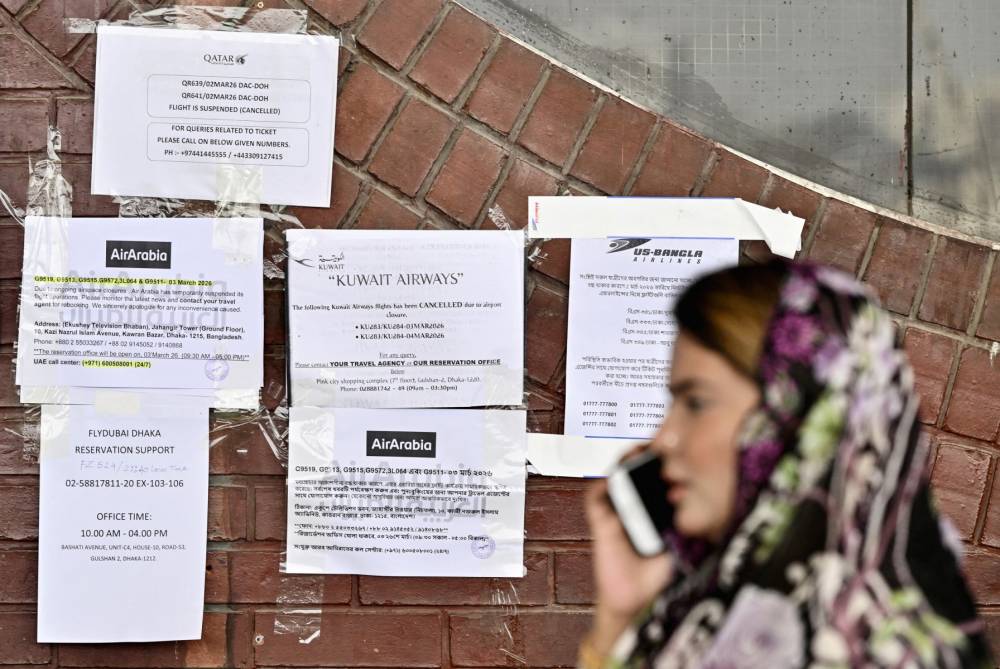
Global Airspace Shutdown Sparks Mass Travel Chaos
The eruption of a regional conflict in the Middle East has sent shockwaves through global travel, leading to the widespread cancellation of flights and the stranding of tens of thousands of travellers. Governments and airlines are now in a race against time to repatriate citizens caught in the escalating tensions, which were ignited by Israel-US strikes on Iran.
The repercussions were immediate and severe, with countries across the region opting to shut down their airspace. This drastic measure was a direct response to Iran’s retaliatory actions against US allies. Qatar, a key aviation hub, reported that it had successfully thwarted an attack targeting its airport, underscoring the volatile nature of the situation.
Aviation Data Reveals Scale of Disruption
The impact on air travel has been monumental. Aviation data analysis firm Cirium reported that between Saturday and Monday, a staggering 12,903 flights were cancelled. This figure represents a substantial 40 per cent of all planned departures, affecting an estimated one million passengers to date. The ripple effect of these cancellations has been felt worldwide, with travellers facing uncertainty and prolonged delays.
Flight Cancellations and Resumptions:
- Saturday to Monday: Over 12,900 flights were cancelled, impacting approximately one million passengers.
- United Arab Emirates (UAE): On Sunday, nearly all flights were cancelled from the UAE, home to Dubai International Airport, the world’s second-busiest airport by passenger traffic.
- Dubai and Abu Dhabi: By Monday, the cancellation rate in the UAE had dropped to 93.5 per cent as Dubai and Abu Dhabi airports began to resume limited operations.
- Tuesday Morning: Some Emirates flights managed to depart, reportedly heading south out of the Gulf region. Low-cost carrier flydubai and Russia’s Aeroflot were also noted to be operating.
Navigating Restricted Airspace
While some routes have seen a gradual reopening, many remain inaccessible to civilian air traffic. Flights continue to operate in and out of Jordan, Saudi Arabia, and Oman. However, airspace over Iraq, Israel, Kuwait, Libya, and Qatar has remained closed to civilian flights, creating significant navigational challenges for airlines. Israel has indicated that its airspace will begin to reopen gradually from Tuesday evening, initially prioritising flights for the repatriation of its own nationals.
National Evacuation Efforts Underway
European nations were among the first to mobilise significant evacuation efforts for their citizens. The Czech Republic, Slovakia, and Romania swiftly organised airlift operations.
- Czech Republic: Hundreds of passengers arrived back in Prague on two planes on Monday morning.
- Slovakia: Approximately 100 Slovak nationals were repatriated.
- Romania: Over 300 Romanians returned to their home country, with their journey facilitated via Egypt.
- Italy: Three flights were scheduled to bring Italian citizens back to Rome and Milan.
Russia has also been active in bringing its nationals home, reporting the successful repatriation of citizens who had fled Iran to Azerbaijan, as well as several dozen individuals from Egypt.
The United States has been instrumental in arranging charter flights from Jordan, Saudi Arabia, and the UAE, reporting that over 9,000 individuals had already returned from the region since Saturday.
France, which has a significant expatriate population with an estimated 400,000 nationals in the affected region, is among the most impacted Western nations. President Emmanuel Macron announced that two flights were en route to Paris, carrying the first groups of repatriated French citizens.
Broader European Response and Airline Involvement
Other European countries are following suit with their own repatriation plans:
- Germany: A charter flight was set to depart from Oman on Wednesday, aiming to bring home some of the estimated 30,000 Germans stranded in the region. Travel firm TUI has also begun flying holidaymakers home from two of its cruise ships in the Gulf, with transfers via Dubai.
- United Kingdom: A charter flight was announced to bring British nationals home from Oman in the coming days.
- Ireland and Spain: Similar announcements regarding the repatriation of their citizens have been made.
Airlines themselves are playing a crucial role in these large-scale evacuations. Three Indian carriers – IndiGo, Air India Express, and Akasa Air – have confirmed that they will be operating dedicated evacuation flights. British Airways has scheduled a flight from Oman for Thursday.
Suspended Operations and Future Outlook
The ongoing instability has led several major airlines to suspend their operations to the Middle East. Companies including Air France, British Airways, LOT Polish Airlines, Norwegian, and SAS have all halted flights to the region for the immediate future. Finnair has gone further, suspending flights to Doha and Dubai until almost the end of the month, highlighting the persistent uncertainty surrounding the duration of the airspace restrictions and the overall regional security situation. The full impact of this crisis on global air travel is yet to be fully assessed, but the immediate priority remains the safe return of all stranded travellers.