Middle East Tensions Spark Gradual Inflationary Pressures in Malaysia
Malaysia’s economy is poised for a period of gradual price increases, with transport and food sectors expected to feel the earliest and most significant impacts of the escalating geopolitical conflict in the Middle East. Economists anticipate a slow but steady rise in the cost of living as higher expenses for oil, logistics, and agricultural inputs filter through the supply chain.
Mohd Sedek Jantan, director of investment strategy and country economist at IPPFA Sdn Bhd, explained that transport-related services are typically the first to respond to global conflicts. This is due to the quicker adjustments in logistics, fuel-linked operations, and commercial transport costs. Food prices, he noted, tend to follow with a slight delay as increased costs for fertilisers, animal feed, and distribution are progressively passed on to consumers.
Currently, Malaysia’s headline inflation stands at 1.6 per cent year-on-year, with transport costs showing a negative 0.7 per cent and food and beverages at 1.5 per cent. Sedek forecasts inflation to drift towards 2.2 per cent by the end of the year, largely driven by mild but persistent pressures in the food and transport sectors.
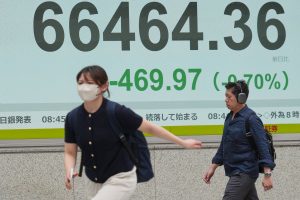
The global markets have adopted a cautious stance following military actions in the Middle East, which have amplified geopolitical risks. Economists warn that this situation could reinforce a “risk-off” sentiment, potentially affecting oil prices, the Malaysian ringgit, and international trade flows.
Impact on Key Economic Indicators:
- Oil Prices: Sedek indicated that oil prices remaining below US$90 per barrel would exert only moderate inflationary pressure.
- Ringgit Exchange Rate: A ringgit trading within the 3.90 to 4.00 range against the US dollar is expected to help contain imported inflation.
- Transport Inflation: This is anticipated to transition gradually from negative to slightly positive territory.
- Food Inflation: This could see an increase to between 2.5 and 2.7 per cent, primarily due to higher production and logistics expenses.
Utilities are considered less sensitive to short-term oil price volatility, as tariff adjustments do not respond immediately. However, Sedek anticipates “second-round effects” across the broader economy as businesses grapple with increased costs for logistics, packaging, imported raw materials, and general operations. These pressures are not expected to cause abrupt price surges but will manifest gradually, particularly affecting food service outlets, processed food items, delivery services, and businesses with tight profit margins.
What Malaysians Should Prepare For:
Malaysians should brace for a year of moderately higher prices, with a particular focus on services and food-related goods, rather than sudden spikes in fuel or electricity costs. Households are advised to:
- Review their spending habits.
- Build a small liquidity buffer to manage potential short-term economic volatility.
The primary risk, according to Sedek, lies in increased insurance and shipping costs, rather than physical shortages, given Malaysia’s diversified and functional import channels.
Government’s Role in Mitigating Inflation:
The government’s fiscal support should concentrate on addressing cost pressures at their source, especially within the logistics and agricultural sectors. Key areas for government intervention include:
- Stabilising fertiliser costs.
- Providing targeted support along the entire food supply chain.
These measures are deemed more effective in preventing widespread inflation than immediate cash transfers. Strengthening price monitoring mechanisms and maintaining current fuel subsidy structures are also crucial for anchoring public expectations without unduly straining fiscal resources.
RON95 Subsidies: A Balancing Act
The government’s commitment to maintaining RON95 petrol subsidies at RM1.99 per litre is contingent on global oil prices and the ringgit’s exchange rate. Sedek highlighted that the sustainability of this subsidy mechanism is heavily influenced by Brent crude prices and the ringgit’s performance against the US dollar.
- At Brent crude levels around US$80 per barrel, the additional fiscal cost for RON95 subsidies would be manageable.
- These costs would rise substantially as Brent approaches US$90 per barrel.
- The subsidies become structurally burdensome if oil prices sustain above US$90 for extended periods and increasingly difficult to justify if prices near US$95 to US$100, especially if coupled with a weaker ringgit.
At the time of reporting, Brent crude had seen an upward trend, rising to US$79.72 per barrel. Sedek suggested that if adjustments become necessary, a gradual price corridor mechanism would be the least disruptive approach. This would allow for partial price pass-through only after oil prices exceed a predetermined threshold, enabling incremental adjustments within a controlled band. Such a strategy would preserve fiscal discipline while avoiding sudden shocks to households and markets.
Prime Minister Datuk Seri Anwar Ibrahim has publicly stated the government’s intention to maintain the RON95 petrol price for Malaysians at the current level of RM1.99 per litre, despite global market uncertainties stemming from the Middle East conflict. He acknowledged that market forces are beyond the government’s complete control and that a complete guarantee against any price increase cannot be provided. Echoing this sentiment, Economy Minister Akmal Nasrullah Nasir confirmed that the MADANI government has no immediate plans for drastic changes to the current fuel price or policy.
Monetary Policy: A Likely Pause
Regarding monetary policy, Sedek anticipates that Bank Negara Malaysia (BNM) is more likely to pause its interest rate adjustments rather than ease them, even with contained inflation. The current Overnight Policy Rate (OPR) of 2.75 per cent is considered accommodative. Premature easing during a period of geopolitical uncertainty could potentially weaken the ringgit and exacerbate imported inflation. The central bank must remain vigilant regarding second-round effects and guard against volatility in inflation expectations.
Professor Geoffrey Williams, an economist, shares similar expectations for a cautious stance from policymakers. He believes the current economic landscape is more defined by the uncertainties of the unfolding geopolitical situation than by concrete price or growth forecasts. Williams does not foresee an immediate risk of higher interest rates in Malaysia and suggests that rate cuts would only be considered if growth concerns become more pronounced.
He noted that inflation remains low, the ringgit is relatively strong, and import prices are contained. Malaysia’s trade position benefits from higher oil prices, although volatility in the ringgit, market corrections, and domestic political uncertainties remain areas requiring close observation. Williams also pointed out that most small and medium enterprises (SMEs) are not significantly impacted, as their operations are primarily focused on the domestic market rather than external risks. He advises policymakers to maintain a calm, steady approach and avoid drastic policy shifts, expressing confidence that the geopolitical conflict will eventually subside.