
The Fierce Rosberg-Hamilton Rivalry: Inside Toto Wolff’s Radical Solution to Team Collisions
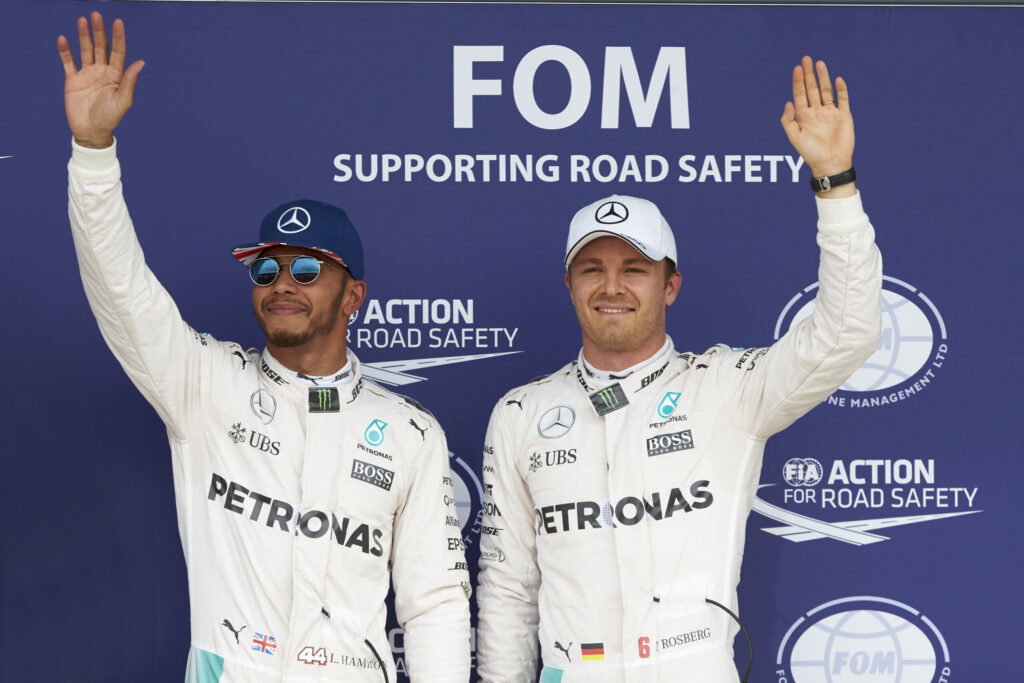
The Formula 1 world still vividly remembers the intense, often fiery, rivalry between Lewis Hamilton and Nico Rosberg during their tenure as teammates at Mercedes. In a recent candid chat on the “High Performance” Racing podcast, the now-40-year-old former German-Finnish driver lifted the lid on some of the extraordinary measures taken to manage this combustible dynamic, particularly in the wake of their infamous collision at the 2016 Spanish Grand Prix.
That particular incident, which saw both Mercedes drivers crash out of the race and handed Max Verstappen his maiden Grand Prix victory, was a stark reminder of the pressures and potential fallout from such a fierce internal battle. Rosberg, with a touch of dry humour, recalled the palpable tension within the team, drawing a parallel to team boss Toto Wolff’s well-documented moments of frustration, often involving headphones. However, in this instance, the sentiment of Wolff’s exasperation was so profound that no mere inanimate object could contain it.
Behind Closed Doors: A Threat of Dismissal
Rosberg revealed a staggering detail from that period: Toto Wolff actually engaged in serious discussions with Dieter Zetsche, the then-head of Mercedes-Benz, about the drastic step of firing both drivers.
“I know he actually had internal discussions with the big boss, Dieter Zetsche, about taking that step (firing the drivers),” Rosberg divulged. “I don’t think it was that; probably suspending or something would have been a first step for a race, something like that. So there was actually that conversation behind closed doors; it never came to us. That’s pretty crazy.”
The gravity of this revelation underscores the extreme measures considered to rein in the escalating conflict between their two star drivers. While the ultimate sanction of dismissal was avoided, the aftermath of such incidents demanded a significant shift in how future collisions would be handled.
The Fifty-Fifty Damage Clause: A Costly Deterrent
To prevent a repeat of the Spanish GP fallout and to instil a greater sense of responsibility, Rosberg explained that a new, stringent contract clause was introduced. Both drivers were required to sign an agreement that stipulated they would split the financial damages of any intra-team incidents equally, regardless of fault.
“What Toto did was he put a contract on the table that we had to sign, and it was 50/50 of the damage I had to pay myself, and it didn’t matter whose fault it was,” Rosberg elaborated. “So even if it was 90% Lewis’ fault, I had to pay 50/50 of the actual damage we caused. So, one of the crashes, I had to pay $360,000. That was what I had to pay, so that definitely calmed us down. That was expensive; it was not really a fun exercise.”
This financial penalty served as a potent, albeit expensive, deterrent. The prospect of personally footing half the bill for crashes, even those not primarily their responsibility, undoubtedly forced both Hamilton and Rosberg to exercise greater caution and strategic thinking when battling wheel-to-wheel. Rosberg concluded this part of the discussion by emphasising the critical importance of clear communication and pre-established protocols during high-stakes moments to avert disputes. He also candidly acknowledged how the intense competition with Hamilton, despite their shared childhood history, placed a considerable strain on their personal relationship.
An Instinctive Retirement: Stepping Away at the Summit
Beyond the drama of the Hamilton rivalry, Rosberg also shed light on his own abrupt retirement from Formula 1, which came just days after he clinched the 2016 World Championship. He revealed that the idea of stepping away had already taken root the moment he achieved his lifelong ambition, though it took a couple of days to fully process and commit to the decision.
Rosberg reiterated his firm belief in the principle of departing the sport at the pinnacle of one’s career. He expressed a strong desire to avoid the scenario of being phased out due to age or a decline in performance, a fate he had observed befall many highly respected drivers throughout F1 history.
“I achieved my goal, so that’s clear,” he stated. “I believe that for me, it would be critical to leave at the peak of Mount Everest for the rest of my life. I really did not want to end up in a situation where my career spirals downward, and I’m going from worse to worse, getting fired from one team, the young guy destroying me in another, and then finally ending up getting sent home.”
His decision to retire at the zenith of his career, a feat few athletes achieve, cemented his legacy as a driver who achieved his ultimate goal and had the courage to walk away on his own terms, leaving the F1 world to ponder what might have been had he continued.


