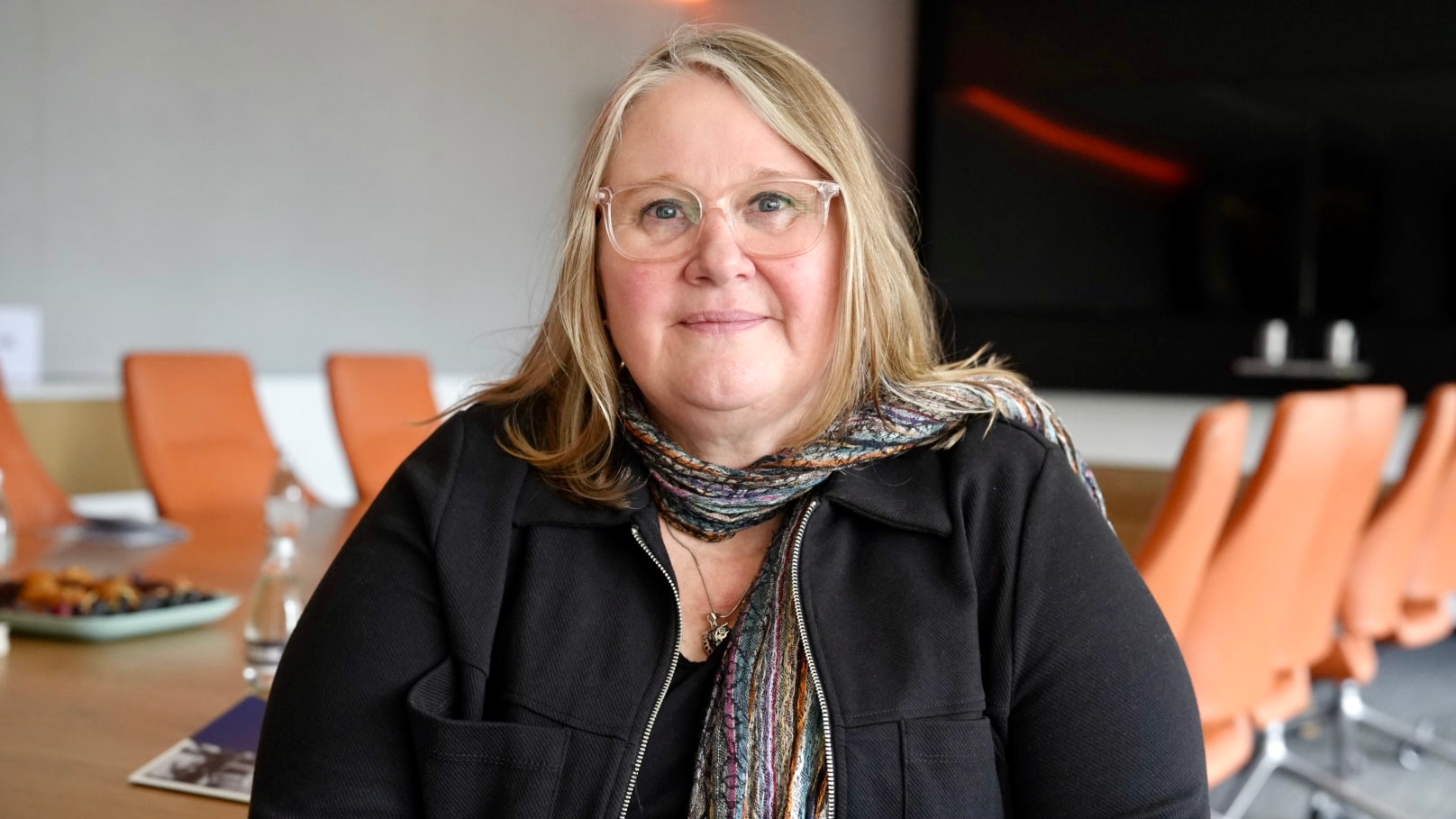
Five years ago, Julie’s world felt like it was crumbling. A devastating personal loss, coupled with a debilitating injury that rendered her unable to work and the sudden departure of her long-term partner to the UK, left her in a precarious situation. “We were in the middle of a pandemic, and I ended up with no income, and I didn’t know what I was going to do,” she recalls, her voice still tinged with the memory of that uncertainty.
But fate, in its own peculiar way, intervened. Julie, whose surname is being withheld to protect her privacy, found herself moving into a magnificent, heritage-listed, 18-bedroom house on Sydney’s lower north shore, boasting breathtaking views of the iconic harbour. This centuries-old mansion, which quickly became her sanctuary, was none other than Mosman House.
The grand property had stood vacant since Mosman Private Hospital ceased operations in 2019. Recognizing a critical need, it was repurposed into a transitional home for women over 50 who were escaping homelessness and domestic violence. For Julie, it was a lifeline. “It just helped me so much to have that safe place to sit back and just try to work out what the hell had happened to me,” she explains.
The ‘Meanwhile Use’ Solution: Bridging the Gap in Housing
Mosman House stands as a powerful example of ‘meanwhile use’ – a pragmatic approach where vacant properties, awaiting sale or redevelopment, are temporarily repurposed to provide much-needed short-term housing. This innovative model has proven invaluable in addressing the growing demand for social housing, particularly for older women.
The story of Mosman House began with Twilight Aged Care, the owner of the land. Their original intention was to redevelop the site. However, the lengthy planning processes meant that construction was still years away. “We were left with a building that was no longer fit for purpose, vacant, and we needed a plan,” explains Niamh Mannion, CEO of Twilight Aged Care.
This challenge sparked a collaboration. Twilight Aged Care joined forces with local charity Women’s Community Shelters and social housing provider Link Wentworth. Together, they transformed the empty mansion into a vital transitional housing facility, which opened its doors in 2020. Over its operational period, a total of 57 women found refuge and support within its historic walls. Following this successful interim use, the land has since been returned to Twilight Aged Care for its planned development.
Scaling the Model: From Beecroft to Beyond
The success of Mosman House is not an isolated incident. Annabelle Daniel, CEO of Women’s Community Shelters, has been a driving force behind this initiative. She recently presented the ‘meanwhile use’ model to a room full of developers and industry stakeholders in Sydney, highlighting its potential for broader application.
The charity’s initial foray into this model was at a vacant site known as Beecroft House in Sydney’s north-west. This property continues to provide a safe haven for women over 55. “That enabled us to prove the model, bring it to life, and then replicate it and scale it,” Ms. Daniel states.
Women’s Community Shelters now manages four other ‘meanwhile use’ properties across Sydney. These centres offer crucial support services, including medical assistance, counselling, and advocacy, all aimed at helping residents secure permanent housing.
The Escalating Crisis: Older Women and Homelessness
The urgent need for such initiatives is underscored by the alarming statistics surrounding homelessness among older women in New South Wales and across Australia. As of June last year, the NSW Housing Register listed over 10,000 older women awaiting social housing – a significant increase from approximately 8,500 the previous year and 7,700 a decade ago.
This trend is not confined to NSW. The Australian Bureau of Statistics indicates a similar surge in the demand for support services nationwide. Between 2011 and 2025, the number of older women accessing homelessness services in Australia has seen a concerning rise of around 8 per cent year-on-year.
Government Support and Overcoming Hurdles
NSW Housing Minister Rose Jackson views ‘meanwhile use’ as a critical strategy to supplement existing social housing stock while more permanent solutions are being developed. “We are looking at ways we can deliver roofs over heads quickly, and ‘meanwhile use’ is a really emerging part of that,” Ms. Jackson commented. She also noted that previous planning regulations often posed challenges for alternative building uses, but these pathways have now been streamlined.
One of the primary challenges in implementing the ‘meanwhile use’ model is securing the cooperation of vacant property owners. Andrew McAnulty, Chief Executive of Link Wentworth, acknowledges that some developers harbour reservations due to what is known as ‘vacancy risk’. This refers to the potential for construction delays if finding alternative housing for residents proves protracted once final development approvals are secured.
To mitigate this risk, the ‘meanwhile use’ model inherently incorporates the involvement of a social housing provider. This ensures a structured process for finding ongoing accommodation for residents when the interim housing period concludes. The success of this approach is evident: more than 80 per cent of the women who resided at Mosman House transitioned directly into permanent housing.
Women’s Community Shelters maintains a policy of only recommending ‘meanwhile use’ for properties that are expected to remain vacant for over 12 months. This commitment ensures that the women are provided with a degree of stability. “We don’t want to create this idyllic scenario… and then have people enter into homelessness,” Ms. Daniel emphasised.
The Power of Community: Camaraderie and Lasting Bonds
Beyond the practical support, the sense of community forged within these transitional homes is profoundly impactful. Robyn Mathot-Gwozdecky, the onsite manager at Mosman House, witnessed firsthand the deep connections formed among the residents. “I had the relationship with all the women there to be able to assure them that we will look after you and everything is going to be OK,” she shared. “It’s a very important thing, and was very important to me.”
Julie, who is now comfortably settled in permanent housing in the nearby suburb of Cammeray, speaks with immense gratitude about her time at Mosman House. She remains in close contact with many of the women she met during her stay. “I hold a place in my heart for them; we went through some really special times – highs, lows, laughter, tears,” she reflects. “We heard each other’s stories, and we were there for each other.” This shared experience, born out of adversity, has created bonds that continue to offer strength and support long after their time at Mosman House has ended.