
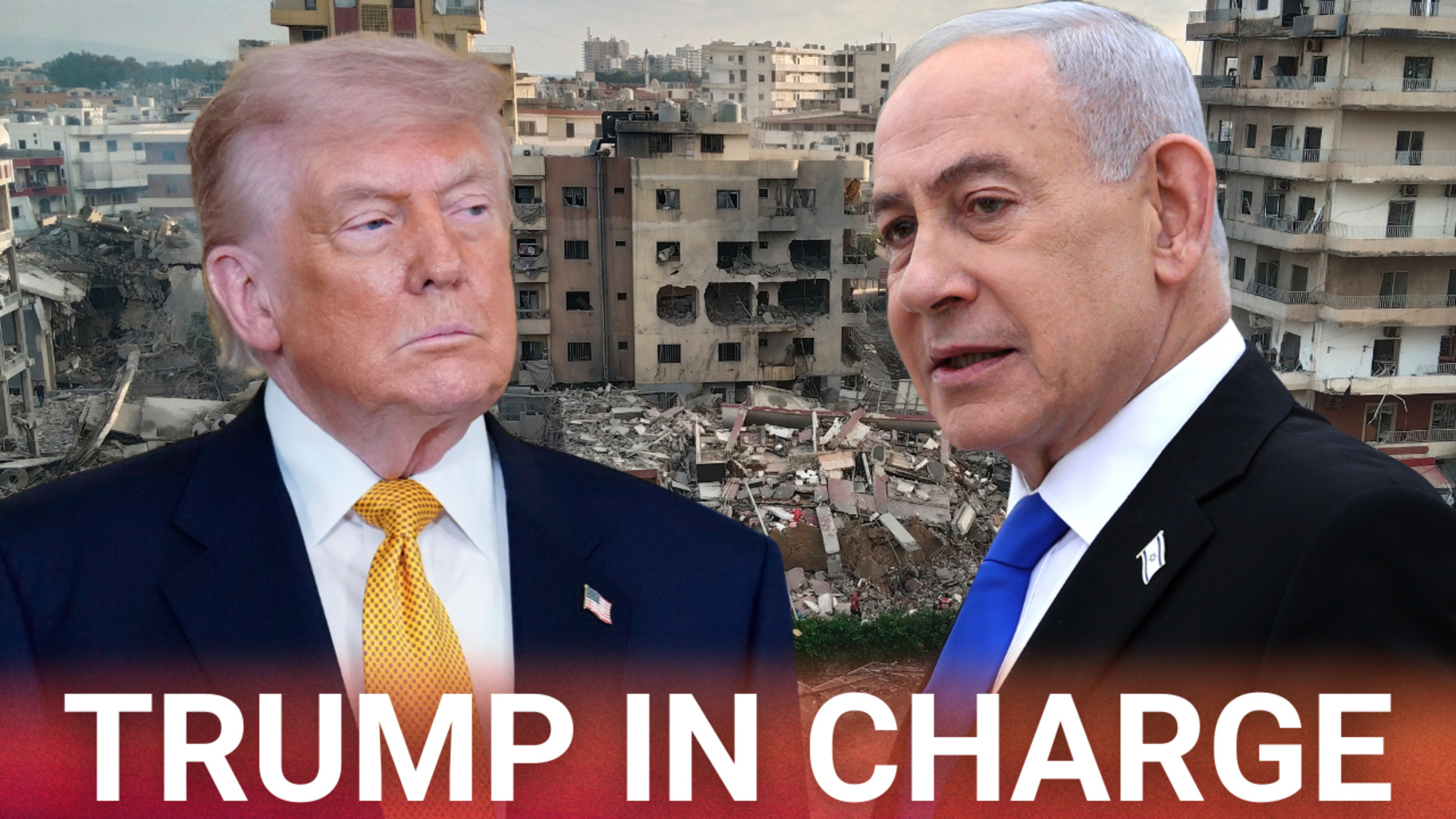
United States President Donald Trump has declared that he has successfully persuaded Israeli Prime Minister Benjamin Netanyahu to halt any planned military incursions into the Lebanese capital, Beirut. These significant pronouncements were disseminated by the former President via his social media platform, Truth Social.
Trump’s statements suggest a pivotal intervention, asserting that Prime Minister Netanyahu had been on the verge of launching a substantial military operation targeting Beirut. According to Trump, this offensive was ultimately averted due to his direct engagement with the Israeli leader, resulting in the redirection of troops away from the planned assault.
Furthermore, the former President also put forth a claim that a cessation of hostilities had been reached between the Lebanese militant group Hezbollah and Israel. This purported agreement, if accurate, would signify a de-escalation in a long-standing and often volatile conflict zone.
However, it is crucial to note that despite President Trump’s assertions of a ceasefire, independent reports from the region have continued to document ongoing exchanges of fire and continued hostilities between Hezbollah and Israeli forces. This discrepancy between the former President’s claims and on-the-ground reporting raises questions about the extent of the de-escalation and the accuracy of the information being presented.
Geopolitical Implications and Regional Tensions
The situation in the Middle East, particularly the dynamic between Israel and Hezbollah, remains a focal point of international concern. These groups have engaged in numerous conflicts over decades, with significant implications for regional stability and global security. Any perceived shift in this delicate balance is closely scrutinised by world powers and regional actors alike.
The role of external mediation in de-escalating such conflicts is a recurring theme in international diplomacy. The United States, historically, has played a significant role in mediating disputes in the Middle East. President Trump’s claims, if substantiated, would indicate a direct and impactful intervention in preventing further bloodshed. However, the effectiveness and permanence of such interventions are often debated, especially when conflicting reports emerge.
Examining the Claims
President Trump’s pronouncements, made on Truth Social, highlight the increasing reliance on social media platforms for disseminating political and diplomatic information. While these platforms offer speed and direct access, they also present challenges in terms of verification and the potential for misinformation.
The assertion that Prime Minister Netanyahu was convinced not to proceed with a major raid on Beirut suggests a high level of direct communication and influence. The specifics of such a conversation, and the exact nature of the ‘convincing’ process, remain details that are not publicly available, leaving room for interpretation.
Similarly, the claim of an agreement between Hezbollah and Israel to cease firing is a significant development. Hezbollah, designated as a terrorist organisation by several countries, including the United States, is a powerful non-state actor with a substantial military capacity. An agreement with Israel, a state actor with a formidable military, would represent a major shift.
Discrepancies in Reporting
The persistent reports of ongoing hostilities directly contradict President Trump’s statement that shooting has ceased. This divergence is a critical element in assessing the situation. On-the-ground reporting from reputable news agencies often provides a more nuanced and immediate picture of events. These reports indicate that exchanges of rockets and artillery fire have continued, suggesting that any de-escalation, if it occurred, is fragile or incomplete.
The reasons for these discrepancies can be varied:
- Differing interpretations of events: What one party considers a significant escalation, another might view as a localized incident.
- Information control: Both sides in a conflict may engage in information warfare, shaping narratives to their advantage.
- Timing: Reports from the ground might reflect events that occurred just before or during the period of Trump’s statements, and the situation could be in flux.
- Nature of the agreement: The alleged agreement might be partial, covering specific types of actions or geographical areas, while other forms of engagement continue.
Broader Context of the Israeli-Palestinian Conflict
The tensions between Israel and Hezbollah are intrinsically linked to the broader and long-standing Israeli-Palestinian conflict. While distinct in their immediate actors and operational theatres, the underlying grievances and geopolitical rivalries often intertwine. Any developments in one area can have ripple effects across the entire region.
The international community continues to monitor the situation with a keen eye, hoping for a sustainable resolution that prioritizes peace and stability for all involved. The effectiveness of diplomatic interventions, regardless of the platform or the mediator, ultimately rests on their ability to translate into tangible de-escalation and a lasting cessation of violence. The ongoing reporting of continued hostilities underscores the complex and often unpredictable nature of conflict resolution in this volatile region.


