
Conservative Newspaper Slams Trump for “Not Pro-Israel Enough” Amidst Iran Tensions
In a surprising turn of events, a prominent conservative newspaper has sharply criticised President Donald Trump’s handling of the escalating conflict with Iran, arguing that his actions are, in fact, detrimental to Israel’s security. This comes as a stark contrast to the frequent accusations that Trump’s foreign policy is primarily driven by a desire to aid the Israeli state.
The editorial board of The Wall Street Journal has voiced strong disapproval of President Trump’s diplomatic approach, particularly in the wake of Iran’s alleged disruptions to ongoing negotiations. The newspaper contends that the President has been too accommodating to Iran’s demands, even to the detriment of Israel’s interests.
“Iran’s regime began Monday by throwing a wrench into negotiations with the U.S., and President Trump spent the rest of the day scrambling to satisfy Iran’s demand,” the Journal’s editorial board wrote. They further elaborated on the immediate consequences: “The result is a new cease-fire in Lebanon, rescuing Hezbollah for the moment, though the terrorists didn’t abide by the first cease-fire for even a day.”
The Journal’s critique centres on the perceived imbalance in the ceasefire negotiations. According to their analysis, Hezbollah initiated the conflict with Israel on March 2nd, launching attacks on soldiers and civilian targets under the direction of its Iranian backers. A subsequent ceasefire was announced on April 17th, following claims by Iran that Israeli retaliation against Hezbollah was hindering the reopening of the Strait of Hormuz. The newspaper argues that President Trump pressured Israel to accept this ceasefire, only for Iran to renege on its commitment regarding the Strait of Hormuz while its proxy, Hezbollah, continued its attacks.
The editorial highlights a period where Israel reportedly exercised restraint, refraining from attacking Hezbollah’s stronghold in Dahiyeh, Beirut. This restraint lasted until Monday, following a week of intense rocket and drone attacks averaging 125 rockets and 49 drones daily. The Journal points to Iranian state media reports indicating a halt in communication with President Trump following Israel’s retaliatory actions.
The newspaper expressed dismay at Iran’s alleged pattern of behaviour: “The shamelessness is always striking.” The Wall Street Journal asserts that Iran has repeatedly violated its April 7th ceasefire agreement with the United States by targeting commercial vessels, U.S. forces, and Gulf states with drones and missiles. Recent incidents cited include the downing of a U.S. drone over international waters and ballistic missile attacks on U.S. forces in Kuwait. Despite these provocations, the Journal claims President Trump has limited U.S. responses to self-defence and maintained that the ceasefire remains in effect.
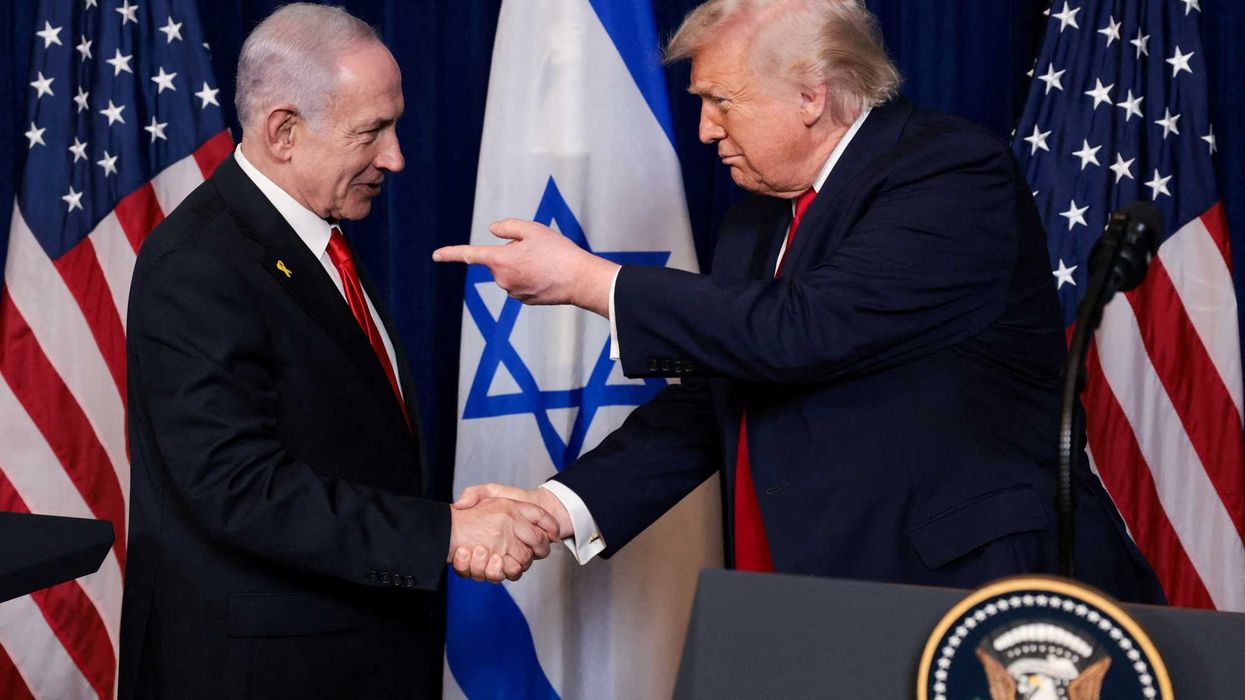
The core of the Journal’s criticism is that President Trump, instead of acknowledging these Iranian transgressions, has reportedly blamed Israeli Prime Minister Benjamin Netanyahu and pressured him into agreeing to a ceasefire in Lebanon.
The editorial quotes the assessment that “Lebanon and Israel suggested the deal is only partial.” It further details the understanding that “As long as Hezbollah doesn’t attack Israeli territory, Israel won’t attack the terrorists in Dahiyeh, Mr. Netanyahu said.” The Journal views this arrangement as a strategy for managing, rather than resolving, the conflict, confining it to southern Lebanon where both sides anticipate continued fighting.
While acknowledging that this status quo might currently be acceptable to Israel, allowing them to consolidate their gains and prepare for threats like fibre-optic drones, the Journal strongly criticises Iran’s strategic advantage. They argue that “Hezbollah’s capital again has been spared the consequences of the group’s own actions. Iran is winning its proxy a refuge. Anytime it wants, Iran could tell Hezbollah to stop shooting and end the war, which Israel has no desire to wage. Instead it encouraged Hezbollah’s fire, so it could cut off U.S. talks when Israel inevitably responded in force.”
The critique extends beyond the immediate conflict in Lebanon, with the Journal expressing concern that President Trump might adopt a similar appeasement strategy in his broader dealings with Iran.
Concerns Over Trump’s Iran Policy and the Rise of Anti-Israel Sentiment
The Wall Street Journal poses critical questions regarding President Trump’s approach: “If it fires on U.S. forces in the Strait or Gulf, will he still try to salvage the cease-fire? How about stepped-up attacks on Israel? How about claiming to quit negotiations? In each case, Mr. Trump has chosen to avoid escalation and keep talking. If he won’t send a different message, it will be difficult to get the regime to comply with a deal, no matter what it promises now.”
This criticism comes at a time when anti-Israel sentiment has seen a significant surge across both the Democratic and Republican parties following the October 7th terrorist attacks. Within the Republican base, this sentiment is particularly pronounced among far-right voters. Their motivations are varied, including:
- Opposition to alleged Israeli human rights violations: A segment of voters expresses strong disapproval of the Israeli government’s actions.
- Desire to limit foreign spending: A general inclination towards reducing the United States’ global financial commitments.
- Belief in anti-Semitic conspiracy theories: Adherence to unsubstantiated narratives about Jewish control of governments and global affairs.
- Anti-Semitic blaming of all Jews/Israelis: The harmful and prejudiced view that all Jewish people and/or Israelis are responsible for the actions of the Israeli government.
Understanding the Nuances of Criticism and Anti-Semitism
In light of the growing anti-Israel sentiment, historian Jonathan Sarna of Brandeis University offered insights into the complexities of the issue. He emphasised that criticising Israeli government policy does not inherently equate to anti-Semitism. However, he cautioned that the line can be easily crossed.
Sarna drew a historical parallel to “The Protocols of the Elders of Zion,” a notorious anti-Semitic forgery. He explained how this document propagated the idea of Jews being all-powerful and operating behind the scenes, ultimately holding responsibility for global events. This marked a significant shift from earlier centuries, when the prevailing view was that Jews were persecuted and powerless due to their role in the crucifixion of Christ.
“Before then, for centuries, the prevailing view was that Jews were persecuted and lowly because they had killed Christ, and that was what they deserved — they were powerless. That was their punishment. But ‘The Protocols’ flipped that,” Sarna stated.
He further elaborated on how this narrative has evolved in modern times: “especially as Jews in modernity have begun to succeed economically, it doesn’t much matter what the issue is — whether it is 9/11, which some blame on the Jews, or the crash of 2008, or now the war with Iran. You can predict before it happens that people will blame Jews, because as The Protocols taught people, it’s always the Jews. It’s the great conspiracy theory.” Sarna noted that many people internalise these beliefs without even having read the source material, much like understanding “evolution” without having read Darwin.
Sarna concluded by advocating for a clear distinction between legitimate criticism and hateful rhetoric: “I can be critical of President Trump without being un-American. Most people who criticize President Trump or the Republicans would assure you how much they love America and hold a fundamentally positive view of it. It seems to me that it’s deeply important for us to do the same with Israel — that is, to make clear that there is a huge difference between disliking the policies of the Prime Minister of Israel and hating Israel itself. If you wouldn’t equate criticism of the President with hating America, there is no reason — and indeed it is wrong and wicked — to do so with regard to Israel.”


