
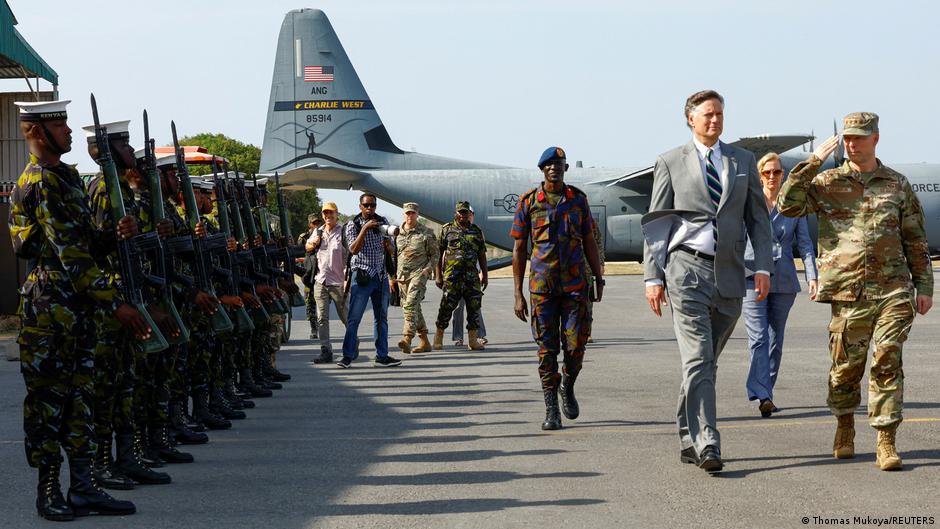
US Deputy Secretary’s African Tour Highlights Red Sea Strategic Importance
Deputy Secretary of State Christopher Landau’s recent diplomatic tour of Egypt, Ethiopia, Kenya, and Djibouti, spanning from January 24 to February 1, underscores a significant American focus on the strategic Red Sea corridor. While Washington officially frames the visit as an effort to strengthen bilateral ties and promote President Donald Trump’s agenda of rebalancing trade, ensuring a positive business environment, and promoting security and peace, the timing and itinerary have sparked considerable analysis regarding America’s deeper interests in the region.
Landau himself described the trip, his inaugural visit to the region, as “one of the great privileges” of his tenure, providing an opportunity for valuable exchanges with regional leaders. The strategic significance of the chosen destinations is evident: three of the four nations – Egypt, Kenya, and Djibouti – are actively involved in the US-led multinational naval force operating in the Red Sea, tasked with countering attacks by the Houthi movement.
This diplomatic engagement follows closely on the heels of a strong statement by Ambassador Tammy Bruce, the Deputy Representative of the US to the United Nations. Bruce unequivocally labeled the Houthis as a “terrorist organization” that, with backing from the Iranian regime, poses a persistent threat to regional stability and the crucial freedom of navigation in the Red Sea and its adjacent waterways.
Geopolitical Currents and the Red Sea Corridor
Some analysts interpret Landau’s tour as a component of a broader American strategy to assert dominance amidst intensifying global geopolitical competition. Charles Amo-Agyemang, a senior lecturer in Politics and International Relations at the University of Ghana, posits that the visit signals a US perception of East Africa and the Red Sea as a unified and interconnected strategic theatre. “The choice of these countries was not accidental,” Amo-Agyemang stated. “It was deliberate, strategic, and it was conscious.”
The Criticality of the Red Sea Region
The Red Sea region, a vast expanse stretching from the Suez Canal, through the vital Bab el-Mandeb Strait, and down to the Gulf of Aden, is a geopolitical and economic linchpin. It encompasses countries such as Egypt, Eritrea, Djibouti, Sudan, Saudi Arabia, and Yemen. This area, approximately 438,000 square kilometers (272,200 square miles), borders some of the world’s most volatile regions, including the Horn of Africa, the Arabian Peninsula, and the western edge of the Indo-Pacific.
According to the International Maritime Organization, the waters of the Red Sea are “one of the most critical maritime routes enabling global trade, and present immense opportunities for development and prosperity in the region.” Despite its pivotal role in international commerce, the region is unfortunately beset by escalating instability, ongoing conflicts, piracy, and transnational organized crime – challenges that the United States has pledged to address.
Timing and Strategic Imperatives
General Dagvin Anderson, Commander of US Africa Command (AFRICOM), emphasized that Landau’s visit demonstrates America’s commitment to assisting in the resolution of threats within the Red Sea region. “There are threats that we share here in the Horn [of Africa],” Anderson commented, noting the presence of groups like al-Shabaab and ISIS, and the “coordination across the Red Sea with the Houthis trying to destabilize the region.” Anderson accompanied Landau during parts of his visit, reinforcing the military and security dimensions of the US engagement.
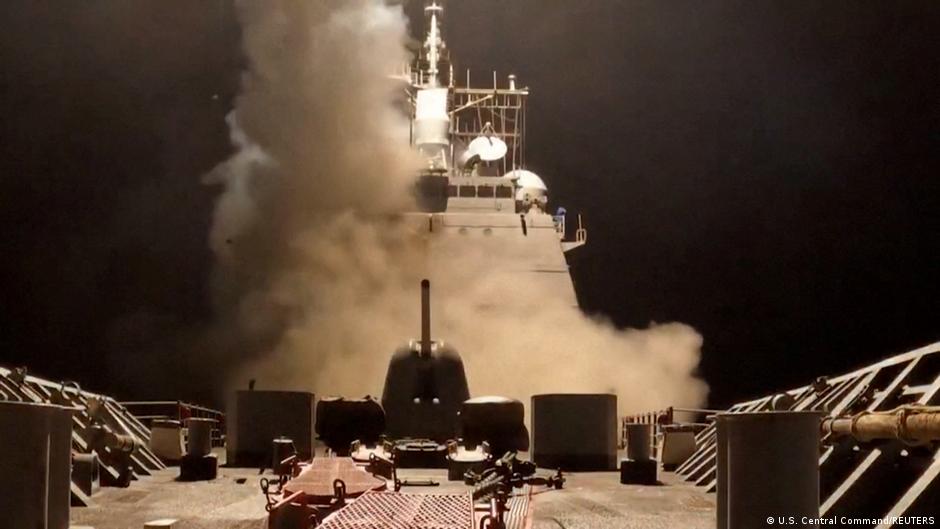
However, other perspectives suggest that the timing of the trip is intrinsically linked to evolving global power dynamics. Etse Sikanku, Dean of the School of Journalism and Media Studies at Ghana’s University of Media, Arts and Communication, believes the visit reflects a recognition within the US of a potential erosion of its influence on the African continent. “There is that recognition that the US is losing its hold within the continent and there is a certain eagerness to make sure that they can reinsert themselves into the global relationship as far as Africa is concerned,” Sikanku explained.
From Amo-Agyemang’s viewpoint, Africa finds itself positioned between two major global powers. “The US intends to maintain a strategic foothold despite China’s expanding presence,” he observed, highlighting the significant interest in such great power rivalries within the realm of international relations. He cautioned, however, “But importantly, we must be careful not to use Africa as a launching pad for great power competition.”
The African Union (AU) advocates for a strategic partnership between Africa and the US, founded on principles of “mutual respect, shared interests and a common commitment to peace, stability, and prosperity.” Nevertheless, experts remain divided on whether the continent will ultimately reap substantial benefits from this renewed American focus. Sikanku advises that African nations should critically reassess their relationships with the United States, seeking to establish terms that are mutually beneficial and advance the continent’s own interests.


