
The Trump Administration’s Temporary Oil Sanctions Relief
The Trump administration has announced a temporary lifting of longstanding sanctions that have prohibited the “sale, delivery, or offloading of crude oil or petroleum products of Iranian origin” for the next month. This move aims to address the sharp rise in global oil prices, which have been affecting economies worldwide since the U.S.-Israeli conflict with Iran escalated last month.
A “General License” issued by the Treasury Department’s Office of Foreign Assets Control on Friday allows the purchase of Iranian oil that is already loaded onto any vessel, including those that have previously been sanctioned. This decision effectively waives 10 separate sets of sanctions targeting both Russian and Iranian oil. These sanctions have been in place for years, many dating back to Trump’s first term.
The sanctions were initially imposed to penalize Russia for its unprovoked 2022 invasion of Ukraine and other harmful foreign activities, as well as to hold Iran accountable for years of malign behavior, human rights violations, support for terrorism, and pursuit of weapons of mass destruction.
By temporarily suspending these sanctions, the U.S. will allow Iranian and Russian oil currently at sea to be purchased and unloaded without penalty until April 19. After this date, the sanctions will resume unless the Treasury extends the waiver.
Treasury Secretary Scott Bessent defended the decision in a post on X, describing it as a “narrowly tailored, short-term authorization” applicable only to Iranian petroleum that is “currently stranded at sea.” He claimed that China has been able to “hoard” Iranian oil “on the cheap,” and that relaxing the sanctions would inject approximately 140 million barrels into global markets. This, he argued, would help expand the amount of worldwide energy and relieve what he called “temporary pressures on supply caused by Iran.”
“In essence, we will be using the Iranian barrels against Tehran to keep the price down as we continue Operation Epic Fury,” Bessent said.
Bessent emphasized that the “temporary, short-term authorization” permitted by his department was limited to “oil that is already in transit” and would not apply to any new production. He also noted that Tehran would not easily benefit from the sanctions relief due to separate longstanding sanctions that cut off Iranian banks from the global financial system as part of the Trump administration’s “maximum pressure” campaign against the country’s Islamic Republic regime.
The announcement comes amid days of turmoil in world markets, driven by escalating attacks on energy facilities across the Middle East. The price of Brent crude climbed as high as $119 per barrel, while European gas prices briefly surged by 35% on Friday after Iran targeted Qatar’s Ras Laffan energy hub and other Middle Eastern oil and gas infrastructure with missiles.
Iran’s attacks on Qatar followed an Israeli strike on the South Pars gas field, which drew condemnation from Gulf states and Tehran. In response, Iranian forces launched missiles at multiple energy sites across the Gulf, including a Saudi oil refinery, Qatari gas facilities, and two more oil refineries in Kuwait.
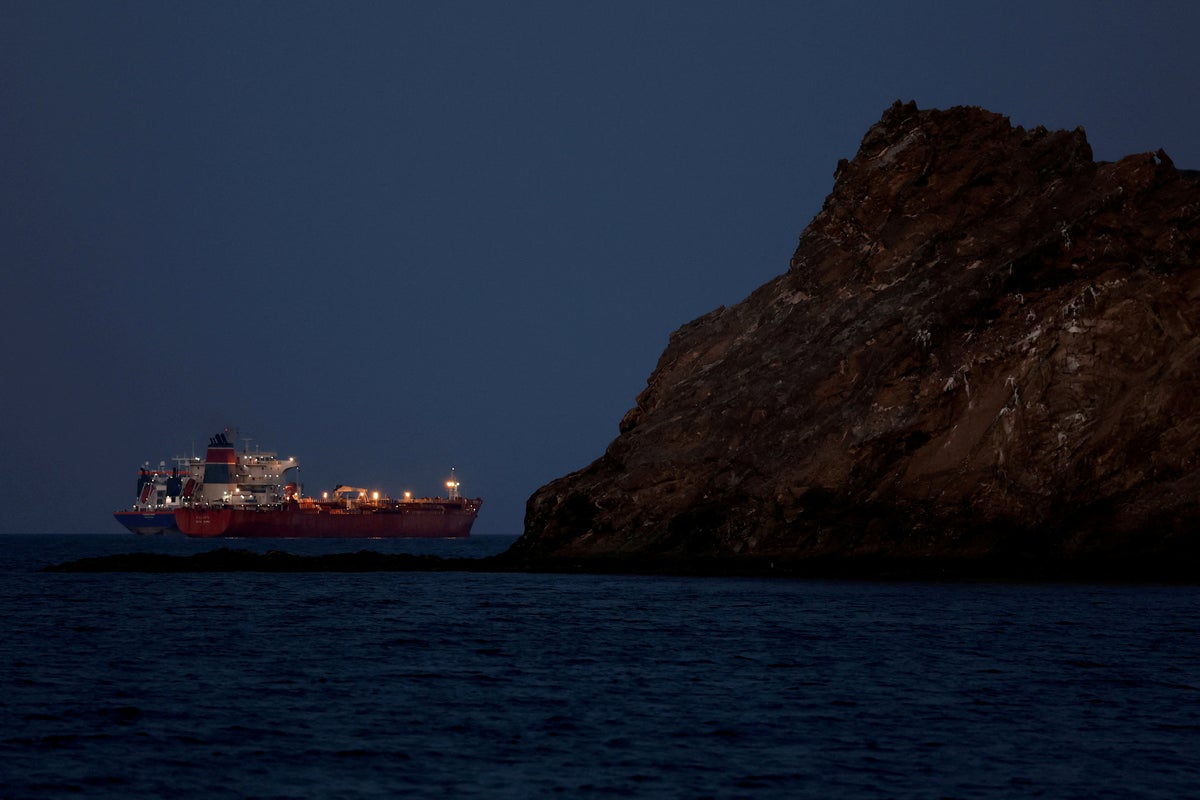
These attacks have prompted major producers across the Middle East to cut production and shut down facilities to reduce vulnerability to potential catastrophic strikes that could take years to recover from. Supply squeezes have been further exacerbated by Iran’s effective closure of the Strait of Hormuz, a critical choke point through which one fifth of the global oil supply passes annually.
President Donald Trump has spent much of the past week criticizing NATO member states and other American allies for not offering their naval forces to protect tanker traffic from Iranian threats. Despite claiming that the U.S. has “obliterated” much of Tehran’s capabilities, he has repeatedly expressed frustration over the lack of support.
“Now that fight is Militarily WON, with very little danger for them, they complain about the high oil prices they are forced to pay, but don’t want to help open the Strait of Hormuz, a simple military maneuver that is the single reason for the high oil prices. So easy for them to do, with so little risk,” he said.
Later, while en route to Florida aboard Air Force One, he posted that the U.S. was “getting very close to meeting our objectives” after three weeks of war and suggested considering “winding down” the bombing campaign. He also claimed that the U.S. does not need to commit resources to reopen the Strait of Hormuz, stating that the U.S. is a net exporter of oil despite the global nature of oil markets.
“The Hormuz Strait will have to be guarded and policed, as necessary, by other Nations who use it — The United States does not! If asked, we will help these Countries in their Hormuz efforts, but it shouldn’t be necessary once Iran’s threat is eradicated,” he said.
Despite his remarks about potentially winding down the war, Trump is currently considering the deployment of thousands of additional troops to the Middle East. At the same time, the Pentagon is seeking an additional $200 billion to fund the offensive. The request was recently sent to the White House, according to a senior administration official. The first six days of the war alone cost over $11.3 billion, as reported by the Pentagon to Congress in a closed-door briefing on March 10.


