


The Evolving Landscape of German Churches: From Sacred Spaces to New Purposes
Germany is witnessing a significant shift in its religious landscape, marked by a steady decline in practicing Christians. This demographic trend has led to a surplus of church buildings, prompting a profound reevaluation of their future. As congregations shrink, once vibrant houses of worship are being deconsecrated and repurposed, sparking emotional responses and a search for new identities.
The Final Service and the Emptying Altar
In the small Catholic church of St. Anna, located in Gildehaus, a district near the German-Dutch border, the final service is underway. Despite the solemn occasion, the church is nearly full, with a choir filling the air with song, accompanied by a small organ. However, this is the last mass to be held within these walls. The building, a sanctuary for generations, will no longer serve its sacred purpose.
As the service concludes, the reality of the church’s closure becomes palpable. Members of the congregation reverently approach the altar, carefully removing the relics. These are sacred fragments, often bone or textile, that are integral to the consecration of a Catholic church. Their removal signifies the formal desacralization of the space, a deeply emotional act for those who have worshipped there.
Catholic pastor Hubertus Goldbeck, his voice thick with emotion, describes the experience as affecting “the heart and the eyes. It’s moving.” His sentiment echoes the feelings of many devout Christians across Germany who are grappling with the loss of their church buildings. The shrinking of congregations inevitably leads to the relinquishing of these significant structures.
A Nation’s Shifting Faith: Declining Membership and Surplus Buildings
The decline in church membership in Germany is a stark reality. In 2024 alone, the two major Christian denominations, the Protestant Church in Germany and the Catholic Church, collectively lost over a million members, a figure attributed to both individuals leaving the church and natural mortality. While over 45% of Germans still identify with one of these denominations, this represents a significant decrease from nearly 69% just three decades ago.
This demographic shift has resulted in a growing number of churches being deconsecrated or desacralized. Between 2000 and 2024, the German Bishops’ Conference reported the closure and decommissioning of 611 Catholic churches. The Protestant Church estimates a similar trend, with approximately 300 to 350 churches permanently shut during the same period, though precise figures are not readily available.
From Sacred to Secular: The Diverse Fates of Deconsecrated Churches
The question of what becomes of these former houses of worship is multifaceted. In some instances, particularly in bustling cities like Berlin, growing Orthodox Christian congregations have found new homes in these vacant buildings. However, this remains an exception rather than the rule. More commonly, these properties are placed on the market. Several large church buildings in the German capital are currently listed for sale, and in some cases, churches are even demolished.
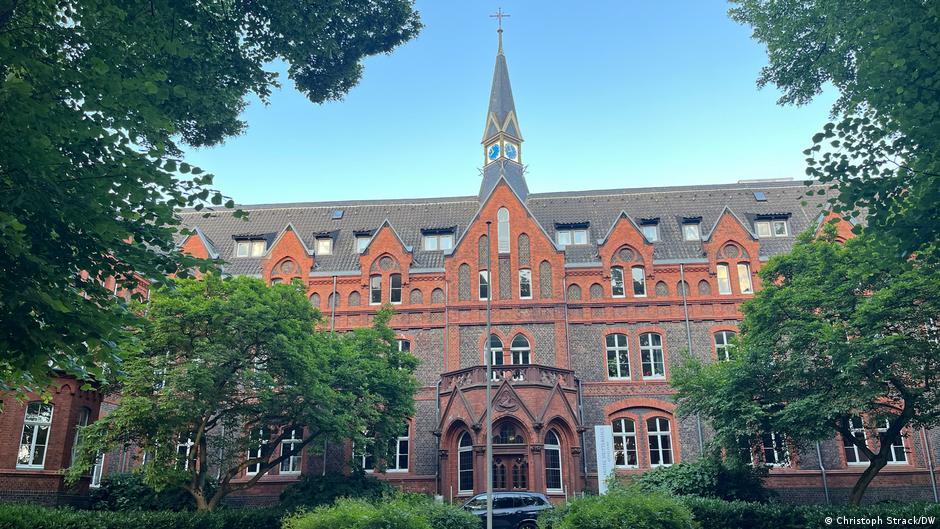
A significant trend is the repurposing of these structures for secular use. In Jülich, a town situated between Cologne and Aachen, the former Catholic St. Rochus Church has been transformed into a thriving bicycle shop. Thomas Oellers, the proprietor of Toms Bike Center, recounts how the parish approached him with the proposition. Oellers, who was baptized and received his first communion in that very church, now operates his business within its historic walls. Externally, the building, a listed monument, remains largely unchanged.
In Wettringen, north of Münster, an abbey has been reimagined as a “soccer church,” a space for sporting activities. Similarly, in Kleve, the former Protestant Church of the Resurrection now serves as a boxing arena. The adaptability of these buildings is remarkable, with former churches also housing pubs, libraries, and bookstores. Some cloisters have even been converted into hotel complexes. In Düsseldorf, a hotel proudly retains the name “Mutterhaus” (Mother House), a poignant nod to its original function as a convent for nuns.
Addressing Housing Shortages: Churches as Homes
With growing housing shortages in many German cities, architects are increasingly finding innovative solutions by converting church buildings into residential spaces. Cities like Berlin, Rostock, Trier, Cologne, and Wuppertal have seen such transformations.
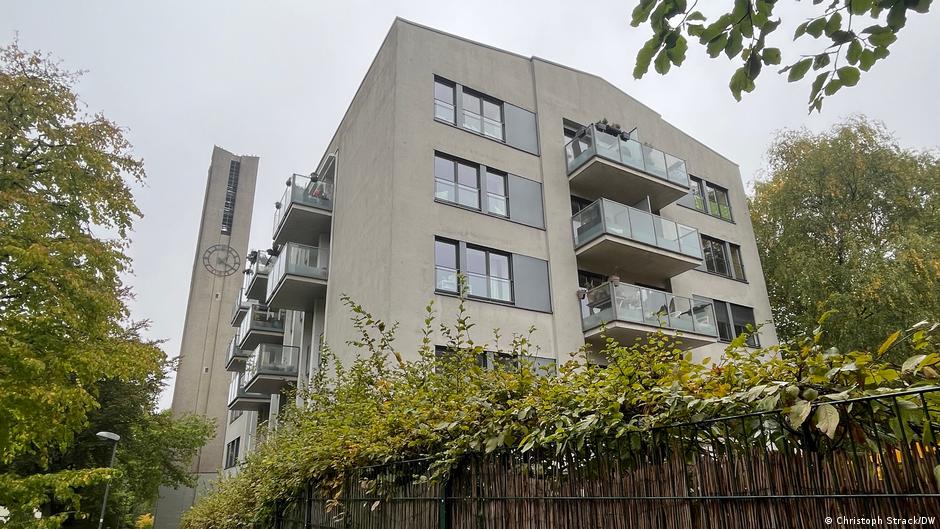
One of the earliest significant examples is the Lukas-K-Haus in Essen. The Protestant St. Luke’s Church, originally built in 1961, was deconsecrated in 2008 and subsequently converted into apartments between 2012 and 2013. Plaques commemorating its past hang at the base of the stairwell, while the original, abstractly colored church windows have been preserved.
Alexandra Schröder, a resident of the former church, reflects on the unique experience of living “above an altar.” For her family, the practicalities of the spacious apartment and its proximity to good schools were the primary motivators.
On a floor below, a physiotherapy practice thrives. Director Jessica Günther discovered the converted church building serendipitously while seeking new premises. She notes the building’s “nice, calm feeling” that contributes to a conducive work environment. While aware of the historical significance of the steps leading to the former altar, she emphasizes the practical benefits of the space.
One of her patients, Stefan Hebenstreit, a practicing Christian who has experienced several strokes, views these conversions positively. He sees the repurposing of these buildings for services like daycare centers or physiotherapy practices as a “very practical” expression of faith, focused on “helping people in need.”
Echoes of the Past: The Missing Chimes and Community Spaces
However, not all perspectives are universally positive. Some long-time residents of the streets surrounding St. Luke’s express a sense of loss, particularly missing the familiar sound of the church bells and the stopped clocks on the tower, which once marked the passage of time for the community.
The major churches have established official commissions and guidelines for the repurposing of church buildings, and researchers are actively engaged in studying this phenomenon. Nevertheless, the specific needs and character of the local neighborhood often play a pivotal role in determining the success of these conversions.
Art historian Klaus-Martin Bresgott, from the cultural office of the Protestant Church in Germany, along with a group of architecture students, has investigated the significance of former church premises for neighborhoods and residential areas. Their research has included the example of a large church in Berlin.
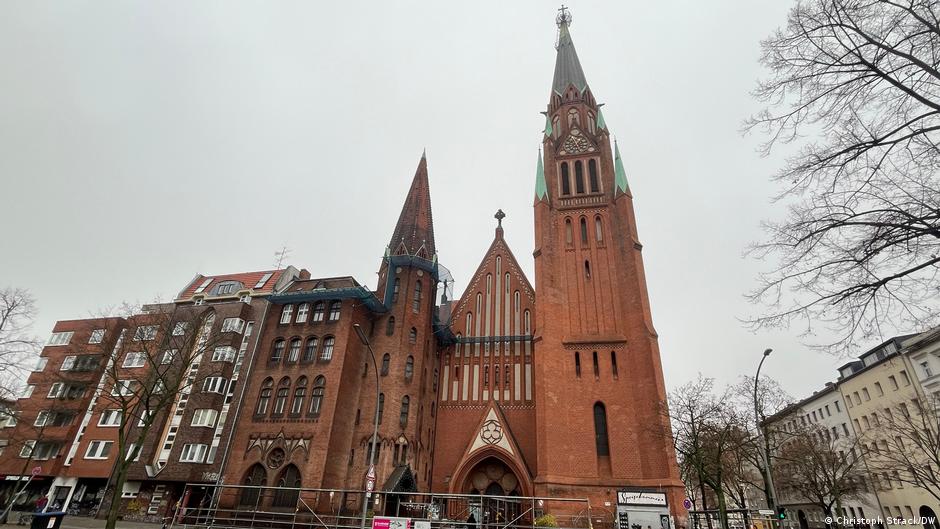
The Protestant St. Stephen’s Church (Stephanuskirche) in the Wedding district of Berlin, built between 1902 and 1904, was deemed too large even at the time of its construction. Today, the church is closed and in such a state of disrepair that public access is no longer permitted, even with protective gear.
Bresgott and his students prioritized community engagement, interviewing residents of the neighborhood, which is known for its social challenges. Their findings highlighted a significant lack of public spaces for gathering, recreation, and cultural activities within the area.
Bresgott emphasizes that the perceived importance of churches can shift over time. He points to historical examples, such as churches being used as horse stables during the Napoleonic Wars, noting that they “remained standing.” He views St. Stephen’s Church as a prime illustration of how an initially oversized structure can still serve society. “We must not immediately panic and say: close down, give up,” he cautions, advocating for thoughtful consideration rather than hasty decisions.