Hong Kong Property Market Shows Strong Signs of Recovery with Consecutive Sell-Outs
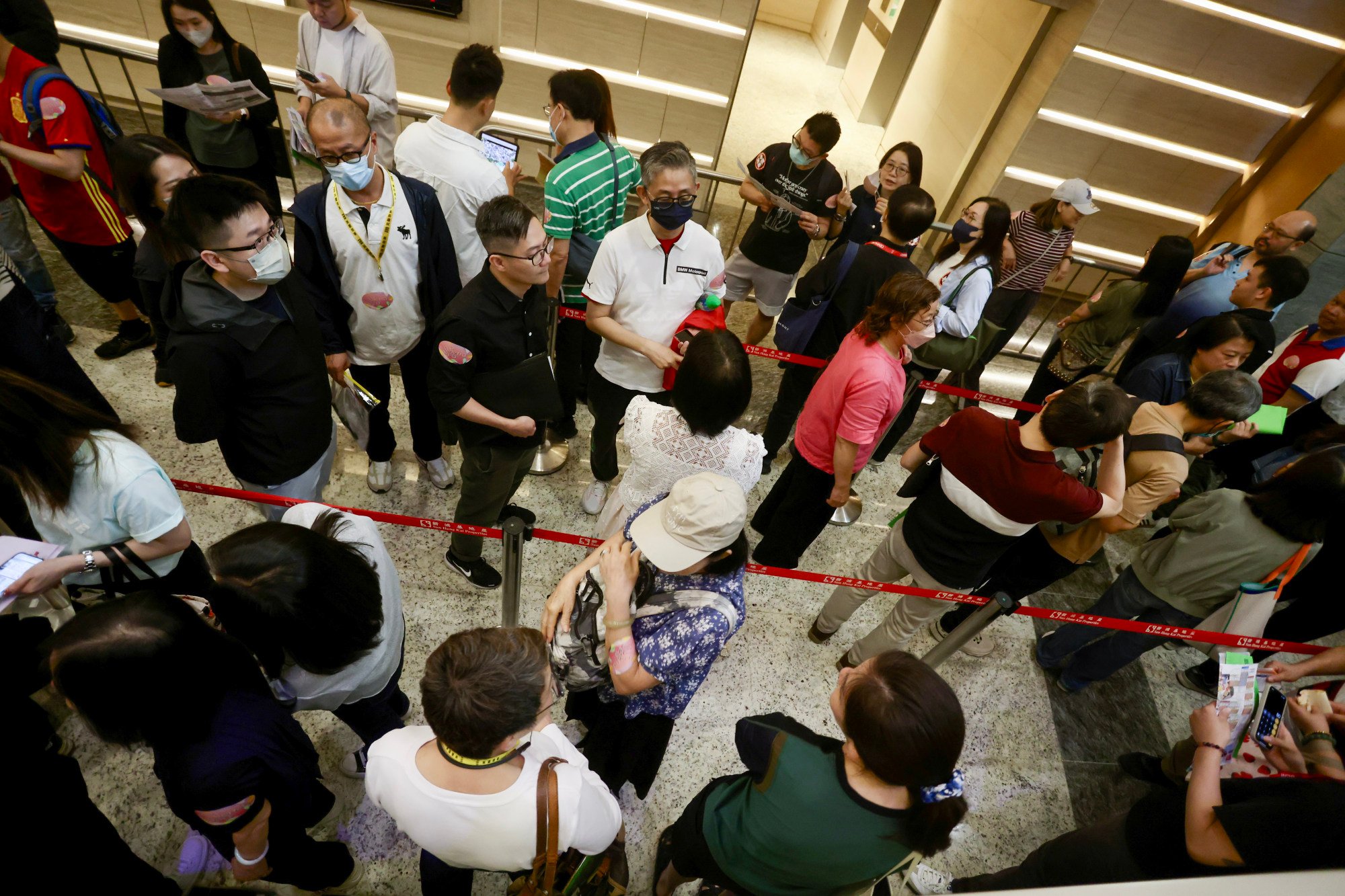
Hong Kong’s notoriously expensive property market is demonstrating a robust resurgence, with Sun Hung Kai Properties (SHKP), the city’s largest developer by market capitalisation, achieving a remarkable fifth consecutive sell-out at its Sierra Sea development. This latest success, where all 350 units released on Sunday were snapped up, underscores a significant return of buyer confidence.
The recently concluded sale involved 244 two-bedroom and 106 three-bedroom apartments within phase 2B of the Sierra Sea project. Prices, after discounts, ranged from HK$4.6 million (approximately US$590,000) to HK$9.74 million. The average discounted price per square foot stood at HK$12,469.
This achievement follows a series of successful sales earlier in the year. In January, phase 2A of the development witnessed four sell-out events: 213 flats were sold on January 10, followed by 229 units on January 17, and another 218 homes on January 21. The momentum continued into phase 2B, which opened its sales on January 28, with all 165 units on the price list being sold in approximately four hours.
Sierra Sea, situated at Shap Sze Heung—a location nestled between the popular districts of Sai Kung and Ma On Shan—represents Hong Kong’s most substantial housing project since 1999. The development boasts an impressive array of amenities designed to appeal to a wide range of residents. These include three themed clubhouses offering a total of 168 facilities, encompassing water play areas, extensive indoor and outdoor sports facilities, dedicated cycling trails, and themed cabins, as detailed by Centaline Property. To date, more than a fifth of the 9,700 units available in the development have already found buyers.
Analysts Forecast Continued Price Appreciation
The strong performance of the Sierra Sea development is seen as a bellwether for the broader Hong Kong property market, which has been navigating multi-year downturns. Recent data from the Rating and Valuation Department indicates a positive shift, with lived-in home prices experiencing a 3.25 per cent increase in 2025. Furthermore, rental prices reached a record high in December of the same year, signalling a strengthening rental market.
Market analysts are optimistic about the future trajectory of Hong Kong’s property sector. Morgan Stanley has notably upgraded its rating for the city’s property market to “attractive.” The investment bank is forecasting a significant rise in home prices, projecting an approximate 10 per cent increase in 2026. This rebound is widely interpreted as the commencement of a new upcycle in the property market.
Similarly, Citi has revised its forecast upwards, now anticipating an 8 per cent growth in home prices this year. This adjustment is attributed to a faster-than-anticipated market rebound, with Citi noting that home sales are likely to surpass new completions for the first time in recent history.
Property Giants Report Stable Profits Amidst Recovery
The ongoing recovery has also translated into stable profit figures for some of Hong Kong’s major property developers. Sun Hung Kai Properties (SHKP) reported an underlying profit of HK$21.86 billion for the financial year concluding in June 2025. This represents a modest increase of 0.5 per cent, as disclosed in an exchange filing.
Hang Lung Properties, which announced its 2025 annual results, posted an underlying net profit of HK$3.2 billion. This figure marks a 3 per cent improvement compared to the previous year. Adriel Chan, the chair of Hang Lung Group and Hang Lung Properties, described the past year as “a year of turnaround and progress for Hang Lung, returning to growth in the second half, while navigating the challenging economic backdrop.”
Factors Driving the Market Rebound
Several key factors are contributing to the uplift in Hong Kong’s residential market. Alvin Leung, senior director of valuation and advisory services at Colliers, highlighted the impact of recent interest rate cuts, which have made property more accessible. Additionally, gains in the local stock market have bolstered the wealth effect, encouraging consumer spending and investment. The influx of talent through various government schemes and an increase in non-local students have also contributed to a rise in demand for housing.
Despite a notable 20 per cent decline in prices over the past five years, Hong Kong continues to hold its position as the world’s most expensive city for homeownership, according to the June 2025 “Mapping the World’s Prices” report by Deutsche Bank Research Institute. The current market trends suggest that this premium may persist, even as prices begin their upward ascent.