Unlocking the Secrets of Roman Concrete: A Pompeii Discovery Rewrites Engineering History
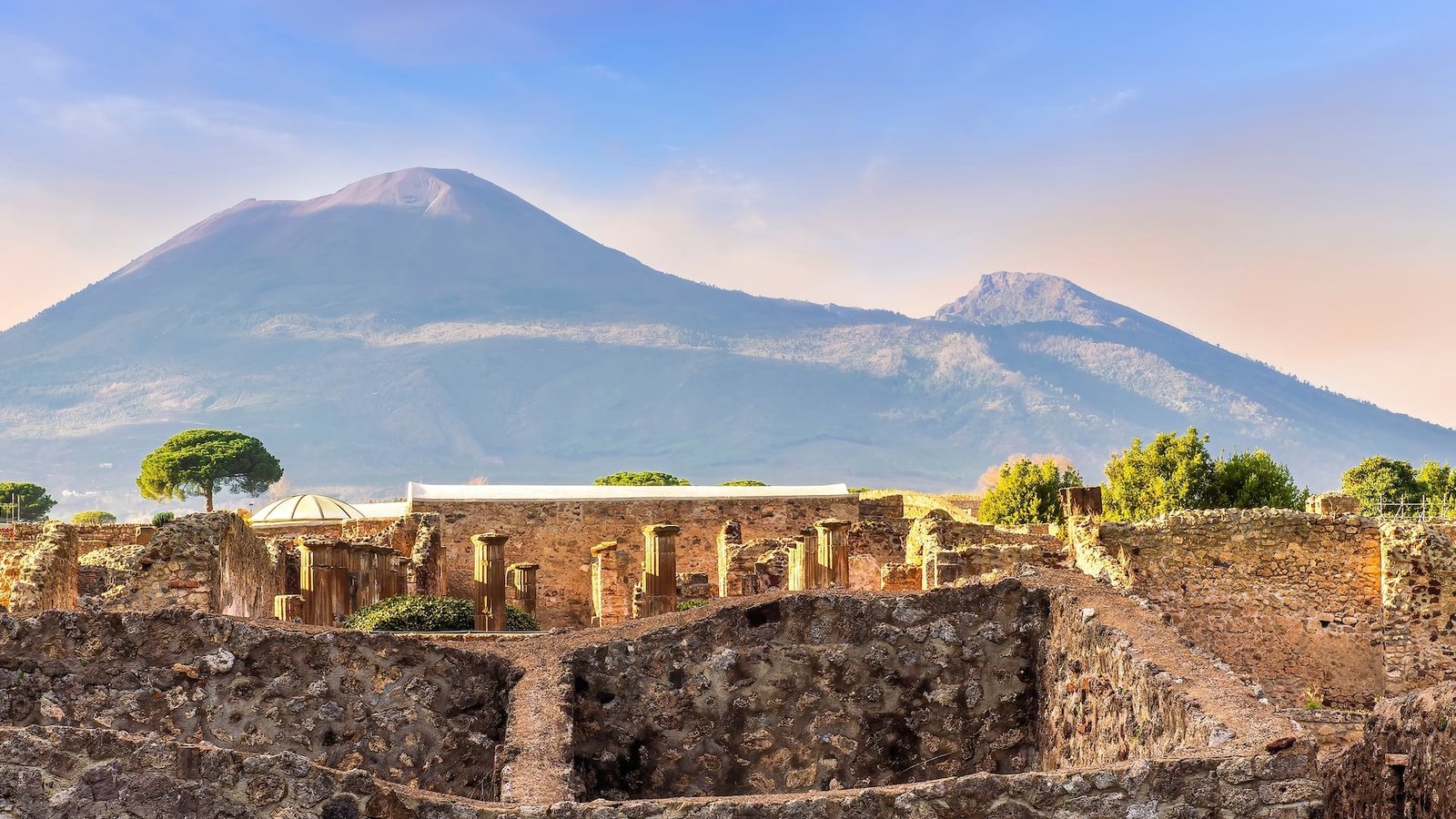
Nearly two millennia ago, the catastrophic eruption of Mount Vesuvius in AD 79 did more than just bury cities; it preserved a window into Roman ingenuity. In Pompeii, an ancient construction site, frozen in time by volcanic ash, has yielded a groundbreaking revelation: the long-sought secret behind the exceptional durability of Roman concrete. Researchers from the Massachusetts Institute of Technology (MIT) have, through meticulous study of this remarkably preserved site, deciphered a revolutionary method of concrete production that surpasses traditional understanding.
The archaeological discovery in Pompeii offers an unprecedented glimpse into Roman construction practices. At the site, a scene of arrested development unfolded before the researchers: piles of raw materials, partially constructed blocks, others already coated in a protective layer, and sections awaiting repair. Lead researcher Admir Masic described the feeling as akin to “interrupting Roman workers in the middle of their tasks.” This extraordinary state of preservation allowed for a step-by-step reconstruction of how Roman concrete was made, revealing a process that deviates significantly from the documented methods of the era.
A Construction Site Frozen in Time in Pompeii
A Revolutionary “Hot Mixing” Technique
Contrary to the traditional recipe attributed to the Roman architect Vitruvius, which involves slaking lime with water to create a paste, the Pompeii site revealed a different approach. The Romans employed a technique that involved mixing quicklime with volcanic ash in a dry state. This method, now termed “hot mixing,” initiated a potent thermal reaction.
This exothermic process was key to the concrete’s legendary longevity. During the hot mixing, fragments of unhydrated lime were effectively trapped within the concrete matrix. These lime clasts, when exposed to water over time, would break down and react, actively contributing to the concrete’s self-healing and strengthening capabilities. This dynamic process is a stark contrast to modern concrete, which tends to degrade over time.
The Volcanic Ash Advantage: Nature’s Reinforcement
The specific properties of the volcanic ash used were equally critical to the concrete’s resilience. The study focused on the role of pumice, a lightweight volcanic rock, and its interaction with the concrete over centuries. Researchers discovered that these fine volcanic particles underwent a slow reaction with water within the concrete’s pores.
This gradual reaction led to the formation of new, interlocking mineral structures, essentially a natural cementitious binder. Instead of deteriorating with age and exposure to the elements, the Roman concrete structures actually grew stronger over time. This inherent ability to self-repair and strengthen allowed these ancient edifices to withstand the ravages of earthquakes, the corrosive effects of seawater, and the relentless passage of centuries, a testament to a sophisticated understanding of material science.
Implications for Modern Sustainable Construction
The implications of these findings extend far beyond archaeological fascination. The research offers a compelling blueprint for developing more sustainable and durable construction materials for the future. Admir Masic and his team are eager to harness these ancient, natural mechanisms to design modern materials that can emulate the longevity of Roman concrete.
The potential to create construction materials that actively strengthen over time, rather than degrade, could revolutionize the building industry. This could lead to:
- Extended Infrastructure Lifespans: Reducing the need for frequent repairs and replacements of roads, bridges, and buildings.
- Reduced Environmental Impact: By using more durable materials, the lifecycle environmental cost of construction could be significantly lowered.
- Enhanced Resilience: Buildings and infrastructure could be better equipped to withstand natural disasters and the impacts of climate change.
The discovery at Pompeii is not merely a historical footnote; it represents a paradigm shift in our understanding of ancient engineering and offers a vital pathway towards a more sustainable and resilient built environment for generations to come. The lessons learned from the ashes of Vesuvius are poised to reshape the future of construction.