
Cosmic Nurseries: Supermassive Black Holes Could Be Breeding Grounds for Millions of Planets
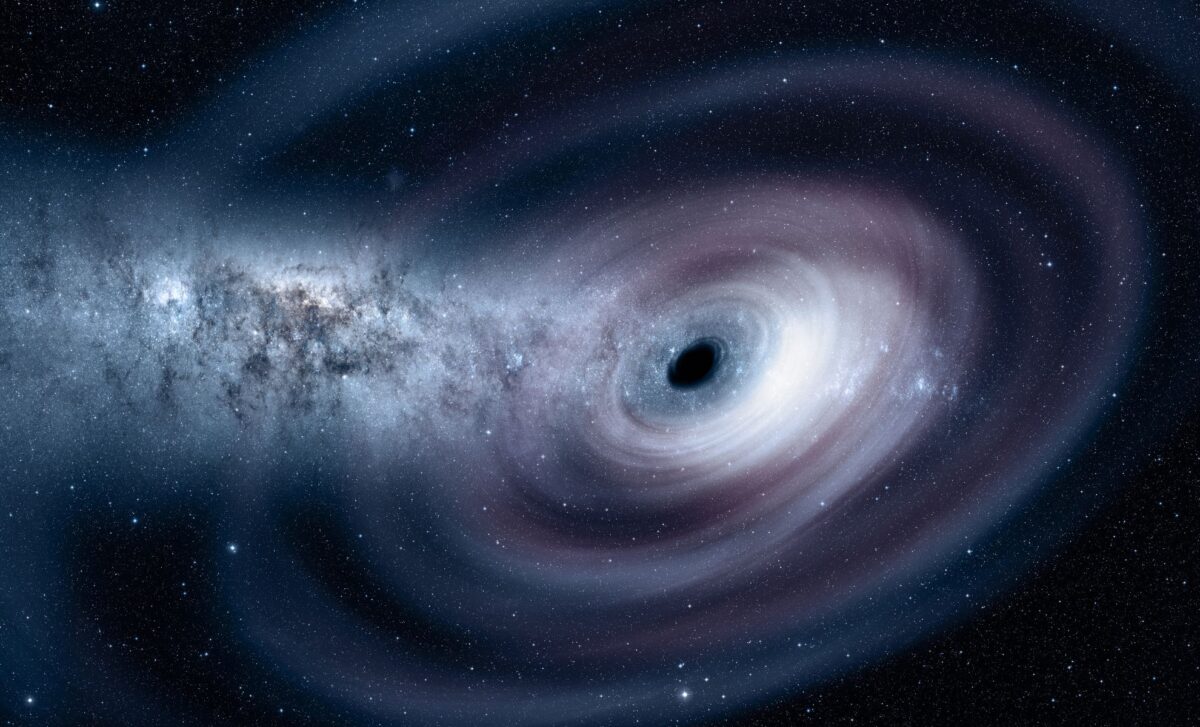
For decades, our understanding of planet formation has been firmly rooted in the swirling disks of gas and dust surrounding young stars. However, groundbreaking research is now suggesting a radical new idea: the dusty environments around active supermassive black holes, previously thought of as cosmic destroyers, might actually be some of the most prolific planet-forming regions in the universe. Computer modelling indicates these alien landscapes could host millions, if not billions, of planets, potentially dwarfing the planetary populations we know.
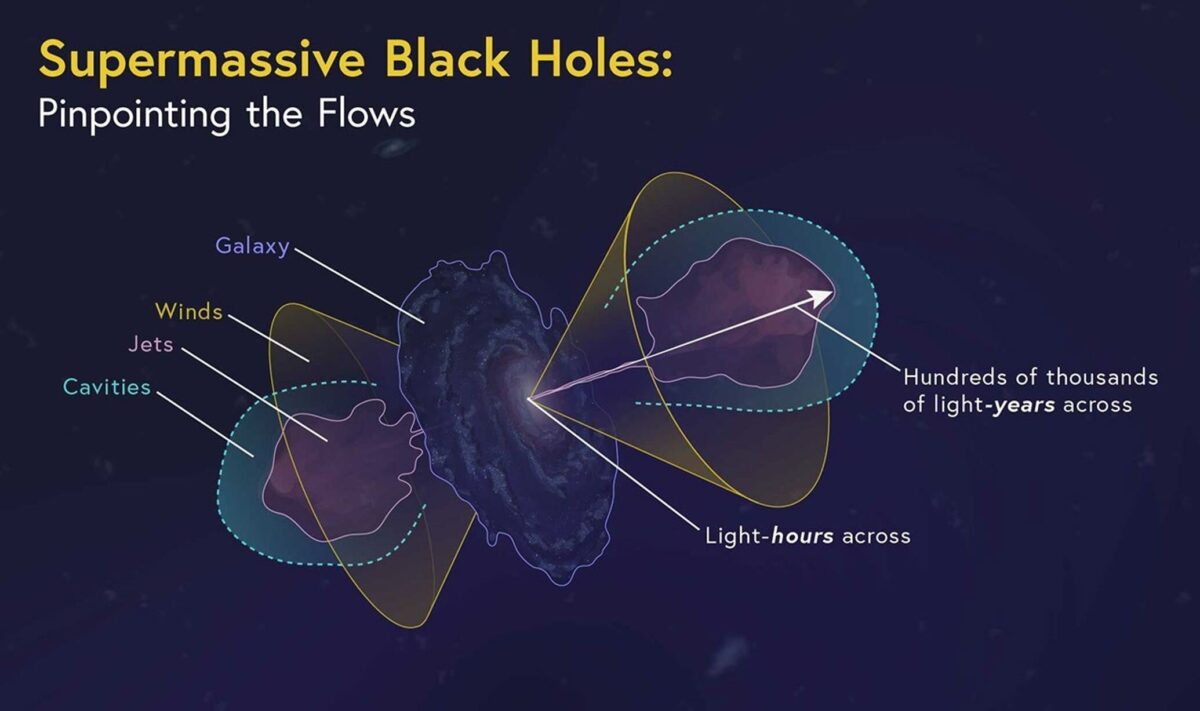
This fascinating proposition challenges the traditional view of supermassive black holes, colossal entities residing at the heart of most large galaxies. When these black holes are actively feeding, drawing in vast quantities of gas and dust, they create phenomena known as active galactic nuclei (AGNs). While AGNs are renowned for their immense energy output and destructive power, this new study posits that the outer reaches of their swirling accretion disks might offer a surprisingly hospitable environment for celestial bodies to coalesce and grow.
An Unlikely Cradle for Cosmic Worlds
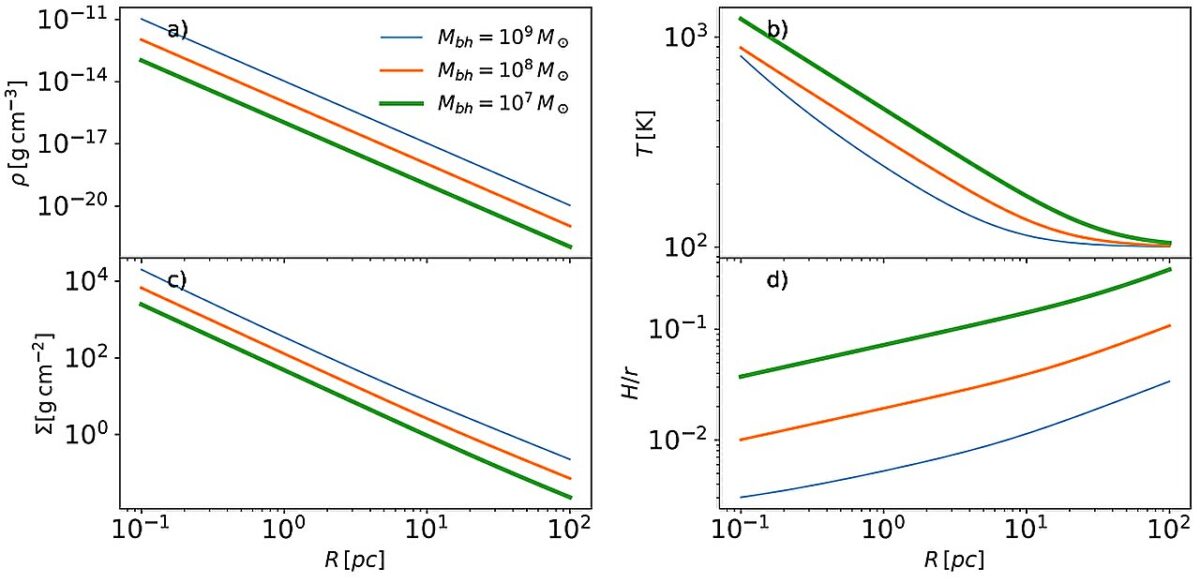
The focus of this innovative research is the outer perimeter of these AGN disks, a region known as the dust torus. The researchers highlight that the physical conditions and temperatures found here bear a striking resemblance to the protoplanetary disks surrounding nascent stars, where planet formation is a well-established process. This unexpected similarity is what prompted the investigation into whether dust within these tori could persist long enough to initiate the complex choreography of planetary growth.
The core principle behind planet formation involves dust grains colliding and adhering to one another, gradually building up into larger and larger structures. The critical question for this new theory was whether the dust in AGN tori could survive the extreme conditions and avoid being immediately consumed or dispersed by the black hole’s immense gravitational pull.
To explore this possibility, a team led by Barry McKernan from the City University of New York developed a sophisticated computer model. This simulation meticulously recreated a magnetized black hole disk, incorporating crucial data on the temperatures and the types of gases present in the outer fringes of an AGN.
A Recipe for Rapid and Massive Planet Growth
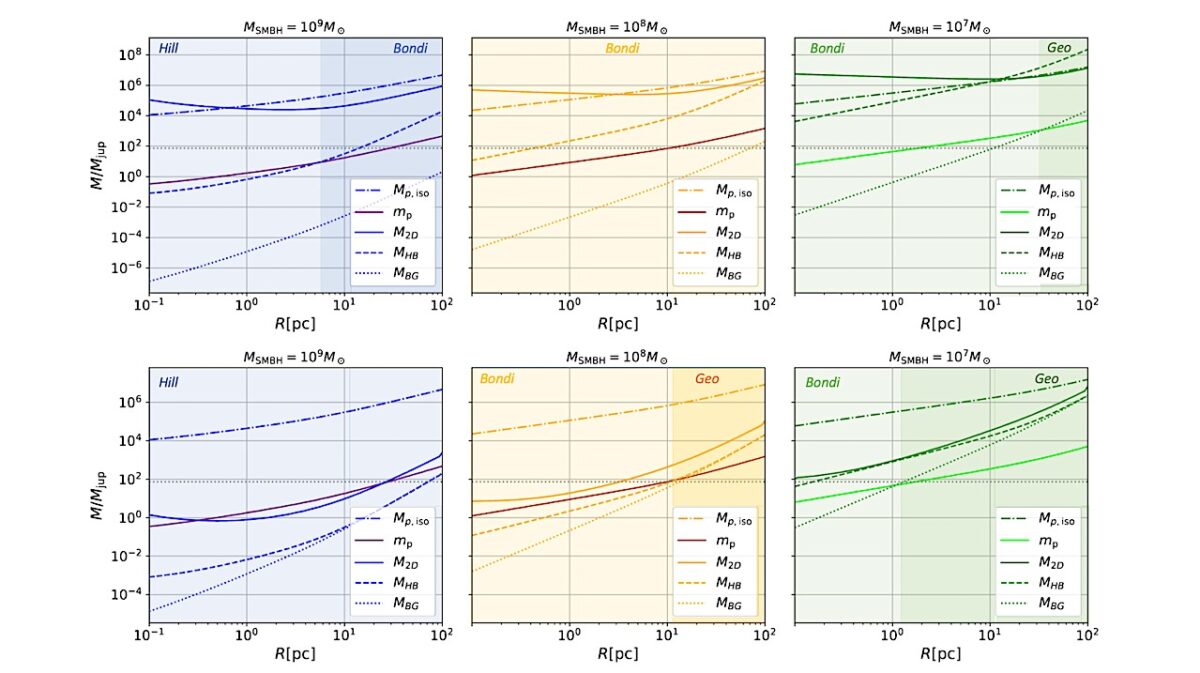
The researchers then meticulously calculated several key factors vital for planetary development. This included assessing the rate at which dust particles could clump together and the likely sizes of the resulting celestial objects. The outcomes of these calculations were compelling: the model strongly suggests that planets can indeed form within these dusty, turbulent structures encircling active supermassive black holes.
Beyond simply forming, the study also delved into the subsequent stages of planetary development in these unique environments. The team estimated how much additional gas and dust these nascent planets could accumulate over millions of years.
Their findings indicate a potential for significantly accelerated planet growth compared to those forming around ordinary stars. The dense concentrations of matter found in AGN tori, coupled with the powerful gravitational forces at play, could provide an exceptionally rich reservoir for planets to continue their expansion. The paper suggests that some of these worlds could grow to be considerably larger than Earth, potentially even surpassing the colossal size of Jupiter.
The sheer scale of this proposed process is one of the study’s most astonishing takeaways. The authors explicitly state that their “approximate model suggests that AGN dust tori host the largest populations of planets in the universe.” This assertion underscores the central conclusion: if this theoretical mechanism holds true, active galactic nuclei could be simultaneously nurturing an enormous number of planets within their dusty outer regions.
From Planetesimals to Stellar Giants: A Continuum of Formation
The research doesn’t stop at the formation of planets. It also proposes a fascinating evolutionary pathway that could extend beyond planetary bodies. The study suggests that some of these accumulating objects might continue to accrete material until they reach stellar masses.
As the paper explains, “vigorous accretion can occur, leading to objects with stellar masses—defining a core accretion channel for star formation.” In this scenario, celestial bodies that begin their existence through planet-like accretion could, given sufficient mass accumulation, ultimately transform into stars themselves. This presents a novel perspective on star formation, potentially operating in tandem with planet formation in these extreme environments.
Furthermore, the team predicts the possible existence of unusual, massive objects composed primarily of dust. These would represent a distinct class of celestial bodies, differing significantly from the planets we currently observe around stars and offering a tantalising glimpse into the diversity of cosmic objects that might exist.
While the theoretical framework is robust and the modelling compelling, it’s crucial to acknowledge that this groundbreaking idea is currently awaiting observational confirmation. As noted by Bhupendra Mishra and his colleagues, direct evidence will be paramount in definitively establishing whether AGN dust tori truly serve as cosmic nurseries for the universe’s most abundant planetary populations. The search for these distant, potentially planet-filled environments is now a key frontier in astronomical research.