Millions of Australians Set for Wage Boost as Minimum Wage Decision Announced
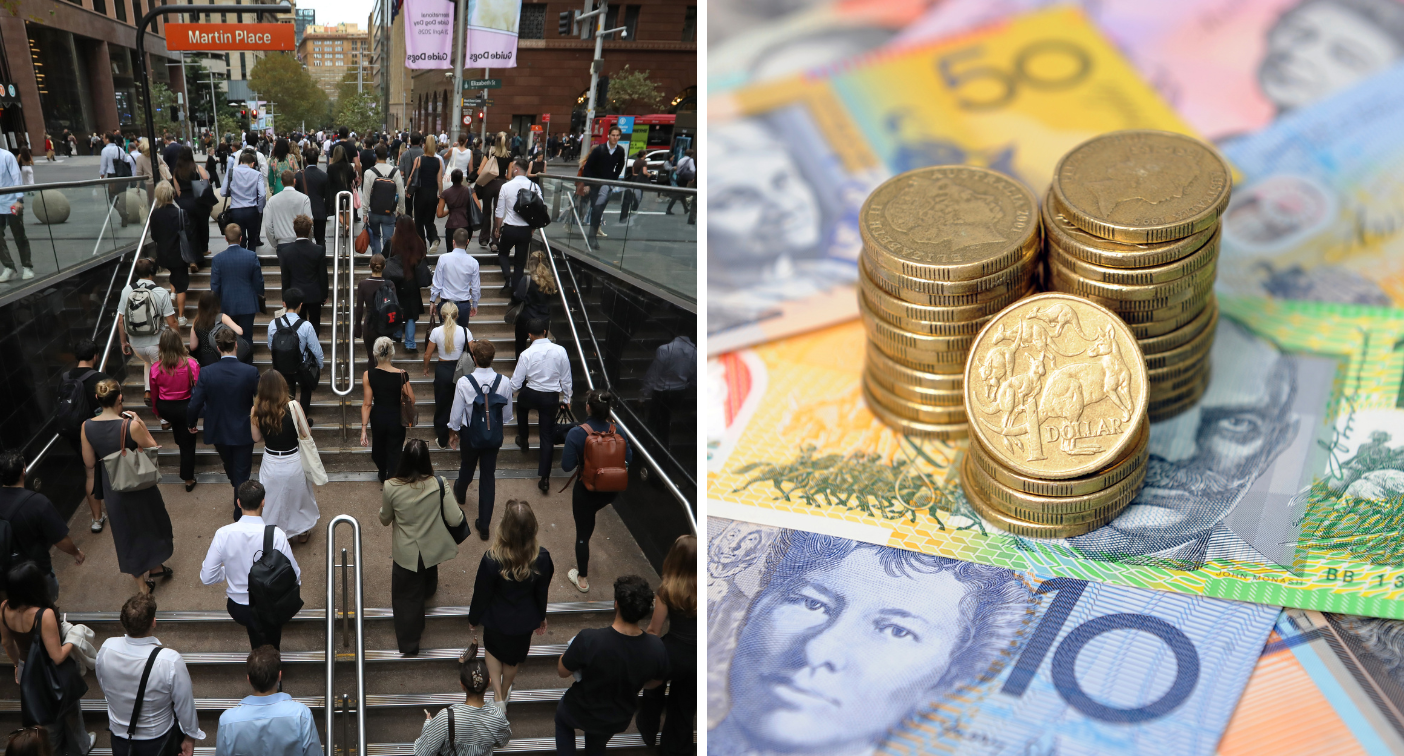
A significant portion of Australia’s workforce is set to benefit from a substantial wage increase following a landmark decision by the Fair Work Commission. Effective from July 1, millions of workers currently paid at minimum award rates will see their pay packets grow by 4.75 per cent. This adjustment is expected to provide much-needed relief amidst rising cost-of-living pressures.
Currently, the national minimum wage stands at $24.95 per hour, equating to $948 per week. After the forthcoming increase, this will be elevated to $26.44 per hour, or $1,004.90 weekly. While this applies to the national minimum wage, which covers a smaller segment of the population, approximately one-fifth of all Australian employees are paid according to minimum award rates, making this decision broadly impactful.
Navigating Economic Headwinds
The Fair Work Commission President, Justice Adam Hatcher, acknowledged the complexities involved in this year’s determination. He highlighted that the decision-making process was particularly challenging due to inflation rates exceeding earlier forecasts and the persistent uncertainty stemming from global events, such as the ongoing conflict in the Middle East.
Justice Hatcher explained that a wage increase exceeding 5 per cent would have been necessary to fully address the real wage gap. However, he stated that the Commission had, with regret, concluded that awarding such a significant real wage increase to award wage employees was not considered “practicable or responsible” given the current unpredictable economic climate.
Despite these constraints, the Commission has prioritised safeguarding the purchasing power of those on lower incomes. Justice Hatcher elaborated, “However, we consider that we should at least ensure that modern award-reliant employees generally are not worse off in real terms than they were as at 1 July 2025, and that we should also take additional measures to protect the position of the very lowest-paid workers under modern awards.”
Government and Union Support for Wage Growth
The federal government had previously advocated for a “substantial” increase to the minimum wage, though it did not specify an exact figure. Treasurer Jim Chalmers, speaking on ABC TV, emphasised the importance of real wage growth for working Australians. “Workers on the minimum wage and on awards need and deserve a decent real wage increase,” he stated. “We want to see it go up further today, and that’s because we recognise that higher wages and lower taxes are the best way to help working people with the cost of living.”
The Australian Council of Trade Unions (ACTU) had pushed for a more ambitious 6 per cent pay increase. Their proposal would have seen the minimum wage reach $26.45 per hour, with a weekly rate of $1,004.88. ACTU secretary Sally McManus underscored the critical role of the Annual Wage Review for many Australians. “One in four workers in Australia rely on the Annual Wage Review as their only way of getting ahead of price rises,” she commented. “Rent, mortgages, and bills are locked in, meaning if these workers’ wages fall short of inflation, they have no choice but to cut back on essentials like food and doctors’ visits.”
Business Perspectives on Wage Adjustments
In contrast, the Australian Chamber of Commerce and Industry had advocated for a more modest increase of 3.5 per cent. Their submission focused on underlying inflation as a more appropriate benchmark for wage adjustments. Headline inflation in the 12 months to April stood at 4.2 per cent, while underlying inflation was recorded at 3.4 per cent.
Last year, the Fair Work Commission implemented a 3.5 per cent increase to the minimum wage. This year’s decision reflects a delicate balancing act between supporting workers and acknowledging the prevailing economic conditions.
Broader Economic Context
The decision comes at a time when economic indicators are being closely watched. The recent rise in headline inflation, coupled with global economic uncertainties, has presented a complex landscape for wage setting. The government’s focus on cost-of-living relief through measures like wage increases and tax adjustments remains a central theme in its economic policy.
Meanwhile, in a separate development reported on Monday, Prime Minister Anthony Albanese’s salary saw a significant increase of $57,000, marking a 10 per cent jump since 2022. This highlights ongoing discussions about remuneration across different levels of Australian society.
The Fair Work Commission’s annual wage review remains a pivotal event for a large segment of the Australian workforce, directly impacting their financial well-being and their ability to navigate the rising costs of everyday life.