Trump’s Iran Standoff: A Tempestuous Turn Amidst Trade Policy Rebuff
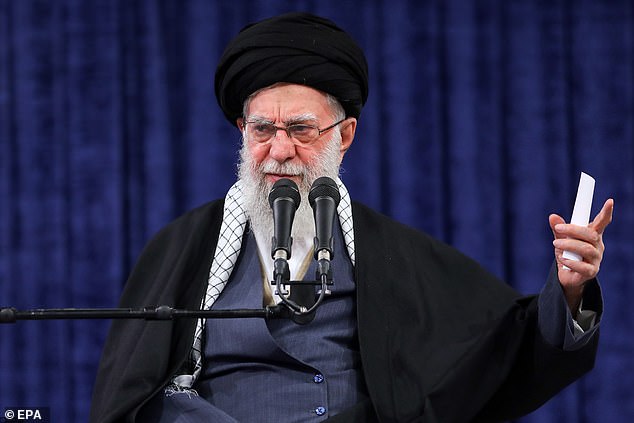
The United States’ stance on Iran has become increasingly precarious, with former White House officials suggesting that a recent Supreme Court ruling against President Donald Trump’s tariff policies could significantly influence his decision-making regarding military action against the Middle Eastern nation. This assessment comes as the President grapples with a complex foreign policy challenge, reportedly oscillating on the issue of Iran amidst troop deployments and diplomatic efforts.
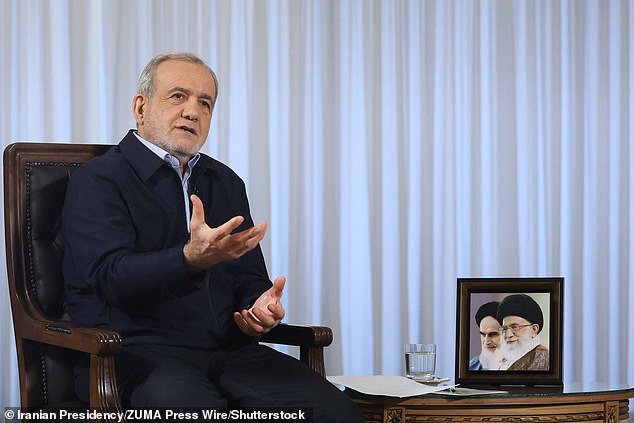
President Trump, a figure known for his decisive and often unconventional approaches, has been reportedly focused on his presidential legacy. In recent weeks, he has actively pursued a diplomatic solution to prevent Iran’s nuclear enrichment program, a path that has encountered resistance from the regime in Tehran.
Wilbur Ross, former Commerce Secretary during Trump’s first term, posits that the Supreme Court’s decision, which declared his significant second-term tariff policies unconstitutional, might embolden Trump to pursue a more aggressive stance on Iran. “I don’t think he can take this loss and then be seen as backing down on Iran,” Ross commented, indicating a potential link between the trade policy setback and a heightened likelihood of military intervention.
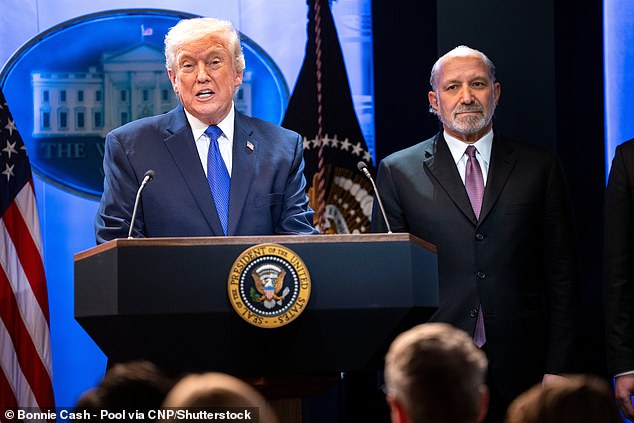
Despite this speculation, a White House official conveyed to The Wall Street Journal that President Trump, even with recent successful targeted military operations in Iran and Venezuela, still prioritizes diplomatic resolutions over outright conflict. The urgency of the situation was underscored on Thursday when the President, speaking at the inaugural meeting of his Board of Peace, issued a stark warning: the US could resort to bombing Iran if a nuclear deal isn’t reached within a 10-day timeframe.
This strategic gambit, as explained by an official in the region, could potentially disrupt Iranian officials’ engagement in negotiations for an extended period. Should these initial measures prove ineffective, the scenario could escalate to strikes against regime facilities with the aim of destabilizing or removing the entire leadership. While senior aides have reportedly presented this phased approach to the President, discussions within the Oval Office have, at times, leaned towards contemplating larger-scale military operations.
“Only President Trump knows what he may or may not do,” stated White House spokesperson Anna Kelly in remarks to the WSJ. President Trump himself, on Thursday, juxtaposed his claims of bringing “peace to the Middle East” with a subsequent threat that “bad things [will] happen” if Iran fails to engage in a meaningful peace deal. He alluded to the possibility of escalating actions or, conversely, reaching an agreement, suggesting that clarity would emerge “over the next probably 10 days.”
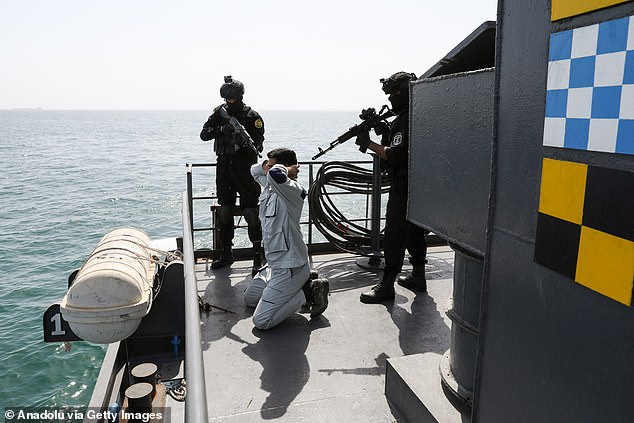
This is not the first time President Trump has contemplated military action against Iran. In June, he directed strikes following a two-week deliberation period between continued talks and decisive action. This culminated in “Operation Midnight Hammer,” where the U.S. Air Force and Navy conducted attacks on three Iranian nuclear facilities. This action, however, occurred against a backdrop of Trump’s stated desire to be the president who ends wars.
The recent military buildup in the Middle East, involving the deployment of aircraft carriers, fighter jets, submarines, and other assets, signals a heightened readiness. These deployments coincide with stalled Iran nuclear talks, which faltered after the latest round of negotiations in Geneva, Switzerland, where Iran sought additional time without substantial progress.
Trade Policy Setback and Judicial Scrutiny
Adding a layer of complexity to the geopolitical landscape is the Supreme Court’s recent decision to strike down President Trump’s signature trade policies. This ruling, handed down on Friday, forced the President to improvise and announce a “Global 10% Tariff on all Countries,” effective almost immediately.
The President’s executive order invoked Section 122 of the Trade Act of 1974, a provision granting the president the authority to impose temporary tariffs in response to short-term emergencies. This law, however, is designed for limited durations and requires congressional approval for policies exceeding 150 days. President Trump’s decision marks the first instance of a president utilizing this specific section. The White House indicated that this temporary import duty would commence on February 24 at 12:01 AM EST.
The scope of this global tariff is not all-encompassing. Several categories of goods are exempt to mitigate economic impacts. These include:
- Energy products
- Natural resources
- Fertilizers
- Pharmaceuticals
- Certain electronics
- Some vehicles
- Specific aerospace products
- Informational materials
- Accompanied baggage
Furthermore, food products, such as beef and tomatoes, are exempted to minimize the burden on average consumers. Products originating from Canada and Mexico are also excluded due to the United States-Mexico-Canada Agreement (USMCA). While these North American neighbours benefit from the lowest effective tariff rates globally, they will still face duties on steel, aluminum, and non-USMCA compliant goods. Additionally, certain textiles and apparel are exempt under the Dominican Republic-Central America Free Trade Agreement (CAFTA-DR).
The President’s reaction to the Supreme Court’s ruling was notably severe. He launched a strong accusation, suggesting that the justices who overturned his tariff policies were “swayed by foreign interests.” In his sharp condemnation, Trump asserted that some conservative justices lacked the same “loyalty” as those appointed by Democratic presidents and accused them of acting contrary to the U.S. Constitution. He expressed frustration, claiming the Court’s decision was illogical, particularly as he perceived it to imply he could wield extensive presidential power except for the imposition of tariffs. “I’m allowed to destroy the country, but I can’t charge them a little fee,” Trump lamented, adding, “I can do anything I want to do to them, but I can’t charge any money.”
The Supreme Court’s decision was a 6-3 ruling, with three conservative justices joining the three liberal justices in opposing the President’s economic initiative. This rebuke of one of his most significant second-term economic proposals highlights the judicial branch’s role in checking executive power.