Unpacking the Mystery of the Yellow Arrows on Your Wheels
You’ve likely seen them – those distinctive little yellow arrows adorning the wheel nuts of buses and trucks. For a long time, their presence was largely confined to these heavy-duty workhorses. However, in recent times, these curious pointers have started appearing on passenger vehicles, sparking curiosity among drivers across Australia. What exactly are these seemingly simple indicators designed to achieve?
Given the sheer volume of commercial and heavy vehicles navigating Australian roads, spotting these uniquely shaped yellow arrow wheel nuts is becoming increasingly common. While they were once exclusively the domain of trucks and buses, their adoption is gradually extending to larger vehicles, including substantial utility vehicles (utes).
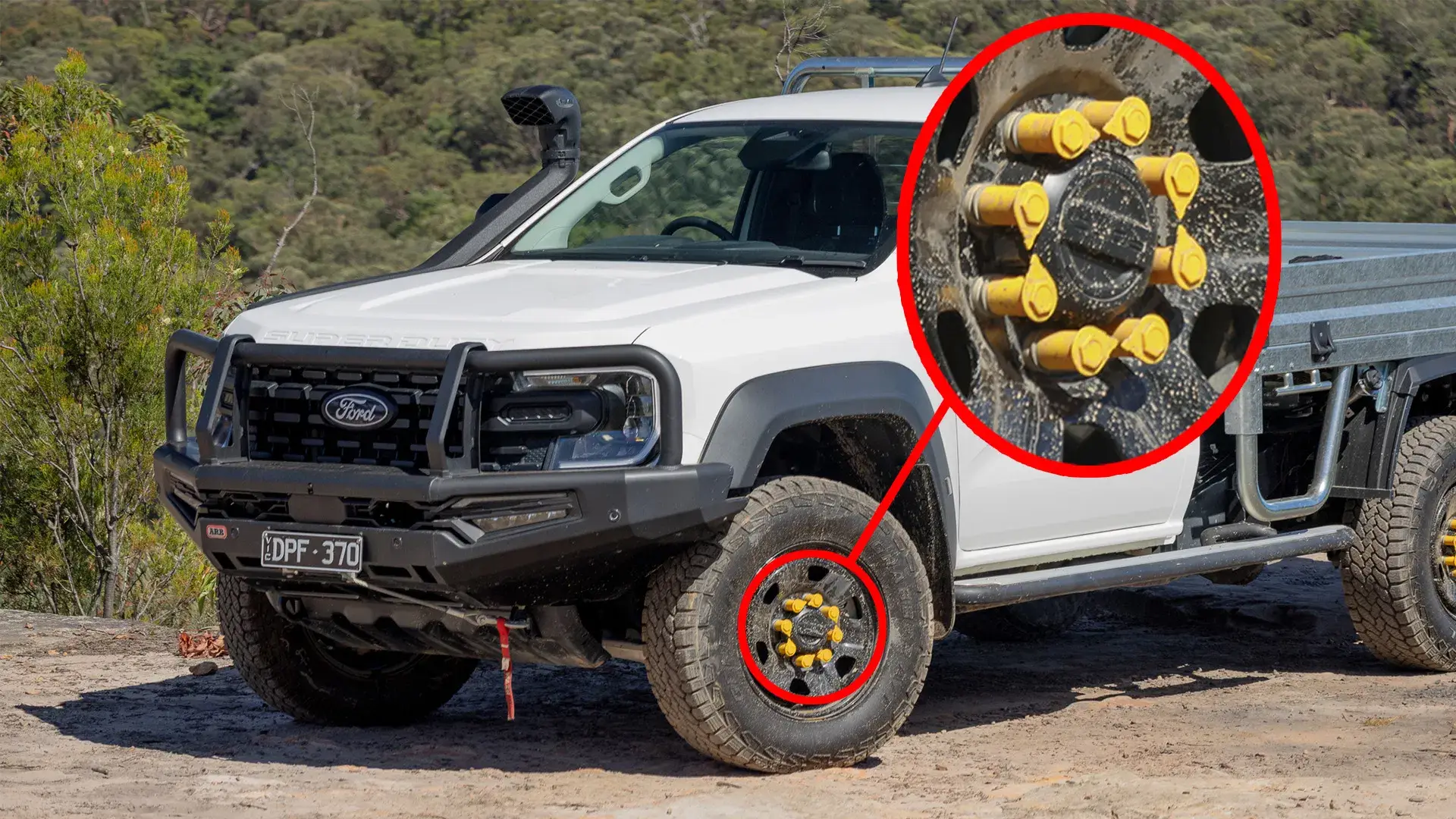
A prime example of this trend can be observed in models like the Ford Ranger Super Duty. This variant prioritises raw load-carrying capacity over passenger comfort, boasting features such as enhanced underbody protection, an expanded 130-litre fuel tank, a raised suspension system, and a reinforced chassis. These modifications are all engineered to handle the demands of increased carrying and towing loads.
Furthermore, these heavy-duty models often feature different wheel configurations. If you’re particularly observant, you might have noticed that these uprated wheels are equipped with eight studs, a departure from the six studs previously considered the maximum for standard road-going cars available new in Australia. And it’s on these eight wheel nuts that you might now be spotting those bright yellow pointers, reminiscent of those seen on their commercial counterparts. But what is their actual purpose?
Understanding Wheel Nut Indicators
These indicators, typically found in vibrant yellow but occasionally in black, are officially known as “wheel nut indicators” or “loose nut indicators.” As their names suggest, their primary function is to provide a clear, visual cue that a wheel nut may no longer be as tightly secured as it should be.
The concept is straightforward: after the wheel nuts are tightened to the manufacturer’s specified torque, the indicator is fitted over the top. The arrow on the indicator is usually aligned to point towards the adjacent wheel nut. If a wheel nut begins to loosen, the indicator will rotate independently, causing the arrow to point in a different direction, often away from its original alignment. A quick glance at the wheel can then reveal if any nuts are becoming loose, as the arrows will no longer be uniformly aligned.
While not a mandatory legal requirement for heavy vehicles in Australia, many companies operating commercial fleets have adopted the use of these indicators as a proactive safety measure. They provide an easily discernible method for monitoring the security of wheel nuts.
Taking the Ford Ranger Super Duty as an illustration, an optional feature for steel-wheeled variants allows for the installation of these indicators at a cost of $150. The Toyota HiLux also offers a similar option. Ford Australia explains that these indicators are particularly beneficial for vehicles often deployed in fleet operations, such as rental fleets and mining vehicles. This allows fleet managers to readily identify any improperly tightened nuts, a crucial task when managing a large number of vehicles.
A spokesperson for Ford Australia highlighted the practical application of these indicators, stating, “The optional Wheel Nut Indicators were introduced to the Ranger Super Duty line-up and are commonly used by commercial vehicle operators, particularly within the agricultural and mining industry. Wheel Nut Indicators provide a quick visual check that the wheel nuts are torqued during pre-inspections; a process that the majority of commercial vehicle fleets employ on a daily basis.”
The commonality between these heavy-duty utes and larger commercial vehicles like buses and trucks lies in their significant load-carrying capabilities. For such vehicles, even a few loose wheel nuts can have catastrophic consequences when fully loaded. Potential issues range from stripped wheel studs and snapped studs to the complete detachment of a wheel while in motion.
Beyond their functional purpose, the bright yellow colour of these indicators also enhances visibility, a valuable asset for mining fleets that often adorn their vehicles with fluorescent yellow stripes.
For Australian motorists keen to enhance the safety of their own vehicles, these wheel nut indicators are readily available for purchase online, often for as little as $30 for a complete set. Their simple design and straightforward installation make them an accessible and effective safety upgrade.