
Isuzu N Series: A Truck Built for Work, Not Just for Show
For any tradie, the right tool is non-negotiable. But when it comes to work vehicles, the ubiquitous dual-cab ute, while popular, might not always be the most effective tool for the job. The lines between a ute and a light-duty truck can blur, leading many to question if these hard-working utes are truly suited for the heavy lifting often demanded of them.
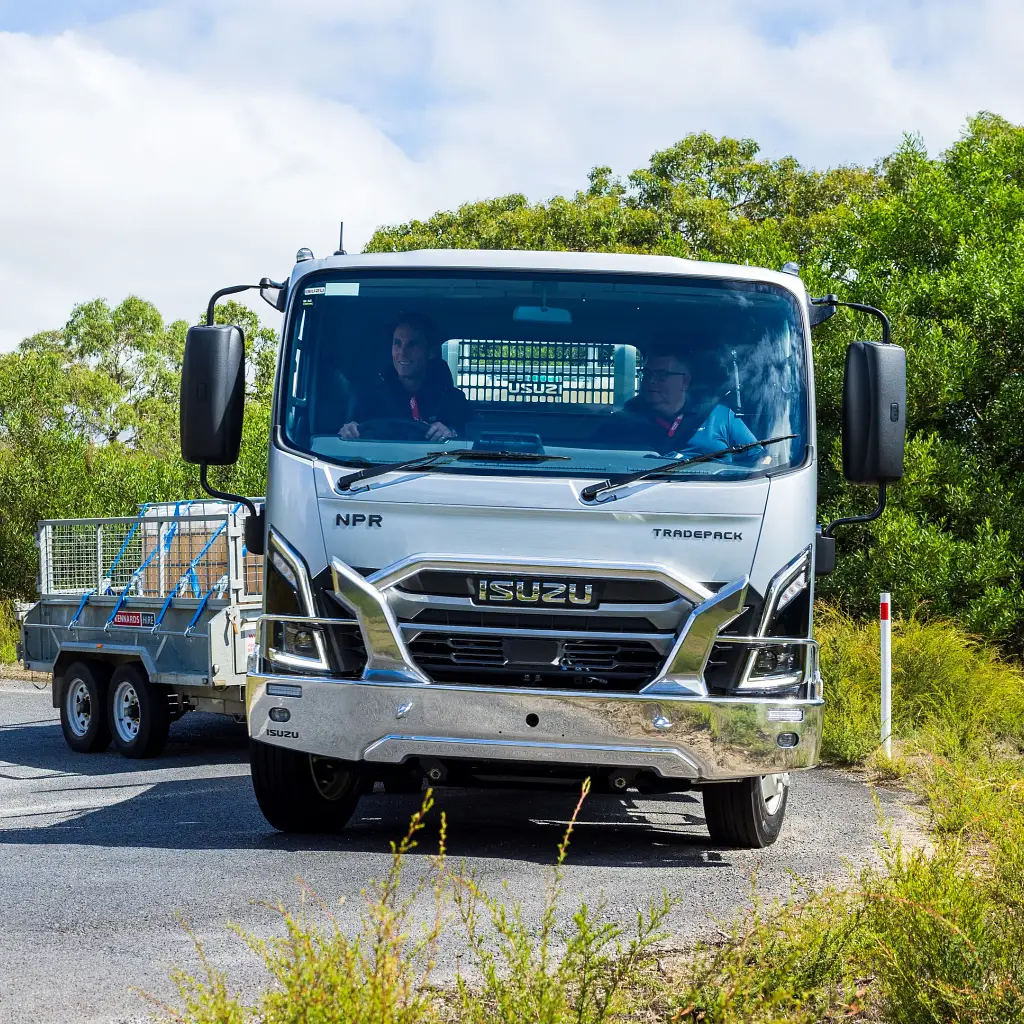
While the ease of purchasing a ute – readily available stock and straightforward specifications – is a significant drawcard, Isuzu Trucks has been aiming to bridge this gap for years. Their “Ready-to-Work” range, first launched in 2003, seeks to offer the accessibility of a ute with the genuine capability of a truck. The 2025 update to the entry-level N Series line-up has significantly bolstered this proposition, introducing modern features, enhanced safety, improved comfort, and a compelling case for choosing a dedicated truck over a ute.
Isuzu’s philosophy centres on the inherent advantages of trucks: greater payload capacity and larger tray space, offering superior flexibility for demanding tasks. A key selling point for the N Series is its accessibility, with many models available to drivers holding a standard car licence. This means businesses can increase their carrying capacity without the costly need for GVM (Gross Vehicle Mass) upgrades or other modifications, allowing the truck to grow with the business.
Isuzu isn’t pretending to appeal to the image-conscious buyer considering a top-tier dual-cab ute for weekend adventures. Instead, their focus is firmly on the countless white utes seen adorned with tradie company logos, laden with building materials, or towing heavy equipment like Bobcats. It’s in this space that Isuzu aims to make a significant impact.
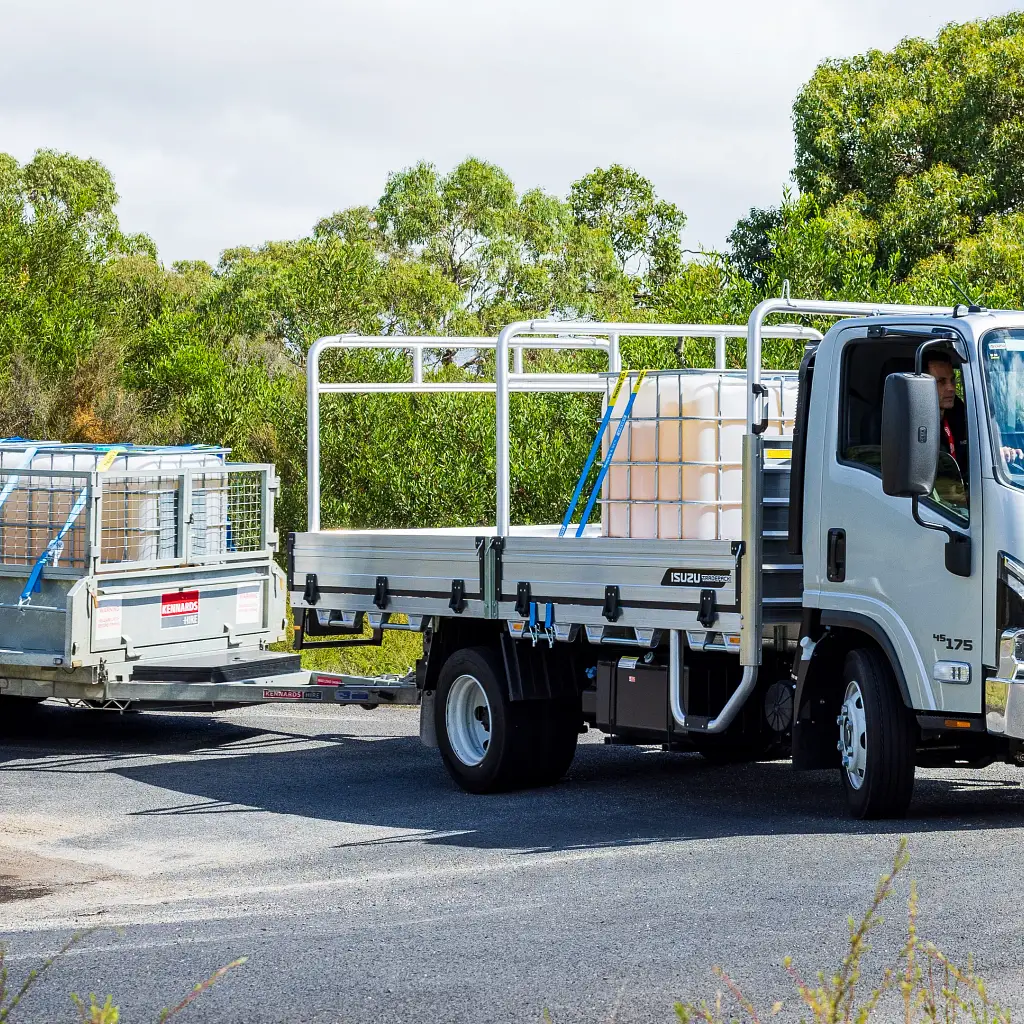
To illustrate the capabilities of a purpose-built goods-carrying vehicle, Isuzu Trucks recently put some of its Ready-to-Work N Series trucks through their paces, demonstrating their advantages alongside popular ute rivals.
A Cabin Built for Purpose, Not Pampering
The most striking difference when stepping into an N Series truck is the cabin. The 2025 refresh brought a new interior, but it’s undeniably a truck cabin, not an SUV’s. The cab-over-engine design places the driver high up, with an upright seating position and flat, minimally padded seats. However, this utilitarian approach brings practical benefits.
A mechanical suspension seat is fitted to absorb road imperfections, providing a smoother ride. The windscreen extends to the very front of the vehicle, offering excellent visibility and allowing the driver to manoeuvre precisely in tight spaces.
Entry and exit require a slightly different technique – stepping up with the right leg first. The steering column positioned between your feet might feel a little confined initially, but it’s a minor adjustment that quickly becomes second nature.
Inside, controls are largely intuitive and car-like. Analogue dials flank a digital trip display, offering a range of functional readouts. Gone are the days of basic radio; a 10.1-inch touchscreen provides AM/FM/DAB+ radio, Android Auto, and Apple CarPlay. A three-year connectivity package unlocks fleet management apps, smartphone integration, and live traffic information.
Storage is plentiful, primarily in open bins, perfect for stashing receipts, phones, tablets, tape measures, and other essentials for quick access. The N Series also gains a new single-zone climate control system with user-friendly physical buttons and an easy-to-use auto mode.
Adding a touch of modern convenience, keyless entry and start are now standard. With the fob in your pocket, simply press a button on the door handle to lock or unlock. Once inside, a traditional twist-to-start ignition offers familiar functionality.
Seating arrangements are also a highlight. Single-cab models accommodate three occupants, while crew-cab variants can seat up to seven, far surpassing the capacity of most dual-cab utes and SUVs. This makes the N Series an ideal choice for businesses needing to transport larger crews to site.
Drivetrain Innovation: The Nine-Speed Auto Steals the Show
The real game-changer in the updated N Series is the new nine-speed dual-clutch automatic transmission. If you’ve experienced the often clunky and hesitant nature of older automated manuals in trucks, you’ll be relieved to know Isuzu’s new offering is a revelation. While a six-speed manual and a traditional AMT are still available on select variants, the dual-clutch automatic represents a significant leap forward.
Developed in-house by Isuzu, this wet-clutch transmission is engineered to withstand the rigours of demanding work. Features like ‘grade logic’ intelligently downshift gears on inclines to maintain momentum, with manual override options available for drivers who prefer direct control.
The engine line-up is drawn from Isuzu’s reputable ‘4J’ family, sharing some fundamental similarities with the D-Max. The base 3.0-litre engine delivers 110kW and 375Nm, with more potent 129kW/430Nm or 460Nm options available. For heavier-duty applications, a 5.2-litre ‘4H’ engine producing 140kW and 513Nm is on offer.
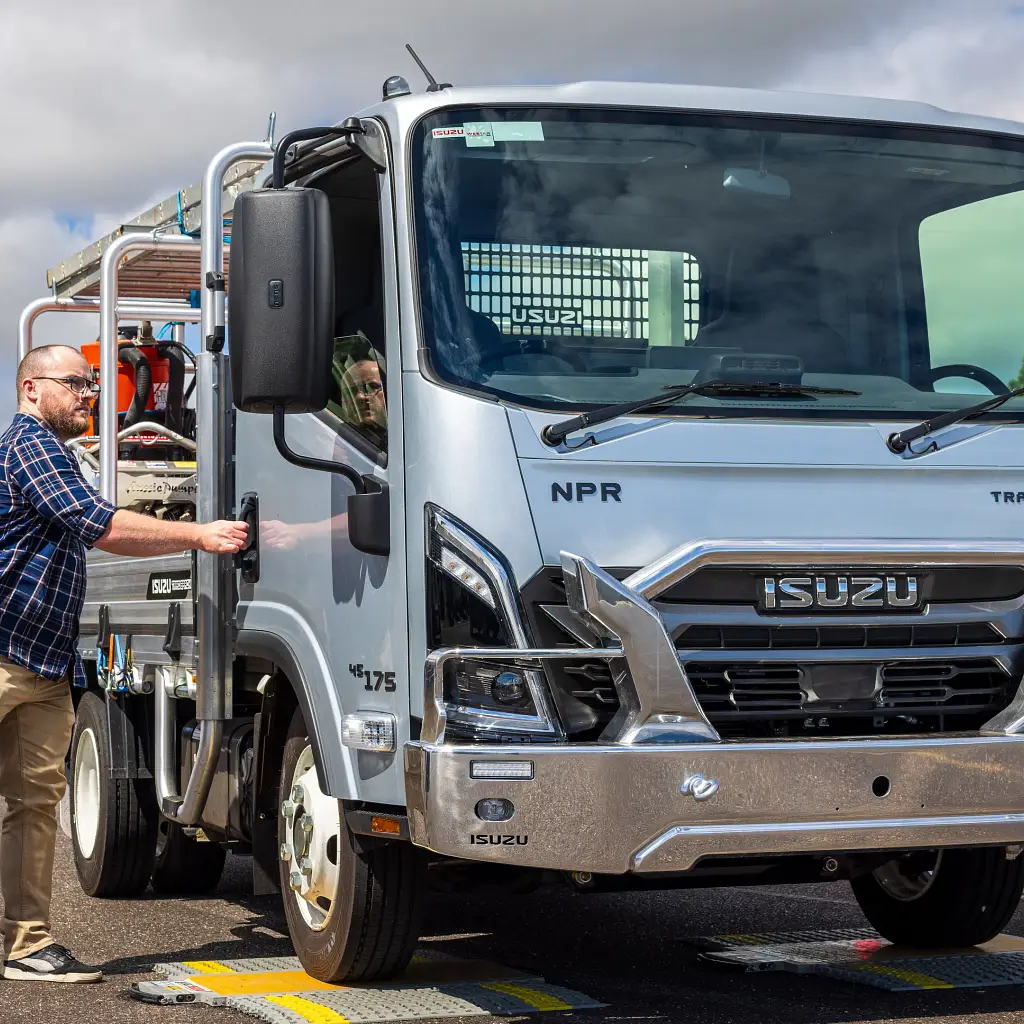
Most models come standard with two-wheel drive, but all-wheel drive and dual-range four-wheel drive are optional extras, adding further versatility. The combination of engine and transmission choices creates a comprehensive matrix to suit diverse operational needs.
Experiencing the nine-speed dual-clutch automatic was eye-opening. Low-speed manoeuvring, such as backing into loading docks, is effortless. The grade logic system proved remarkably proactive, downshifting on descents to provide effective engine braking, often before the driver would even consider it.
While not as razor-sharp as a high-performance car transmission, this Isuzu auto is a substantial improvement for the light-duty truck segment. Competitors offer a range of transmissions: Fuso’s Canter features a six-speed dual-clutch, Iveco’s Daily uses an eight-speed torque converter, Mercedes-Benz Sprinters have a nine-speed torque converter, and Hino’s 300 Series offers a six-speed torque converter auto or an AMT on hybrids.
Unlocking Market Potential: The 4.5-Tonne GVM Advantage
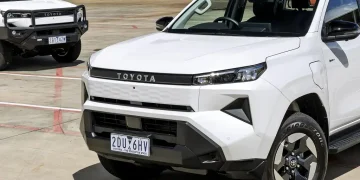
Isuzu’s trump card lies in its range of 4.5-tonne GVM models. These light trucks are accessible with a standard car licence, opening up a vast market segment previously limited to dual-cab utes. This GVM significantly exceeds that of a new Toyota HiLux (just over 3000kg) and the LandCruiser 70 Series (3510kg). Ford’s new Ranger Super Duty line-up matches the 4500kg GVM, but beyond that, Isuzu holds a distinct advantage.
While many utes can have their GVM upgraded, this typically involves extensive mechanical modifications and re-compliance. The brilliance of Isuzu’s N Series is that the 4.5-tonne GVM models are mechanically identical to their 6.5-tonne GVM counterparts. The lower GVM is a compliance measure, not a limitation of the hardware. This means the truck is never overstressed when operating within its rated capacity, and there’s inherent carrying capacity to spare.
Furthermore, if a business’s needs expand, Isuzu can simply issue a new compliance plate to increase the documented GVM, requiring only a change in the driver’s licence. This offers a seamless upgrade path without the need to replace the entire vehicle.
Beyond GVM, other enhancements to the 2025 N Series range solidify its workhorse credentials. Traypack models now feature a standard tray with a five-tonne capacity, up from three tonnes previously, boasting a floor rated to 1250kg per square metre, a significant increase from 750kg. Isuzu Australia has even ensured their locally sourced Vanpack bodies are designed to clear height restrictions, such as Melbourne’s notorious Montague Street bridge.
Gross Combination Mass (GCM) starts at 8000kg, depending on the variant, with towing capacities from 4000kg. This ensures ample usable payload and towing capability without compromising either significantly. Ford’s Super Duty range is a notable competitor, offering a similar 4500kg GVM, 4500kg braked towing capacity, and 8000kg GCM. In contrast, a 4×2 Isuzu D-Max is limited to a 3000kg GVM, 3500kg towing, and a 5850kg GCM.
Agility and Practicality: Navigating Tight Spots
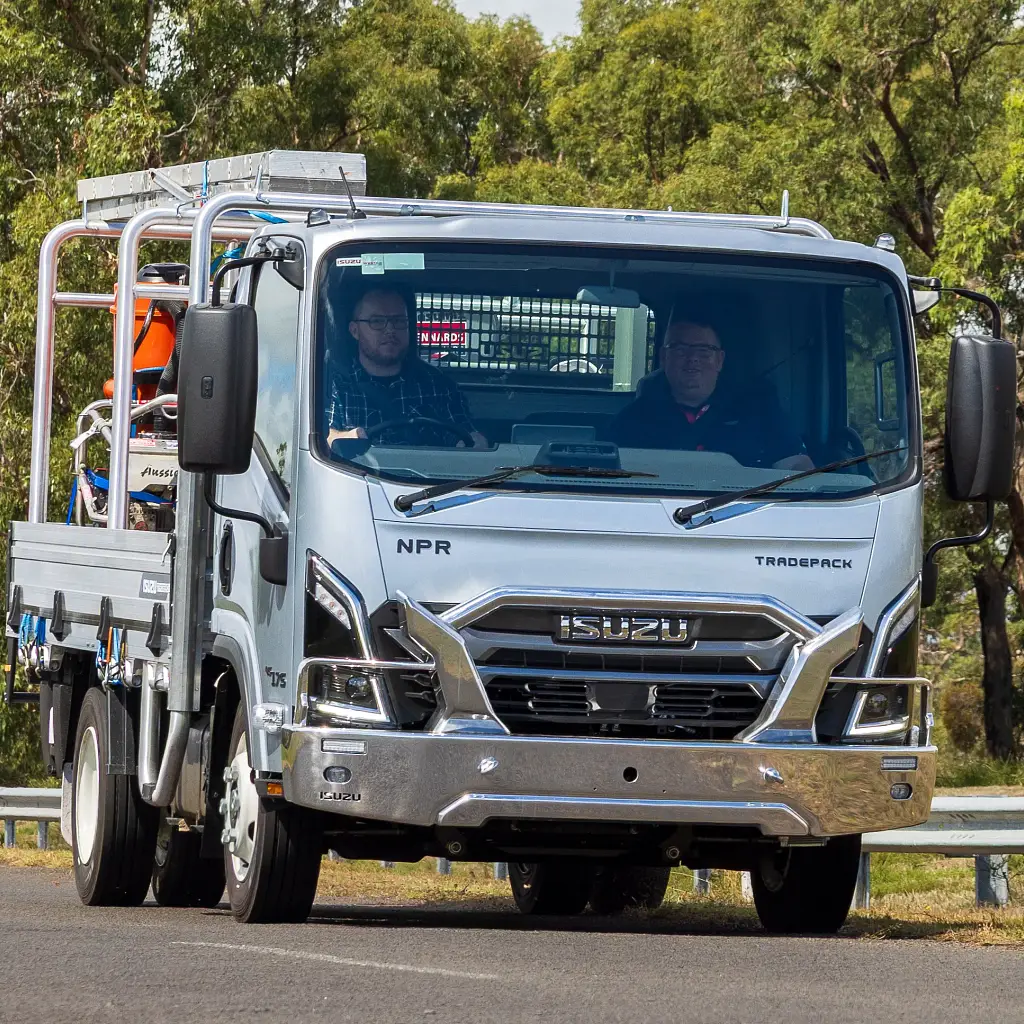
Site access is another area where the N Series excels. The shortest version of the N Series boasts an impressive 9.6-metre turning circle, significantly tighter than a 4×2 HiLux’s 11.8 metres or the BYD Shark’s 13.5 metres. This agility is crucial for navigating tight worksites and urban environments.
During a demonstration with a tandem trailer, piloting a HiLux through a tight course highlighted the significant blind spots inherent in a ute’s design. While achievable, it underscored the real-world risks of damaging expensive equipment or valuable materials, risks that are minimised with the N Series’ superior visibility.
Reliability and Support: Isuzu’s Established Network
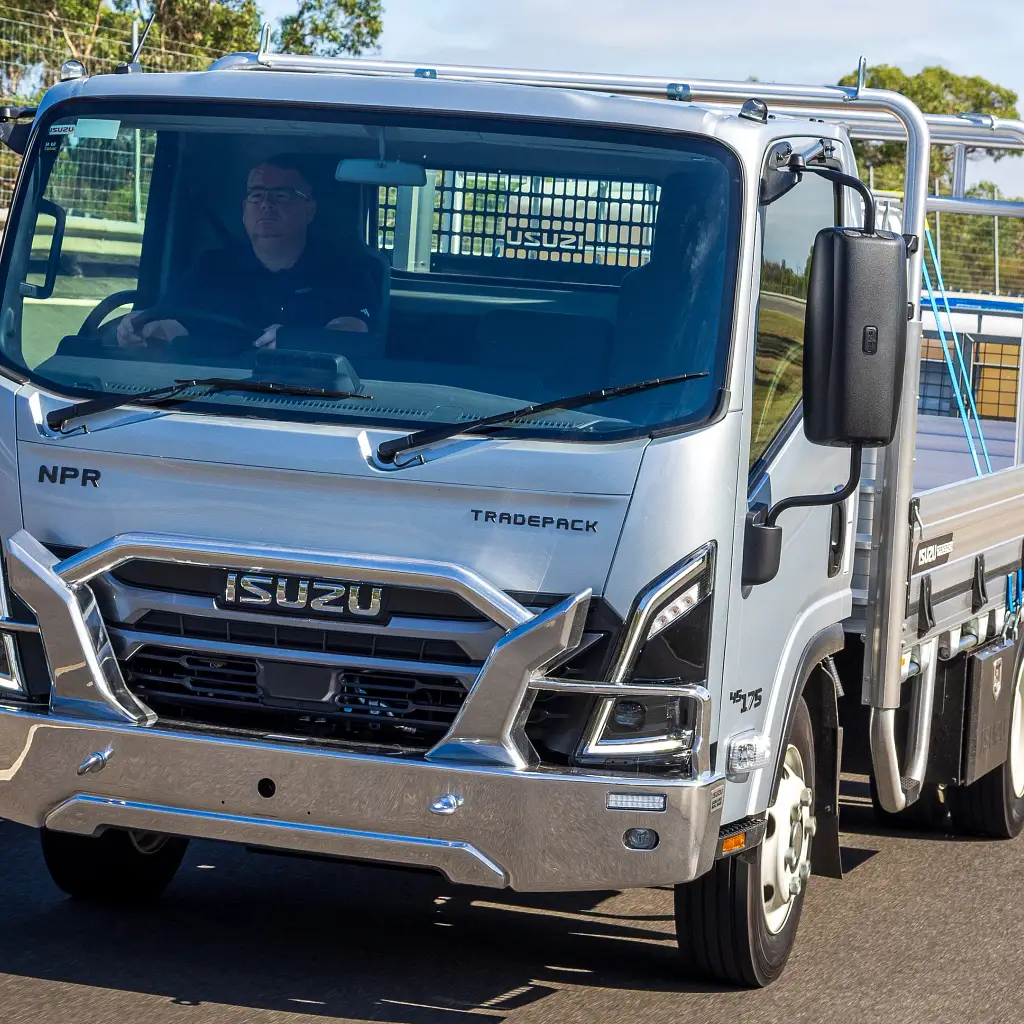
Isuzu’s long-standing position as Australia’s best-selling truck brand since 1989, coupled with its extensive parts network, provides a substantial advantage. To streamline parts inventory, all trucks utilise the same tail-lights, and rear-view mirrors come in just two designs. This means Isuzu’s warehouse is likely to have immediate stock of any necessary parts, minimising downtime and keeping businesses on the road.
While tipper bodies are manufactured and fitted in Japan, Isuzu’s range of Traypack, Tradepack, Vanpack, and Servicepack bodies are all sourced locally in Australia. If a desired configuration isn’t readily available at a dealership, Isuzu estimates that sourcing a Ready-to-Work body should take no more than a fortnight.
The warranty coverage is robust, offering six years or 250,000km on most of the range, with Isuzu-sourced bodies receiving a three-year warranty. Specific conditions may apply, and drivers are advised to consult their dealer for full details.
Advanced Safety Features: Trucking into the Future
Safety equipment on the N Series now rivals that of dual-cab utes. Features like an automatic electronic park brake reduce the risk of roll-away, while traffic sign recognition assists drivers in spotting speed limits in unfamiliar areas.
The N Series range is equipped with Autonomous Emergency Braking (AEB), capable of detecting cars, cyclists, and pedestrians. It also includes intersection intervention, front cross-traffic alert, lane-departure warning, adaptive cruise control, driver fatigue monitoring, and more.
While AEB couldn’t be demonstrated, the speed sign recognition proved its utility, and the lane-departure alert, though perhaps less refined than in passenger cars, effectively provided audible warnings even with faint lane markings.
The Verdict: A Dedicated Workhorse for Serious Business
The Isuzu N Series Ready-to-Work range clearly targets fleet operators and small to medium businesses that can benefit from a dedicated work vehicle. The crossover opportunity lies in recognising that a truck’s capability doesn’t need to compromise personal vehicle choices. While unlikely to become a weekend family car, the N Series frees up dual-cab utes from demanding weekday duties, allowing them to be used for their intended recreational purposes without compromise. For businesses requiring genuine hauling power and unwavering reliability, the updated Isuzu N Series presents a compelling and practical solution.