
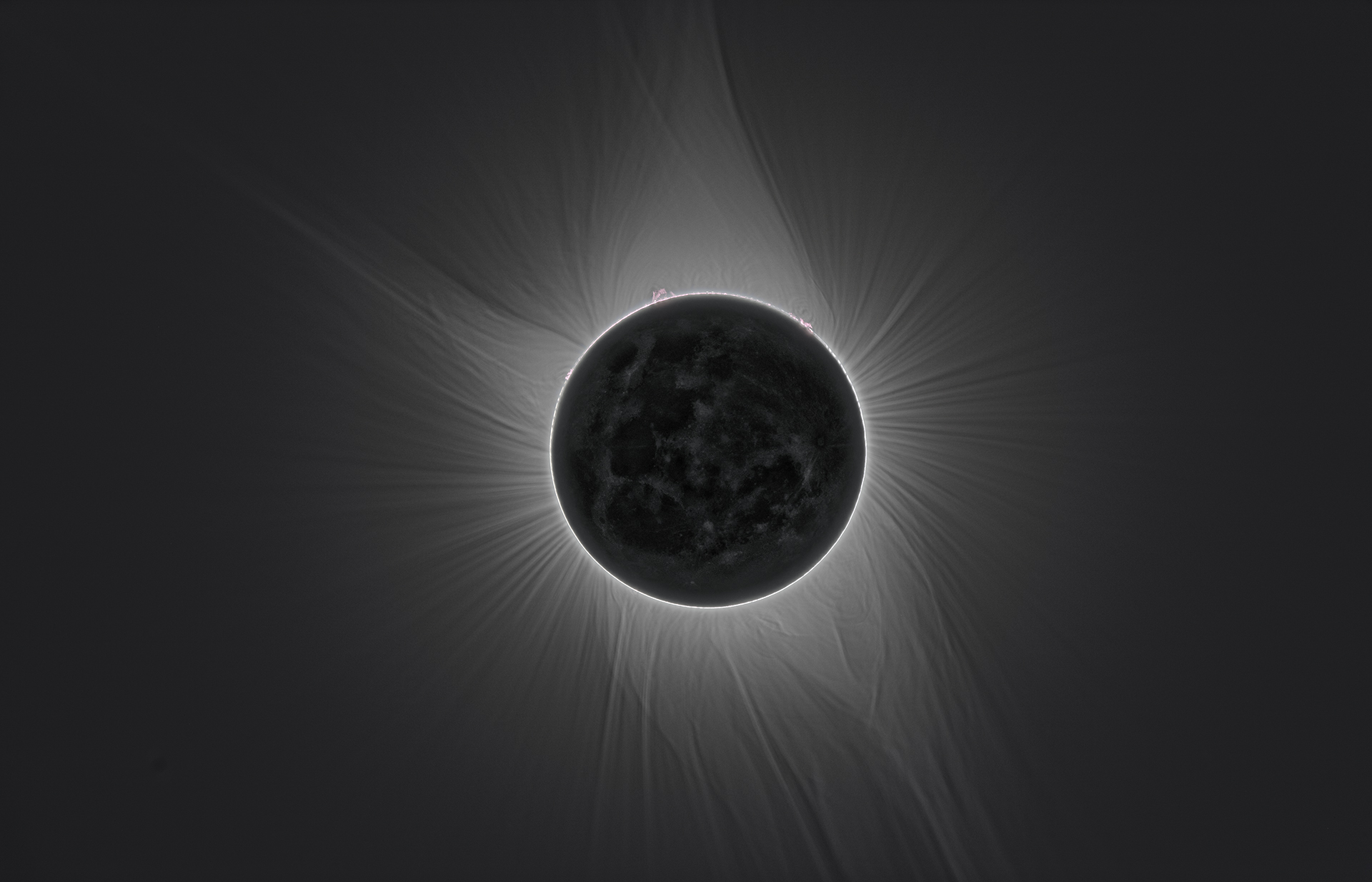
A Unique View of a Solar Eclipse from Space
Astronauts aboard NASA’s Orion spacecraft have captured a rare and breathtaking moment as they witnessed a solar eclipse near the Moon. This event, which cannot be seen from Earth, offers a unique perspective on one of nature’s most fascinating phenomena.
The footage shows the Sun’s corona glowing brilliantly from behind the Moon, creating a striking visual contrast against the dark silhouette of our natural satellite. In the distance, a small dot represents Earth, highlighting the vastness of space and the relative scale of our planet in comparison to the Moon.
One of the astronauts from the Artemis II mission described the experience, stating, “The earthshine is very distinct, and it creates quite an impressive visual illusion.” This observation adds to the growing body of knowledge about how celestial events appear from different vantage points in space.
The Significance of the Event
The solar eclipse observed by the astronauts is not just a visual spectacle but also a scientific opportunity. It allows researchers to study the Sun’s corona in greater detail, which is usually difficult to observe from Earth due to the brightness of the Sun itself. By capturing this event from the vicinity of the Moon, scientists can gather valuable data that could contribute to our understanding of solar activity and its effects on space weather.
The ability to witness such an event from space also underscores the importance of human exploration beyond Earth. As astronauts venture further into the cosmos, they are not only expanding our knowledge of the universe but also experiencing moments that are impossible to replicate from our home planet.
The Astronaut’s Reaction
The awe and wonder expressed by the astronauts during this encounter are evident in their words. One of them simply exclaimed, “Wow, it’s amazing.” These reactions reflect the profound impact that such experiences can have on individuals who are privileged to see the universe up close.
Such moments remind us of the beauty and complexity of the cosmos, and they serve as a powerful reminder of why we continue to explore space. The combination of scientific discovery and personal inspiration makes these missions invaluable to both the scientific community and the general public.
The Role of Technology in Capturing the Moment
The ability to capture and share these moments is made possible through advanced technology. The cameras and sensors aboard the Orion spacecraft are designed to withstand the harsh conditions of space and provide high-quality footage that can be analyzed by scientists and shared with the world.
This technology not only enhances our understanding of space but also allows us to appreciate the beauty of the universe in ways that were previously unimaginable. The images and videos captured during these missions can inspire future generations of scientists, engineers, and explorers.
Looking Ahead
As NASA continues its Artemis program, the focus remains on returning humans to the Moon and eventually sending them to Mars. The experiences gained from missions like Artemis II will be crucial in preparing for these ambitious goals.
The observations made during this solar eclipse highlight the importance of continued exploration and the need for international collaboration in space science. By working together, nations can pool their resources and expertise to achieve what was once thought impossible.
Conclusion
The solar eclipse witnessed by astronauts aboard the Orion spacecraft is a testament to the wonders of space and the importance of human exploration. It offers a unique perspective on a natural phenomenon that is not visible from Earth, providing both scientific value and a sense of awe for those who witness it.
As we continue to push the boundaries of what is possible, these moments remind us of the vastness of the universe and the potential for discovery that lies ahead. The journey into space is not just about reaching new destinations; it is about expanding our understanding of the world and our place within it.


