
The Unforgettable Stars: Who Deserves a Spot in the Australian Football Hall of Fame?
The Australian Football Hall of Fame represents the pinnacle of achievement in the nation’s beloved sport. It’s a place where legacies are cemented, excellence is recognised, and careers dedicated to the code are honoured. As new stars emerge and established legends continue to be overlooked, it’s time to highlight those who unequivocally deserve their place among the greats, from first-time eligible contenders to those whose omissions have become increasingly baffling.
Wayne Schwass: The Roaring Roo Who Soared South
Hailing from New Zealand, Wayne Schwass made an immediate impact after being recruited to the Kangaroos from Warrnambool. His early promise was evident when he captained the club’s under-19s to a premiership in 1987, also clinching the Morrish Medal as the grade’s best player.
Schwass blossomed into a blistering wingman, securing two consecutive Syd Barker Medals as North Melbourne’s best and fairest. He served as Wayne Carey’s deputy during the club’s triumphant 1996 premiership season. Many believed his best years were behind him when he was traded to the Sydney Swans for the 1998 season. However, “Swatta” defied expectations, winning the Swans’ best and fairest and earning All-Australian selection for his pivotal role in their 1999 campaign. His versatility and enduring impact demand his inclusion.
David McKay: The Graceful Giant of Princes Park
Known affectionately as “Swan” for his high-flying marks and elegant style, David McKay is a beloved son of Carlton. Having already been elevated to Legend status within Carlton’s own Hall of Fame, his induction into the broader competition’s top echelon is long overdue.
McKay boasts an impressive four premierships with the Blues, holding the unique distinction of being the only Carlton player to feature in three Grand Final victories against their bitter rivals, Collingwood. A goal-kicking half-back renowned for his aerial prowess, McKay also provided valuable support in the ruck throughout his 263-game career. His adaptability and extensive team success should have secured his Hall of Fame spot years ago.
Rodney “Rocket” Eade: The Hawthorn Dynamo
While younger fans might recognise Rodney “Rocket” Eade as a passionate (and sometimes irate) coach, particularly with the Western Bulldogs, this perception overshadows a truly remarkable playing career. Eade was a lightning-fast half-back and wingman, celebrated for his long, penetrating kicks that often rescued his dynastic Hawthorn side from precarious situations.
As a key member of four premiership teams during Hawthorn’s golden era, and later forging a coaching legacy defined by fierce competitiveness, Eade’s on-field contributions are undeniable. Despite the ultimate coaching success eluding him, his status as a four-time premiership player makes him a prime candidate for enshrinement.
Tony Modra: The “Specky” King of the 90s
Tony Modra, affectionately known as “Godra,” was a defining figure of the vibrant 1990s Australian rules football scene. He played a crucial role in the Adelaide Crows’ rise to prominence after their entry into the national competition.
With his flowing golden hair, breathtaking aerial marks, and spectacular goals, Modra possessed all the hallmarks of a superstar. His glittering resume includes a Coleman Medal, six All-Australian selections, three Mark of the Year awards, and a Goal of the Year win. While injury cruelly denied him participation in the Crows’ two premiership triumphs, his record of 588 goals from 165 games (including 77 goals from 27 games in his twilight with the Fremantle Dockers) is extraordinary. He is arguably the greatest exponent of the “specky” – the spectacular aerial mark – the game has ever witnessed. His cultural impact, influence on the game outside of Victoria, and scintillating on-field performances make his Hall of Fame inclusion a necessity.
Alex Rance: The Defensive Architect
Alex Rance epitomised the modern key defender. A premiership player with the Richmond Tigers, Rance possessed the remarkable ability to completely shut down his direct opponent while simultaneously reading the play and intercepting opposition attacks at will.
A consistent and reliable performer for Damien Hardwick’s dominant Richmond sides throughout the 2010s, Rance amassed an impressive collection of accolades, even if he only featured in one of the Tigers’ three premiership victories. A best and fairest winner and a five-time All-Australian (including one as captain), Rance was the definitive defender of his era. His ability to redefine his role and contribute significantly to team success makes his omission from the Hall of Fame perplexing.
Steve Johnson: The Mercurial Maverick
“Stevie J” is a player who truly stands alone. A prodigiously talented and often unpredictable forward, this mercurial Geelong Cat was instrumental in three premiership campaigns for the club. His exceptional skill set also earned him three All-Australian selections.
Johnson was Geelong’s leading goalkicker twice, but his impact extended beyond scoring. He was also a prolific playmaker, ranking equal seventh all-time for average goal assists. As a key figure in Geelong’s late 2000s dynasty, a Norm Smith Medallist, and a player with an undeniable flair and character, Johnson richly deserves his place alongside many of his former teammates in football’s most exclusive club.
Alastair Lynch: The Towering Champion
“Lynchy” was simply brilliant. His early career was marked by titanic contests against formidable opposing key forwards, establishing him as a no-nonsense defender for Fitzroy. He even secured a best and fairest and All-Australian honours in his debut season in defence.
His career took a dramatic turn when he moved to centre forward in 1993. This transition proved inspired, leading him to sign a landmark 10-year deal with the Brisbane Lions. In Brisbane, Lynch truly flourished, claiming five club leading goalkicker awards (adding to the one from Fitzroy) and playing a pivotal role in three premierships. His importance as a linchpin in arguably the greatest team the game has ever seen, his vocal advocacy for Tasmania, his contributions to growing the game in new territories, and his media work post-retirement all solidify his status as an honouree-in-waiting.
Saverio Rocca: The Unacknowledged Goal-Scoring Machine
Saverio Rocca stands as a glaring anomaly: the only player among the V/AFL’s top 30 all-time goalkickers not to have at least been nominated for the Hall of Fame. This oversight is nothing short of a disgrace.
Rocca amassed an astonishing 10 leading goalkicker awards during his tenures with Collingwood and North Melbourne. He ranks 17th in V/AFL history for total goals scored and fifth in the storied history of Collingwood, where he also claimed a best and fairest award. His prolific scoring and consistent performance demand his immediate induction.
Dustin Fletcher: The Enduring Bomber Legend
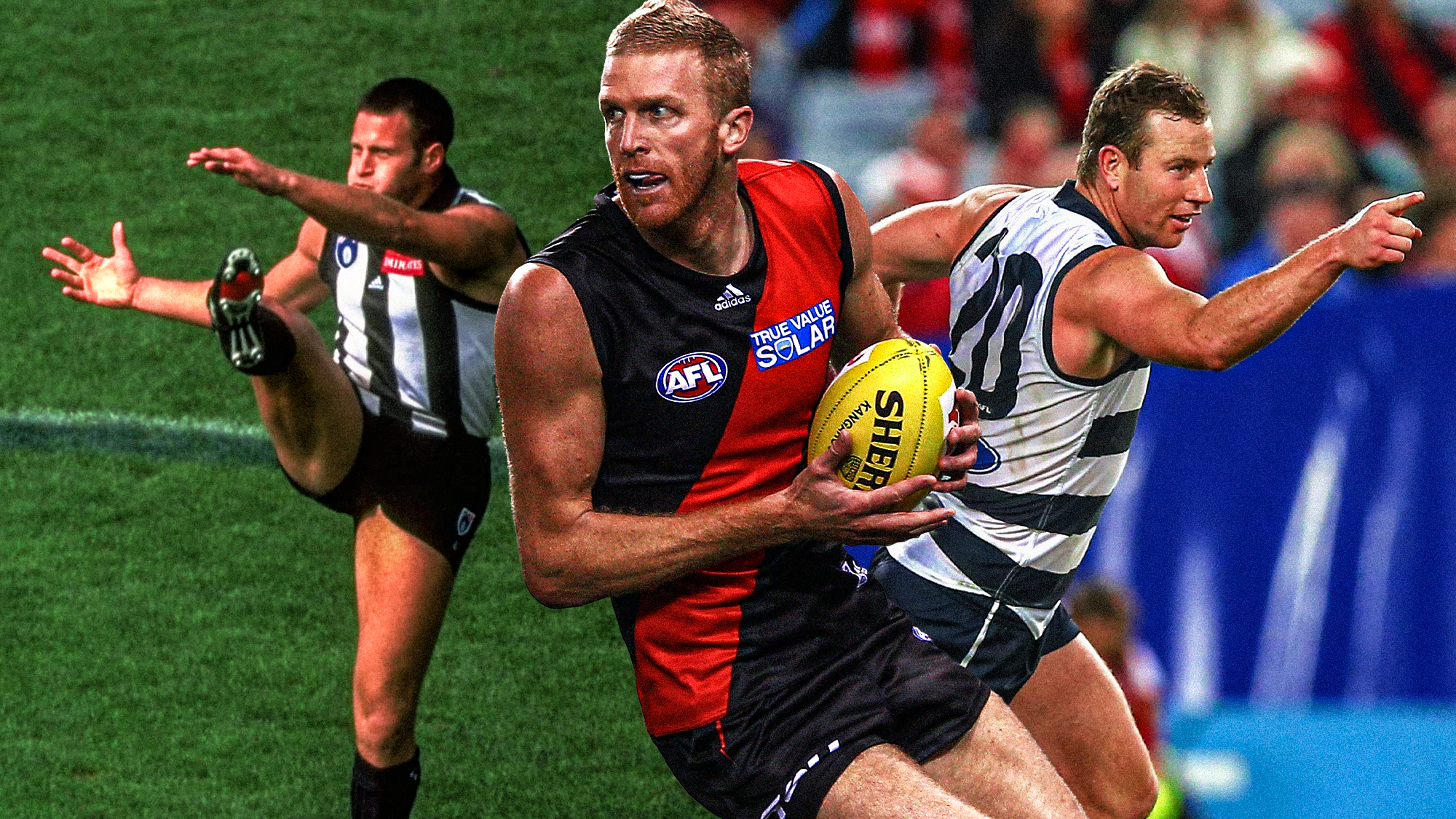
Only six players in V/AFL history have reached the 400-game milestone – a club more exclusive than the Hall of Fame itself. Essendon’s Dustin Fletcher is one of these select few and his induction is a clear imperative.
Fletcher’s longevity is remarkable, but his career was defined by far more than just endurance. He secured two premierships, earned two All-Australian blazers, and won a best and fairest in a premiership year. For over two decades, he was the bedrock of Essendon’s defence, facing off against successive generations of dominant key forwards, from Dunstall and Lockett to Franklin and Kennedy. “Inspector Gadget,” as he was known, consistently held his own against the league’s best.
Gary Ablett Jnr: The Unquestionable GOAT
For many, Gary Ablett Jnr is simply the greatest player to have ever graced the game. His first year of eligibility has arrived, and if he is not an automatic inductee, the entire concept of the Hall of Fame should be questioned.
The immense pressure on Ablett to live up to the legacy of his legendary father, Gary Ablett Snr., was extraordinary. Yet, “The Little Master” not only met but surpassed all expectations. His early career as a dazzling small forward transitioned into a period of unparalleled ball-winning dominance. Ablett holds the record for the most 40+ disposal games and is one of only nine players in V/AFL history to achieve 50+ disposals in a single match.
The “Son of God” is a two-time Brownlow Medallist and was strongly favoured for a third before a devastating shoulder injury in 2014 curtailed his season and impacted the Gold Coast Suns’ finals hopes. Despite this, he still finished equal third in that year’s Brownlow count. Ablett’s individual accolades are staggering:
* Five Leigh Matthews Trophies (AFL Players Association MVP)
* Three AFL Coaches Association Champion Player of the Year awards
* Six club best and fairest awards across two clubs
* Three club leading goalkicker awards
* Eight All-Australian selections (equalling a record)
* Two premierships
His only obstacle to a third premiership in 2020 was the dominant Richmond side, spearheaded by Dustin Martin. Ablett Jnr.’s resume is a testament to his unparalleled skill and impact. His immediate induction, and eventual elevation to Legend status, is not just deserved, but essential for the integrity of the Hall of Fame.


