
Asus Unveils Groundbreaking ProArt Laptops with Nvidia’s RTX Spark Superchip
Computex 2026 in Taipei has officially kicked off, and the spotlight is firmly on the burgeoning field of AI-capable hardware. Asus has seized the moment to unveil its latest generation of ProArt creator PCs, the P16 and P14. While the refreshed chassis designs are undeniably sleek, the real headline-grabber is the revolutionary silicon powering these machines. These new ProArt laptops are among the first Windows devices to integrate Nvidia’s formidable RTX Spark superchip, signalling a significant leap forward for local AI processing.
Redefining Local AI: The Power of RTX Spark
For anyone keeping a close eye on the AI PC revolution, the primary hurdles to running demanding AI models directly on a device have always been memory capacity and raw compute power. Nvidia’s RTX Spark appears engineered to obliterate these limitations. This cutting-edge chip is a sophisticated fusion of a 20-core Nvidia Grace CPU and a Blackwell-architecture RTX GPU, boasting an impressive 6,144 CUDA cores and FP4 Tensor Cores. Crucially, these components are seamlessly interconnected via Nvidia’s NVLink-C2C technology, enabling the system to support a staggering 128GB of unified memory.
This unified memory architecture represents a paradigm shift for Windows PCs. It allows the system to allocate vast swathes of RAM directly to the GPU, a critical requirement for running large language models (LLMs) locally without the need for constant cloud reliance. Asus boldly claims that these new ProArt machines can effortlessly handle LLMs with up to 120 billion parameters and an expansive 1 million token context window. For creative professionals, this translates into a significant boost in productivity, with Asus asserting the hardware’s capability to manage 12K video editing, render intricate 3D scenes weighing in at 90GB, and even generate 4K AI video directly on the device.
Software Synergy: A New Era for Creative Applications
The potential of the RTX Spark architecture hasn’t gone unnoticed by software developers. Reports indicate that industry giants like Adobe are undertaking a fundamental rewrite of their flagship applications, Photoshop and Premiere Pro, specifically for this new Nvidia silicon. Asus anticipates that this optimisation will result in a doubling of performance for both AI-driven tasks and graphics-intensive workloads.
Refined Design, Uncompromised Quality
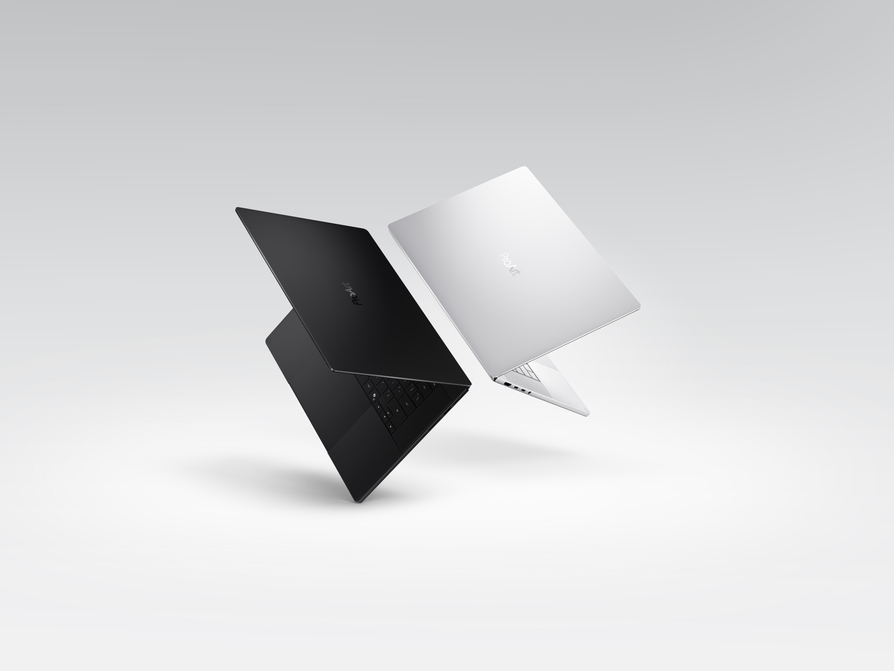
Beyond the internal prowess, Asus has also meticulously refined the external design of the ProArt P16 and P14. Both laptops feature CNC-milled chassis, offering a premium feel and durability. They will be available in a classic standard black and a striking new Neo White finish. Portability has also been enhanced, with the 16-inch P16 now 13% thinner and 16% lighter compared to its predecessor.
Immersive Visuals and Enhanced User Experience
At the heart of the visual experience are Asus’s renowned Lumina Pro OLED panels. These displays are equipped with an anti-reflective coating and can achieve a brilliant peak brightness of 1,600 nits, ensuring clarity and vibrant colours even in challenging lighting conditions. The larger 16-inch model boasts a 4K resolution display with a fluid 120Hz variable refresh rate and Nvidia G-Sync support for seamless gaming and motion clarity. The more compact 14-inch version sports a sharp 3K display. Asus has also integrated advanced haptic trackpads for a more precise and responsive user interaction. Furthermore, the battery capacity has been maximised to a substantial 99.9 Wh, providing extended power for professionals on the go.
Pricing and Availability
Asus has yet to officially announce the pricing for the new ProArt P16 and P14. However, considering the inclusion of 128GB of unified memory and the cutting-edge Nvidia RTX Spark silicon, it’s reasonable to expect these machines to be positioned at the premium end of the market. Availability is slated for this autumn.
In Other Asus News
In a separate announcement, Asus has also revealed a new 24.5-inch esports monitor featuring a remarkably fast 540Hz Tandem OLED panel and an ultra-low 0.02ms response time, catering to the most demanding competitive gamers.


