Reparations Debate Ignites in New York as Black Activists Clash with Democrats Over Eligibility and Immigration
A heated debate is unfolding in New York as Black activists advocating for reparations for slavery express deep concerns over proposals that include other minority groups, accusing Democratic politicians of strategically introducing immigrants to alter voter demographics and dilute their historical claims. The core of the controversy lies in who should be eligible for reparations and the perceived political motivations behind expanding the scope of these initiatives.
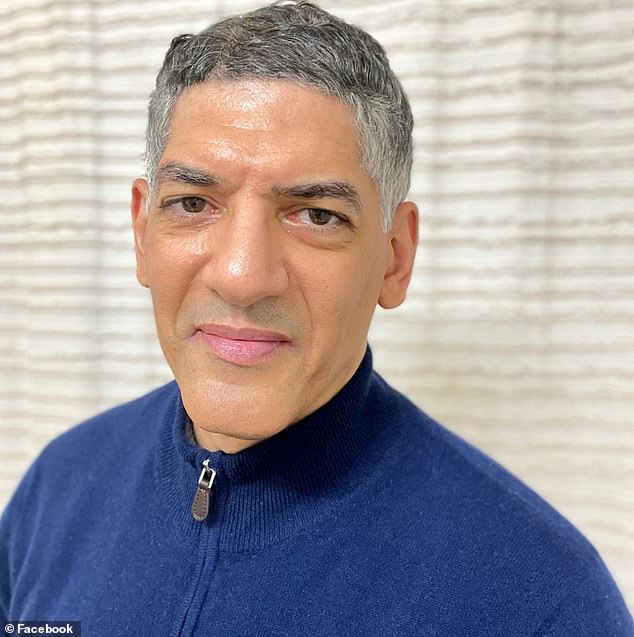
At a recent hearing of the New York State Commission on Reparations Remedies held in Long Island, Aubrey Muhammad, a vocal proponent of reparations for “Foundational Black Americans,” voiced strong opposition to broader inclusion. He alleged that Democrats were actively “importing” Latino immigrants to swell voting rolls, effectively positioning them as replacements for the Black community.
“The Democrats, in a sick way, imported 25 million immigrants,” Muhammad stated, expressing his belief that a significant portion of these new arrivals have been directed towards historically Black neighbourhoods. “Hempstead, since the 90s, has been flooded with immigrants. That’s taking the resources, putting them towards others.”
Census data from the Village of Hempstead appears to support some of these demographic shifts. Between 1990 and 2025, the Hispanic or Latino population in Hempstead reportedly surged from approximately 14 percent to around 45 percent. Concurrently, the Black population constituted roughly 45 percent of the town’s nearly 60,000 residents, according to available data.
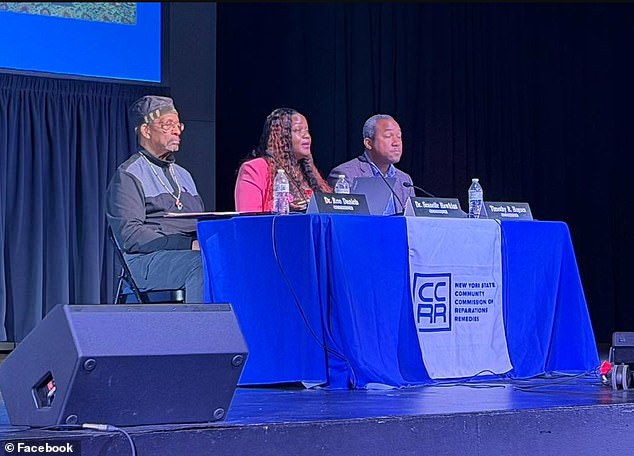
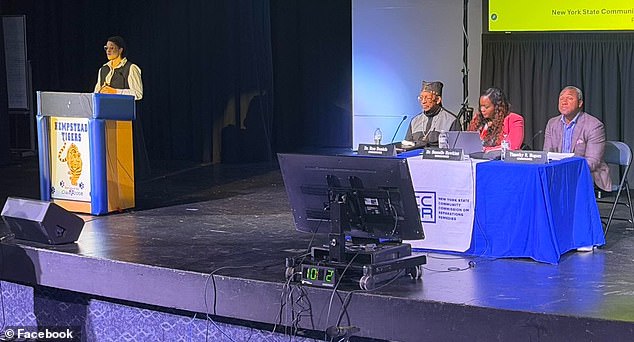
The public hearing, organised by New York’s nine-member reparations commission, aimed to gather opinions on historical discriminatory policies and the potential for reparations for slavery. Many speakers at the event identified with The United States Freedman Project (USFP), an organisation that advocates for reparations specifically for those who are direct descendants of enslaved people in the US.
“I think it’s important because as Foundational Black Americans who’ve been here since the founding of the country, coming in as slaves, and also indigenous people who are here, we have a claim to the country,” Muhammad explained. “We have our own culture, and we deserve to be compensated for what our ancestors have been put through.”
The USFP’s stated mission is to educate the public on the legal and historical distinctions between African Americans who are descendants of enslaved individuals and those who immigrated voluntarily. Their supporters argue that basing reparations eligibility solely on race would contravene the Constitution’s Equal Protection Clause.
“If those are based on race, they’re going to be shot down like affirmative action, like the Fearless Fund, like the farmer’s bill,” Divine Prince, a spokesperson for the USFP, told reporters, highlighting concerns about potential legal challenges. Instead, they advocate for eligibility to be determined by “proven lineage.”
However, not all stakeholders agree with this restrictive approach. Dr. Ron Daniels, a member of the reparations commission, acknowledged the complexity of the issue. “The idea that we feel that we should somehow craft something that will not in some way look like it’s racial is somewhat problematic,” he commented. He also noted the commission’s engagement with a legal team to develop an “injury- and harm-based proposition” for reparations.
Broader Inequities and the Fight for Recognition
Susan Gottehrer, Director of the Nassau County Chapter of the New York Civil Liberties Union (NYCLU), presented a counterargument, asserting that a broader approach is necessary to effectively address systemic inequities. “These government policies have affected Black New Yorkers regardless of lineage,” she stated. “Excluding a subset of Black Americans would leave a significant portion of documented racial injustice completely unexamined.”
Muhammad, however, dismissed Gottehrer’s perspective as “disrespectful,” arguing that it fails to acknowledge the unique historical experiences of Black Americans whose ancestors were enslaved. He suggested that organisations like the ACLU might be seeking to secure funding from reparations to support their own initiatives. “They form these organizations, they give them funding and they bless these immigrants – they bless these other groups, marginalized groups,” he contended.
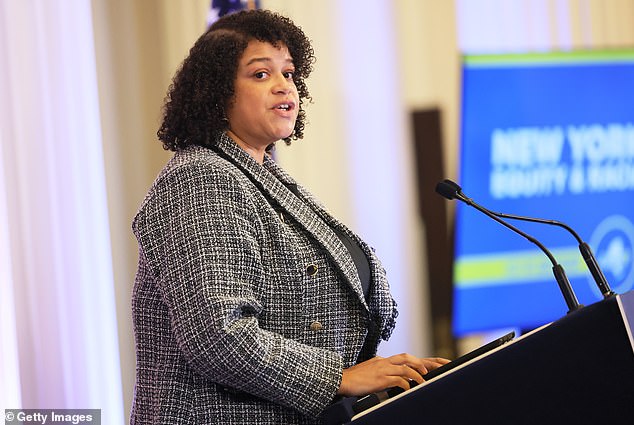
New York State Assemblymember Michaelle Solages also faced criticism for remarks perceived as aligning with a more inclusive view of reparations.
Solages stated her intention to ensure that legislation for the commission involves a “thorough conversation about slavery and its harms, whether it’s mass incarceration, health disparities, the lack of educational opportunity for folks or the wealth gap.”
Brooke Lean, a supporter of the USFP, expressed frustration with this broader framing. “They want to erase our story, dilute our story by adding in a bunch of people who just got here, whose ancestors did not build this county,” she told reporters.
The hearing in Hempstead was the 19th session held by the commission and the second on Long Island. Lynette Battle, another attendee, shared a personal account of her family’s direct connection to slavery, explaining how the “harm and economic impact did not disappear” but rather “passed from generation to generation.”
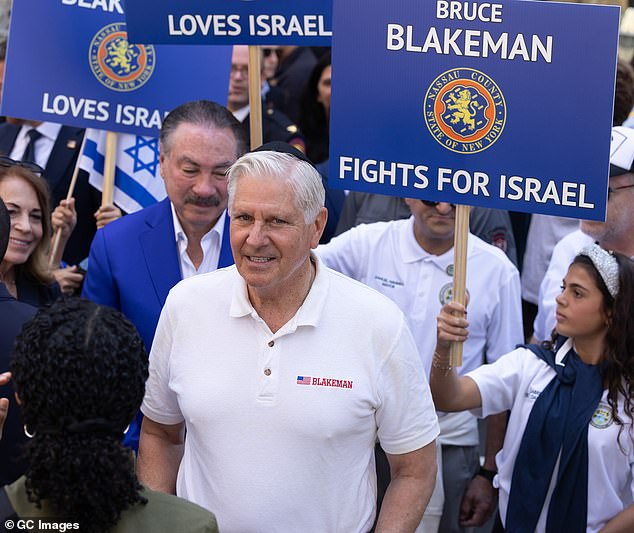
Meanwhile, Nassau County Executive Bruce Blakeman, a Republican gubernatorial candidate, dismissed the reparations initiative as a “just another empty political promise that will never materialize,” suggesting that Black New Yorkers are “smart enough to know” this reality.