

Donald Trump’s recent outbursts directed at his NATO allies over their reluctance to engage in the volatile Hormuz Strait standoff have once again showcased his characteristic demeaning and graceless behaviour. The US President’s threats to “never forget” who offered support and who did not, his derision of British Prime Minister Keir Starmer and the Royal Navy for perceived inaction, and his expressed “surprise” at Australia’s apparent lack of military commitment have drawn sharp criticism and highlighted a growing divide.
The core of the issue appears to be a clear message from NATO partners: “You broke it, you own it.” Starmer, in particular, has shown a newfound resolve, stating he “will not buckle” under Trump’s pressure, a stance that has clearly displeased the US President. Australia, meanwhile, is opting for a more subdued approach, aligning with the broader international consensus rather than succumbing to unilateral demands.
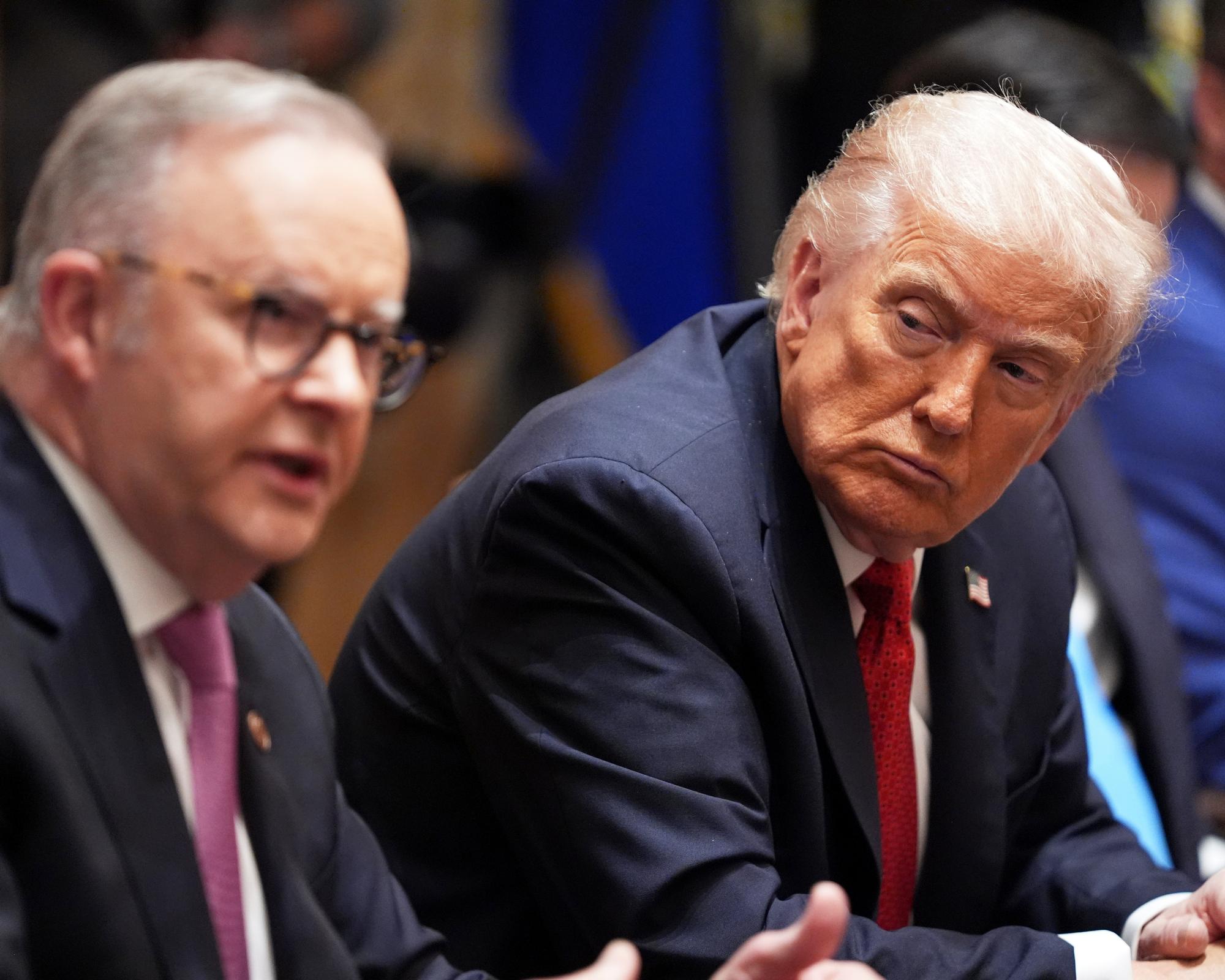
It’s becoming increasingly apparent that Donald Trump is out of his depth, struggling to articulate a clear path forward. His strategy of extending deadlines while simultaneously deploying more military forces to the Gulf suggests a belief that boots on the ground are the solution – a notion that, if pursued, could lead to disastrous outcomes akin to past conflicts in Korea, Vietnam, Iraq, and Afghanistan.
Trump’s attempts at bluster and bullying are proving ineffective, as are his fabricated narratives of ongoing negotiations with the Iranian government. While he may not have exhausted all his options, the viable ones are rapidly diminishing, and the definition of “victory” in this complex geopolitical landscape remains elusive.
His international partners are understandably unwilling to escalate a crisis that is already inflicting damage on the global economy and carries the inherent risk of unpredictable and dangerous escalation. This is hardly the time to intensify tensions, especially when Iran holds a significant leverage over the global oil market.
Navigating the Diplomatic Tightrope
Australian Prime Minister Anthony Albanese has rightly dismissed Trump’s criticisms. However, both the Prime Minister and Deputy Prime Minister Richard Marles appear to be caught in a linguistic dance, struggling to reconcile the contradictions within US foreign policy. The objective of dissuading Iran from developing nuclear weapons is distinct from endorsing large-scale rocket attacks by the US and Israel without concrete evidence of Iranian intent.
The concept of an “international rules-based order,” a frequent refrain in Australian foreign policy, appears to be in tatters. The urgent task now is to construct a new framework that effectively serves Australia’s economic, political, and strategic interests, fostering collaboration with partners rather than capitulating to potentates.
International Voices of Concern
Canadian Prime Minister Mark Carney has publicly addressed the ramifications of the Trump presidency. More recently, German Defence Minister Boris Pistorius delivered candid remarks at the National Press Club, highlighting Trump’s lack of an exit strategy. In contrast, Australia’s Deputy Prime Minister Marles has resorted to circumlocutions and platitudes, a position that suggests a reluctance from the Albanese government to speak truth to power.
The Albanese government seems to be caught in a difficult position, balancing its long-standing security reliance on the US with the destabilising global consequences of a US acting erratically. The current crisis is far from resolved, with Iran seemingly gaining ground by extending the repercussions of Israeli-US actions across the global community.
Asymmetric Warfare and Strategic Choices
Ironically, Iran appears to be adopting elements of Trump’s own unpredictability playbook. Trump’s earlier imposition of tariffs as a tool of statecraft has, in effect, sanctioned Iran’s use of punitive energy restrictions and other economic measures as an asymmetric weapon.
To extricate itself from this predicament, the Albanese government faces a stark choice. It must, to some extent, accept Iran’s control over the Strait of Hormuz – much like the international community accommodates Egypt’s control of the Suez Canal. Crucially, it must also urge its “great and powerful friend” to leverage its remaining diplomatic capacity rather than relying solely on military might.
Trump’s established pattern involves demeaning those who challenge him while demanding more from those who concede. Therefore, Trump’s criticism of Albanese can be interpreted as a sign that the Australian leader has captured his attention, and importantly, in a constructive way. This suggests that Albanese is beginning to assert Australia’s agency in pursuit of its own national interests.
This approach is essential for dealing with petulance and for ensuring that Australia is not taken for granted on the international stage.
Allan Behm provides advice on international and security affairs at the Australia Institute in Canberra.


