From Heartbreak to Hope: A German’s Journey to Revitalise a Nepali Village
A personal crisis can often be the catalyst for profound change, not just for the individual experiencing it, but for entire communities. This was the case for Jonathan, a young German man in his early thirties, who arrived in Nepal driven by a deep sense of heartbreak and disillusionment. His five-year live-in relationship with Jenifer, a medical student, had reached a sudden and painful end just days before their planned marriage. A seemingly minor disagreement escalated into an unbridgeable chasm, leading Jenifer to abruptly leave their shared life in Hamburg. Despite Jonathan’s earnest attempts to reconcile, her resolve was unyielding.
Devastated and seeking solace, Jonathan decided to leave not only his city but his country behind. His profound love for nature and a yearning for solitude drew him to the majestic landscapes of Nepal. He travelled extensively, immersing himself in the country’s natural beauty, eventually settling in the bustling capital, Kathmandu.
It was in Kathmandu that Jonathan’s life took an unexpected turn when he befriended Hum Bahadur, a young Nepali man working at a local restaurant. Hum Bahadur, originally from the remote village of Jimruk in Lamjung district, had been living and working in Kathmandu for seven years. Upon learning of Jonathan’s desire to experience rural Nepal, Hum Bahadur, who found himself with a few days of unexpected free time due to restaurant renovations, extended an invitation to visit his village. Jonathan, eager for an authentic experience, readily accepted.
The Journey to Jimruk
Their adventure began with an early morning bus ride from Kathmandu to Damauli in Tanahun district. The following day, they transitioned to a robust Mustang jeep for the journey to Jitakot, Lamjung. From Jitakot, the final leg of their journey involved a challenging three-hour trek to Jimruk village. The path was arduous, marked by a gravelled road riddled with potholes and damaged in several sections. The jeep navigated treacherous terrain, crossing rivers with considerable water levels, at times submerging almost halfway, and skirting steep cliffs. Far from being daunted, Jonathan found the thrilling and unpredictable ride exhilarating.
Along the way, the jeep made several stops where local vendors offered a vibrant array of fresh produce. Jonathan sampled various fruits and vegetables, but it was the local kafal (bayberry) that particularly captivated his taste buds with its unique flavour.
A Warm Welcome and a Taste of Village Life
Arriving in Jitakot at 4 p.m., Jonathan and Hum Bahadur commenced their three-hour walk to Hum Bahadur’s ancestral home. They were greeted with immense warmth and affection by Hum Bahadur’s parents, Harke and Sitamaya, who adorned their necks with flower garlands as a traditional gesture of respect and welcome.
Jonathan was deeply moved by the genuine love and admiration displayed within the household. Sitamaya prepared a traditional Nepali dinner, featuring flavourful gundruk soup (a fermented mustard green dish) and a rich vegetable curry made with pidalu (taro) and tender pumpkin stems. While dinner was being prepared, Harke gathered fresh ingredients from his backyard farm – tomatoes, mint, ginger, garlic leaves, and fiery dulle khursani (fireball cherry pepper). He expertly ground these into a vibrant pickle, enhanced with timmur (Sichuan pepper) and a pinch of salt. Jonathan savoured this authentic and delicious meal, likely one of the most memorable he had experienced in Nepal.
After dinner, the family gathered around the hearth, engaging in conversation. Hum Bahadur’s parents, with Jonathan as the subject of their curiosity, posed numerous questions, with Hum Bahadur acting as the bridge between his parents and their foreign guest.
The Beauty and the Burden of Jimruk
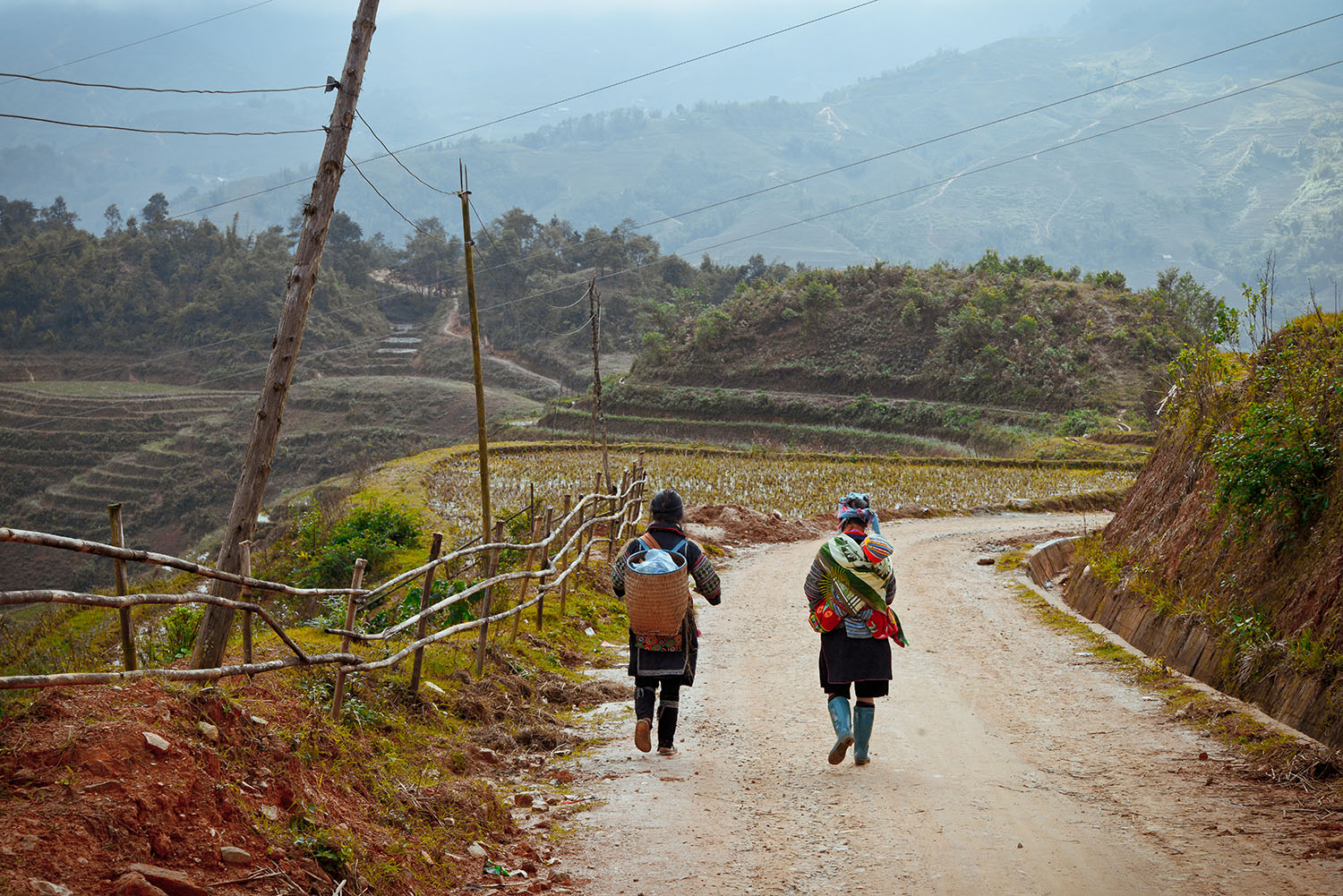
The following morning, Hum Bahadur proudly guided Jonathan through his village. They explored lush vegetable farms, fertile paddy fields, and vibrant mustard fields. The landscape was dotted with fruit trees, including orange, guava, pineapple, and avocado. In the distance, the majestic snow-capped Himalayas stretched across the horizon, painting a breathtaking panorama. Jimruk village, in its natural splendour, appeared to be a true paradise on Earth.
However, amidst this breathtaking beauty, Jonathan couldn’t overlook a poignant reality: the presence of numerous abandoned and decaying houses. Overgrown bushes had reclaimed many homes, their once-appealing structures succumbing to the ravages of time, with wooden elements rotting and termite colonies infesting the decaying wood.
Jonathan, expressing his concern, inquired about the deserted state of the village. Hum Bahadur, with a heavy heart, explained the underlying reasons. He articulated the severe lack of essential basic amenities, including electricity, adequate schools, and a functional hospital.
The Root of Migration and a Seed of Hope
Hum Bahadur elaborated on the challenges faced by the villagers. For critical medical emergencies, residents must travel over 95 kilometres to Pokhara. The dilapidated condition of the roads and the absence of bridges across numerous rivers render travel virtually impossible during the monsoon season. Education was another significant issue; the village lacked even a single high school, let alone a college.
Jonathan, understanding the core issue driving the exodus of villagers, suggested that establishing a functional hospital and a high school could potentially curb the migration. Hum Bahadur, however, expressed skepticism, viewing such initiatives as beyond individual capacity and the government’s current priorities, which he felt were consumed by self-interest rather than rural development.
A moment of reflection followed, after which Jonathan, with newfound determination, proposed a collaborative effort. He expressed his belief that together, they could bring about positive change. Hum Bahadur, though astonished by the ambitious proposal, pledged his unwavering support, questioning what two individuals could possibly achieve.
Jonathan then unveiled his vision to Hum Bahadur. While ambitious, the plan was undeniably achievable. The two men shook hands, solidifying their commitment to transforming their shared dream into a tangible reality.
Revitalising Jimruk: A Collective Effort
Their initial phase involved engaging with the remaining families in the village. At the time, only 12 houses were occupied, a stark contrast to the over 60 that had existed just a few years prior. Jonathan and Hum Bahadur presented their ideas, seeking the cooperation and support of the villagers, who readily agreed to lend their assistance.
Jonathan spearheaded the transformation of the 12 occupied houses into welcoming homestays. Villagers were encouraged to cultivate local produce to cater to visiting guests. Hum Bahadur advised the local women to develop and showcase their traditional songs, dances, and culinary heritage. Jonathan also proposed inviting journalists from Kathmandu to document their village’s story, a move that garnered significant attention from both electronic and print media outlets in the capital.
Further emphasis was placed on cultivating cultural experiences. Jonathan reached out to his network of German friends, who provided invaluable support, including financial assistance.
Within months, the impact of their efforts became evident. Many families who had migrated began to return to their village, demonstrating solidarity and a renewed commitment to its development. A Village Development Committee was established, and with each passing day, more families returned to reclaim their homes. Under the committee’s leadership, spearheaded by Jonathan and Hum Bahadur, the village primary school was successfully upgraded to a high school.
The Unexpected Arrival and a Renewed Bond
Gradually, Jimruk village began to attract both domestic and international visitors, drawn by the authentic local experiences offered by the villagers. Yet, a persistent concern for Jonathan remained: the absence of a doctor to serve the local community. A clinic had been established, but it lacked medical personnel.
As Jonathan pondered how to staff the clinic, an email arrived. The sender, who remained anonymous, expressed a keen interest in taking responsibility for the clinic on a voluntary basis. Jonathan’s joy was immense upon receiving this news, which he shared with the delighted villagers. The prospective doctor soon arrived in Kathmandu, and Hum Bahadur was dispatched to escort them to Jimruk.
The village buzzed with anticipation. The clinic was adorned with festive decorations, and colourful balloons filled the air. Jonathan and the villagers gathered at the main entrance, eager to welcome their new doctor. As Jonathan spotted the approaching figures of the doctor and Hum Bahadur, he held a flower garland ready.
However, as the doctor stepped forward, Jonathan froze, his eyes widening in disbelief. He felt as though he were in a dream. Standing before him was none other than Jenifer. The shock was so profound that Jonathan momentarily forgot his prepared gesture, tears welling up in his eyes instead. Jenifer embraced Jonathan, her voice filled with emotion, proclaiming, “I am here with you forever.”