

Nvidia Unveils “New Era of PC” and AI Supercomputers at Taiwan Tech Extravaganza
Nvidia CEO Jensen Huang, a familiar figure in his signature leather jacket, recently took centre stage at the company’s annual GTC conference in Taiwan, an event widely dubbed the “Super Bowl” of artificial intelligence. Huang’s address, held in his birthplace, was a deep dive into Nvidia’s latest innovations, spanning from a revolutionary new personal computer concept co-developed with Microsoft to the burgeoning world of AI agents and the economic landscape of AI development. Here are the key highlights from this pivotal tech gathering in Taipei.
The Dawn of the AI PC
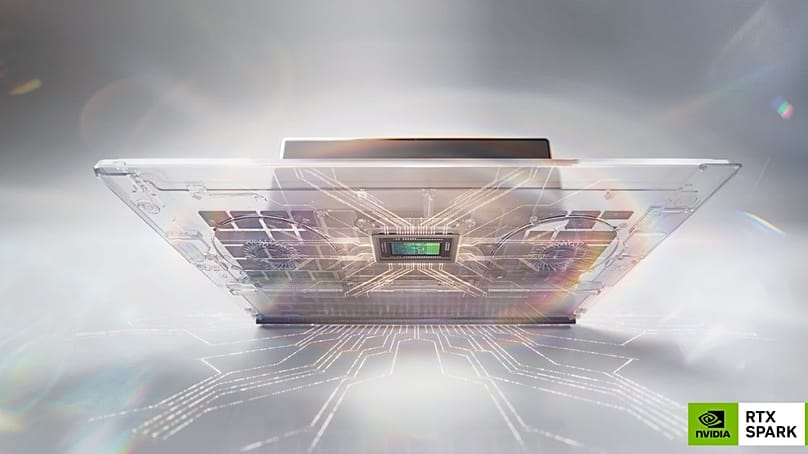
Huang saved one of his most significant announcements for last, proclaiming a “new era of PC” through a groundbreaking partnership with Microsoft. He described this initiative as the most substantial “PC reinvention in 40 years,” aiming to reimagine desktops, laptops, and workstations. This marks the first significant overhaul of engineering for personal computers in four decades.
Huang articulated a compelling vision for the future of computing within the home. He theorised that just as modern households have embraced labour-saving devices like lawnmowers and dishwashers, they will one day integrate AI supercomputers as a standard fixture.
“I imagine someday an AI supercomputer in your house running [AI] agents,” Huang stated, painting a picture of a future where these intelligent systems become deeply embedded in our daily lives. He continued, “And you have to have it in your house and these in time become more like R2-D2 to you than a PC to you.”
He drew a parallel between this upcoming transformation and the evolution from basic phones to smartphones, asserting that this represents “the beginning of that journey.” These next-generation computers will be powered by RTX Spark, a novel “superchip” designed to unify AI agents, content creation capabilities, and gaming experiences within a single, portable device. While the RTX Spark-powered laptops are slated for release later this autumn, specific pricing details remain undisclosed. Adding to the excitement, Huang revealed that industry giants like Adobe are actively redeveloping their flagship software, Photoshop and Premiere Pro, to leverage the advanced architecture of RTX Spark.
The Rise of AI Agents
Huang kicked off the conference by declaring, “Today, agentic and useful AI has arrived,” firmly establishing AI agents as a core theme for the event. In principle, AI agents are designed to operate autonomously, assisting humans without the need for constant direct instruction. They achieve this by gathering data based on user preferences and learning patterns. However, Huang acknowledged that while the technology has made significant strides, it is still in its nascent stages and requires ongoing human oversight and input.
The Economics of AI: Compute Fuels Revenue
Beyond the technological marvels, Huang delved into the economic underpinnings of AI, highlighting the potential of “super agents” as significant “profit generators” for businesses. His central thesis was straightforward: “Compute is revenue. The more you buy, the more you make.”
He elaborated on the current market dynamics, noting, “All of you are experiencing this with me; everyone wants to make money. They realise profitable AI is here, compute demand is incredibly high. Let’s help the world and build AI factories around the world.”
To meet the demand for high-speed AI agent execution, Nvidia unveiled Vera, a new class of processor engineered to accelerate task completion by an impressive 1.8 times. Huang described Vera as the “Central Processing Unit (CPU) for AI agents,” calling it the “last computer science breakthrough.”
In a nod to sustainability, Huang mentioned that both the Rubin GPU and Vera CPU architectures are being designed with full liquid cooling in mind. This approach promises a more efficient and quieter computing experience, eliminating the need for traditional cables, hoses, and fans.
AI is Not a Job Killer, but a Skill Multiplier
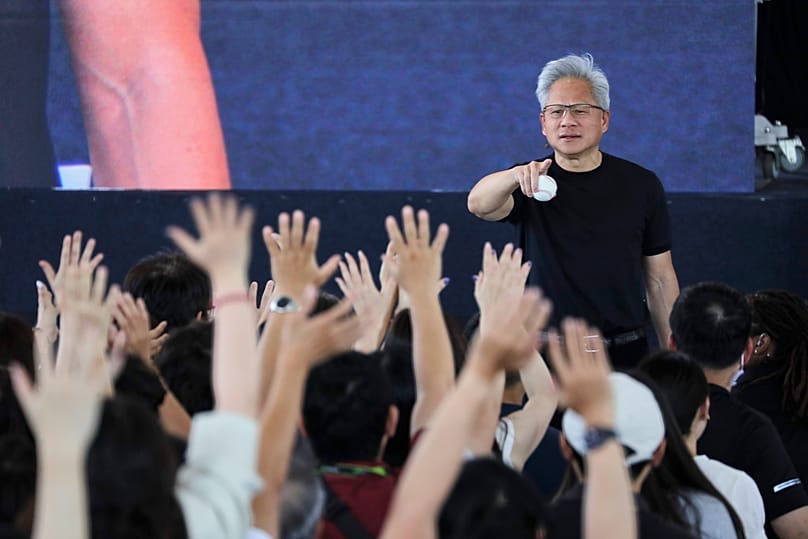
Addressing widespread concerns about artificial intelligence displacing human workers, Huang emphatically stated that the notion of AI taking jobs from software engineers is “complete nonsense.” He argued that the industry is, in fact, experiencing an increased demand for these professionals.
Huang has consistently championed the idea that the true risk lies not in AI replacing jobs, but rather in individuals who master AI tools outperforming those who do not. His message is one of adaptation and skill enhancement, rather than outright replacement.
A Memorable, If Slightly Unconventional, Closing
Nvidia concluded its two-hour presentation with a unique flourish: an AI-generated video showcasing robots navigating the bustling night markets of Taipei, complete with a song detailing the keynote’s announcements. While the visual fidelity of the animation was undeniably impressive, the overall execution, for some observers, leaned towards being a touch “cringe.” Nevertheless, it served as a memorable, albeit unconventional, demonstration of Nvidia’s AI capabilities.


