
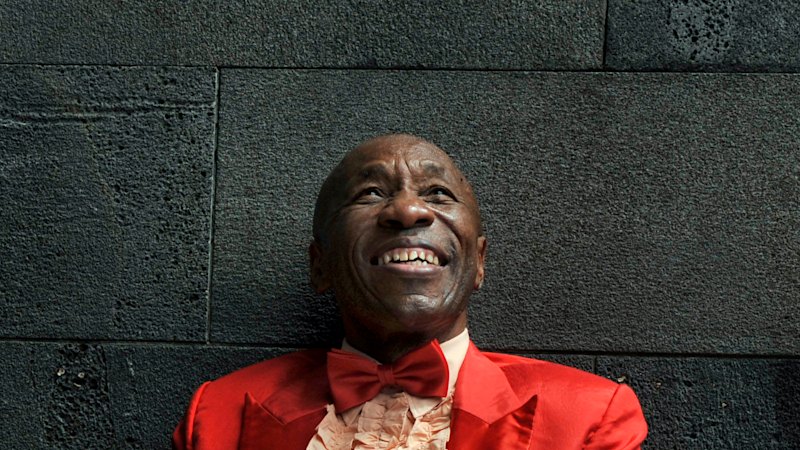
Movin’ Melvin Brown: A Soulful Journey of Song, Dance, and Purpose
Texan-based performer Movin’ Melvin Brown, a dynamic force in the world of music and dance, is set to captivate audiences with his latest production, “Soul to Soul (I Have a Dream!)”. Despite his seasoned experience, Brown maintains an electrifying stage presence, performing for an impressive 50 weeks a year. He playfully deflects questions about his age, stating he’s “between 20 and 60,” a testament to his enduring youthful vigour.
Brown’s show, coming to Chapel Off Chapel for six nights from next Tuesday, offers a vibrant tapestry of soul music. It masterfully weaves together tributes to legendary artists like Ray Charles, Sam Cooke, and Otis Redding, with his own original compositions. But the performance is more than just a musical journey; it’s a visual spectacle featuring his signature tap, juke, clogging, and even robotic dance moves.
“I give people an understanding of where the term came from and what it really is about,” Brown explains, resplendent in his signature red tuxedo. “Soul music has a history, so I talk about how the term came about and the conditions that it came from.” His show serves as a condensed history lesson, illuminating the origins and essence of soul music for his audiences.
Brown’s musical journey began in the early 1960s with a doo-wop band, followed by his work with the Movin’ Soothen’ and Stone Funk band. However, his prowess in tap dancing is a more recent development. Fifteen years ago, in a bid to enhance his appeal to festival organisers, Brown found himself embarking on a rapid learning curve.
“I told a guy I wanted to appear at his festival, and he asked what I did,” Brown recounts. “I said I could sing and there was a silence at the end of the line – so I said, ‘And I can tap dance!’ I had to learn it in six months.” The tale is a testament to his adaptability and sheer determination. Witnessing him now, effortlessly executing complex tap routines, it’s hard to fathom that he only took up the discipline relatively recently.
“I could dance before that, but not tap,” he admits. “I think if you can dance, you can tap.” This philosophy underpins his ability to seamlessly integrate various dance styles into his performances.
Beyond his captivating stage persona, Brown is a man of many talents. He’s a songwriter, a former singing telegram deliveryman, a prison counsellor, and even a minister. This diverse background fuels his belief that many contemporary artists lack the multifaceted skills that defined the “song and dance man” era.
“I still love the idea of the song and dance man,” he asserts. “I guess Michael Jackson was kind of a culmination of all those older song and dance men … that’s why I loved to watch him. Of course all the people thought it was new – it wasn’t new! He just put it all together.” Brown sees himself as a torchbearer for this tradition, reviving a style that resonates with audiences of all ages. “You just don’t see that any more. When people see my show they think it’s really great – even the young kids get tripped off at the tap dancing.”
A significant portion of Brown’s performance profits is dedicated to a long-standing homeless project in his hometown of Austin, Texas. He dedicates a substantial amount of his time to this cause, spending only three to four weeks a year at home. This commitment, coupled with his demanding performance schedule, paints a picture of a man driven by passion and purpose.
When gently probed about his workload, assuming he’s closer to 60 than 20, Brown laughs and concedes, “you’re probably right.” He attributes his sustained energy to the era he hails from. “I came from the song and dance man era – Jackie Wilson, James Brown, Sammy Davis Junior – if you enjoy it and keep doing it, you just keep getting the energy to do it. It works of itself,” he explains. “And of course, I love doing it.”
Melbourne’s City Museum Closes its Doors
In a somber turn of events for Melbourne’s cultural landscape, the beloved City Museum has announced its permanent closure. After 14 years of operation, the museum will cease to welcome visitors on Sunday. Housed within the architecturally significant Old Treasury building at the top of Collins Street, the not-for-profit institution has played a vital role in showcasing Melbourne’s rich social history.
The decision to close the museum was made in December by Tourism and Major Events Minister Tim Holding. He stated that the Old Treasury building, an “extraordinary architectural icon,” could be better utilised. This move will facilitate the expansion of the Victorian Marriage Registry, which also occupies the historic 19th-century structure.
“I think it’s an upsetting event for the museum culture in Melbourne,” expressed Kate Luciano, the museum’s senior curator. The closure marks a significant loss for the city’s heritage and exhibition spaces.
Operating on a modest annual budget of $600,000, the City Museum has consistently attracted visitors, drawing approximately 35,000 tourists last year. Its recent exhibition, “The Toy Box,” achieved a record attendance of 10,000 visitors, highlighting its growing popularity and successful public programming.
Luciano voiced her dismay at the decision, describing it as “bizarre” given the museum’s upward trajectory in visitor numbers and program success. “We are such a large, vibrant and cultured city that I feel there is a place for multiple cultural institutions telling the story of Melbourne,” she added. The closure means that valuable artefacts, currently on loan from private lenders, will be returned to their owners. These lenders are reportedly “devastated” that the public will no longer have the opportunity to experience their remarkable collections.


