

Iranian Women’s Football Team Sparks SOS Fears Amidst Australian Tournament
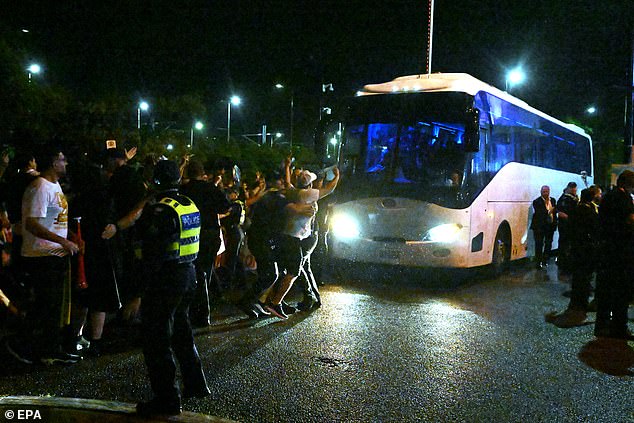
A distressing scene unfolded on the Gold Coast as approximately 200 protesters gathered around the Iranian women’s national football team bus. Chants of “let them go” echoed as concerns mount over the players’ safety upon their return to Iran, with fears of imprisonment or even death. The team, in Australia for the AFC Women’s Asian Cup, saw their tournament campaign conclude with a 2-0 loss to the Philippines.
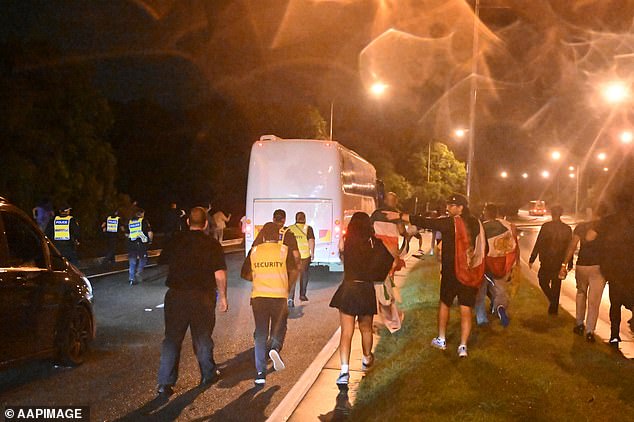
Following the match, the situation intensified outside the stadium. As the team boarded their bus, a significant crowd of protesters surrounded the vehicle, their voices a mix of protest and pleas. Police were present, working to manage the impassioned demonstrators who banged on the bus and vociferously called for the players’ freedom.
Among the protesters were individuals displaying the Lion and Sun flag, a potent symbol predating the 1979 Islamic Revolution and now widely recognised as an emblem of resistance against the current Iranian regime.
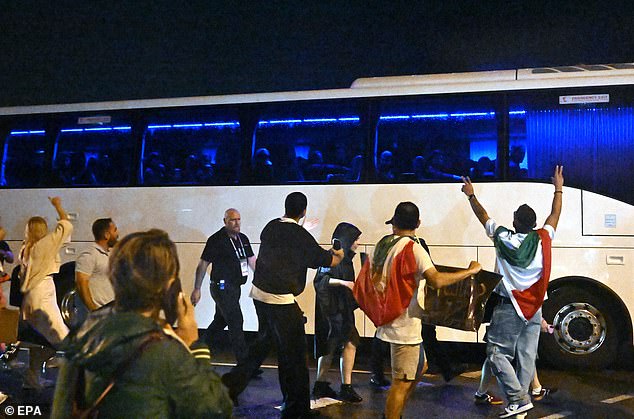
Amidst the commotion, a deeply concerning moment was captured: at least one Iranian player was observed making a recognised international SOS distress signal from within the confines of the team bus. This signal, a simple yet powerful gesture of tucking the thumb into the palm and folding the fingers over it, is a universally understood plea for help.
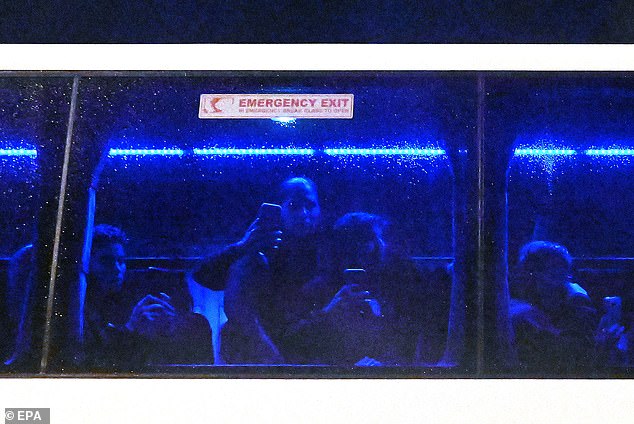
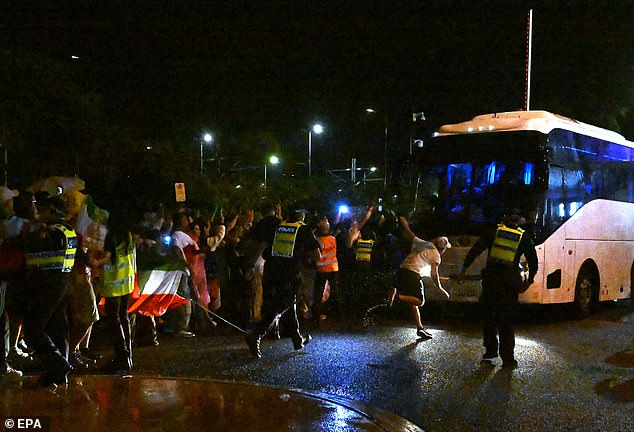
This critical distress signal reportedly followed earlier footage of at least one player making a heart symbol towards the crowd outside, an act that may have been misinterpreted or intended as a gesture of solidarity before the more urgent plea for assistance.
“The help sign is, I think, the most concerning,” stated Ara Rasuli, 25, to News Corp. Another protester, Aram, 19, shared her experience of approaching a police station to demand intervention from the Australian Federal Police. “There is a clear video of one of them doing the help sign. People’s lives are in danger,” she emphasised.
Confirming the widespread concern, a source within the Iranian-Australian community revealed that activists were independently engaging with the Australian Federal Police to secure urgent protection for the women.
One protester recounted a chilling encounter her mother had with two players in a hotel elevator. “They told her they cannot talk,” she shared, her voice heavy with emotion. “There were threats to their family in Iran. They are super scared. Some of them were crying on the bus as we were chasing the bus and trying to stop it and don’t let them go.”
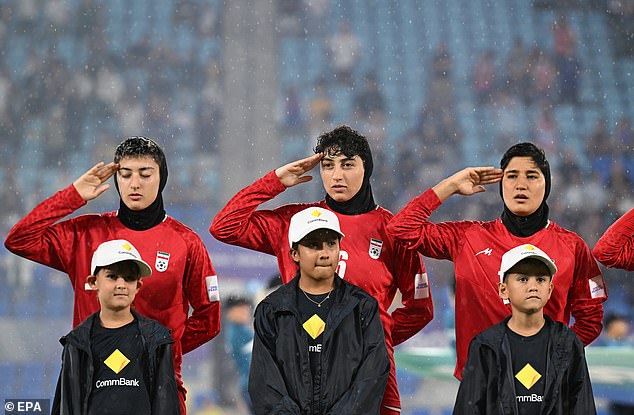
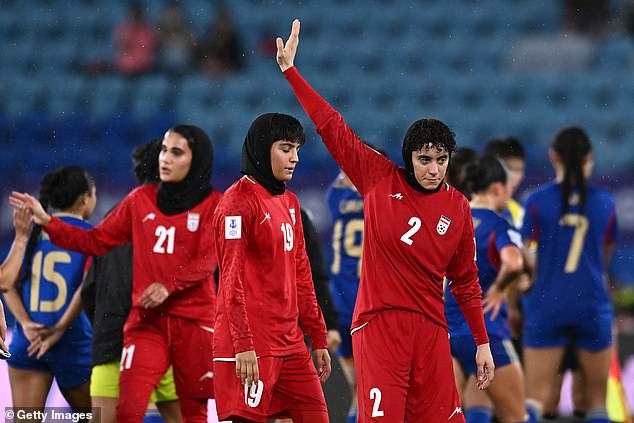
The current crisis appears to have been ignited by the team’s silent protest during the playing of the Iranian national anthem before their opening match against South Korea. This act of defiance was met with immediate condemnation from Iran’s state-controlled television, which labelled the boycott “the pinnacle of dishonour” and “the height of shamelessness and betrayal.”
A presenter on air, Mohammad Reza Shahbazi, issued a stark warning: “In times of war, traitors must be dealt with more harshly. Anyone who takes even a single step against the country during wartime must face stronger consequences.” This pronouncement came in the wake of a significant geopolitical event, adding a layer of extreme danger to the players’ protest. Under Iranian law, corruption and treason are punishable by death.
This anthem boycott is not an isolated incident. At the 2022 men’s World Cup in Qatar, the Iranian men’s team also notably refused to sing their national anthem and refrained from celebrating goals during their opening match against England. That protest occurred concurrently with a severe crackdown by Iran’s Revolutionary Guard on the nation’s women’s rights movement.
The pressure on the women’s team has been palpable, with two players withdrawing from the squad prior to the Asian Cup’s commencement. Former player Kousar Kamali expressed her profound distress on social media, writing, “When the heart is wounded and the soul is tired, football is no longer a refuge. I can’t pretend everything is normal. This decision is not out of anger, it is out of awareness. It is not out of disrespect, it is out of respect for my conscience.”
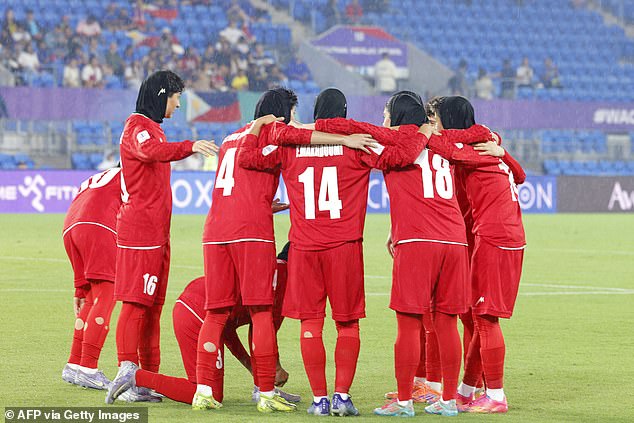
Reports suggest the team was subsequently instructed by the regime to sing the anthem in subsequent matches. They complied, performing the anthem and a military salute before their second game against Australia and again before their final match on Sunday.
Raha Pourbakhsh, a journalist for Iran International TV, detailed the severe duress the women have allegedly faced. Speaking on The Sports Ambassador podcast, she revealed that players were threatened with the end of their careers and imprisonment. Furthermore, their phones were reportedly tapped, and they were coerced into signing hefty bail agreements that explicitly prohibited them from seeking asylum in Australia or applying for refugee status. They were also reportedly instructed to sing the national anthem and display joy if they scored, to project an image of normalcy.
These fears are compounded by tragic events that have already befallen the Iranian women’s football community. Player Zahra Azadpour was reportedly shot dead during protests in January, and referee Sabha Rashtian was also killed amidst demonstrations.
Compounding the anxiety, players are reportedly scheduled to travel to Turkey before returning to Iran by bus, a journey that occurs even as conflict rages in the region. There are also grave concerns that family members back home may be held hostage, effectively preventing the players from seeking asylum abroad.
A petition urging Australia not to permit the players’ return to a dangerous situation has garnered over 46,000 signatures. The petition states, “Australia is hosting this tournament … This is a moment for principled leadership.”
Leaders within the Iranian community have formally requested authorities to engage with the players privately. Their aim is to “ensure they are aware of their rights and the protection pathways available.”
Activists, politicians, and former Socceroos captain Craig Foster have all appealed to FIFA and the Australian government, imploring them to guarantee that no player is forced to leave if they feel unsafe. Foster specifically urged, “The Australian government should ensure that no players are forced to leave against their wishes or will, and provide all opportunities to be satisfied this is not the case.”
Assistant Foreign Affairs spokesman Matt Thistlethwaite, when questioned about whether any players had sought assistance from Australian authorities, declined to provide specifics, citing privacy concerns. “It’s been great to see the Iranian women’s team participating in the Asian Cup,” he remarked to Sky News. “We don’t go into individual circumstances for privacy reasons.”
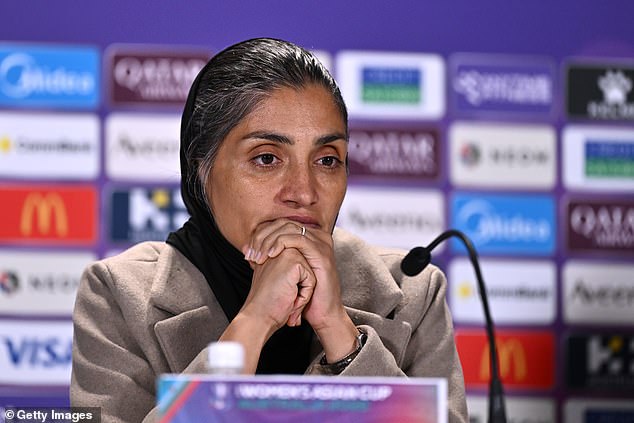
Despite the unfolding drama and the visible distress of some players, Iranian head coach Marziyeh Jafari, who herself sang the anthem and performed the military salute, stated to reporters that the team was ready to return home. “We want to come back to Iran as soon as we can,” she told the ABC. “I want to be with my country and home, Iranians inside Iran. We are eager to come back.”


