Iran’s Leadership Vacuum: A Stumbling Block for International Diplomacy
For months, the Trump administration has been painting a picture of imminent progress in negotiations with Iran, suggesting a deal was within reach. However, these pronouncements have consistently fallen short of reality, leaving many questioning the efficacy of the White House’s diplomatic efforts. While criticism has been levelled at the administration for its perceived failures, a deeper, more complex issue lies at the heart of these difficulties: the fractured and uncertain state of leadership within Iran itself.
The country’s power structure appears to be precariously balanced between an increasingly influential military and a political class that has suffered significant losses, allegedly due to US and Israeli airstrikes. Adding to this complexity, the individual ostensibly at the helm of the nation has been conspicuously absent since assuming the highest office.
A Divided Landscape: Hardliners, Moderates, and the Supreme Leader
Australia’s former ambassador to Lebanon, Ian Parmeter, explained to nine.com.au that Iran has long been characterised by an internal division between hardline factions and more moderate voices. Historically, the Supreme Leader, Ali Khamenei, served as the ultimate arbiter, listening to all sides before making final decisions.
“He would listen to the views of all sides, and then say, well, this is what we’re going to do,” Parmeter recalled. “The big problem now is that with Ali Khamenei having been killed by the Israelis, there really isn’t anyone there right at the top to be able to, to, in a sense, knock heads together.”
The situation has been further complicated by the alleged succession of Khamenei by his son. While officially holding the position of Supreme Leader, reports suggest he may have sustained serious injuries and has not been seen publicly since the airstrike that reportedly claimed the lives of his family. Public statements from him have been scarce.
Adel Abdel Ghafar from the Australian Strategic Policy Institute highlighted the fundamental role of the Supreme Leader in Iran’s system. “Ultimately the Iranian system is designed for the Supreme Leader to have final say on all negotiating matters,” he told nine.com.au. “The main issue is that we don’t know what the status of Khamenei is.”
Parmeter also pointed to the alleged killing of Ali Larijani in March as a significant misstep by the US and Israel, describing it as an “own goal.” He noted Larijani’s influence within the Iranian system, stating that while not a moderate, he was capable of shaping internal debate.
The Ascendancy of the Revolutionary Guard
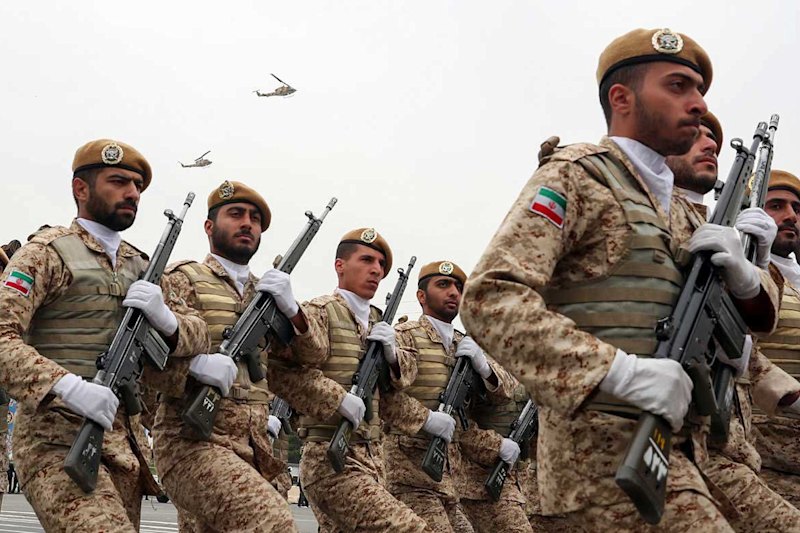
Iran’s power dynamics can broadly be divided into two main camps: the politicians, represented by figures like Foreign Minister Seyed Abbas Araghchi and Parliamentary Speaker Mohammad-Bagher Ghalibaf, and the Islamic Revolutionary Guard Corps (IRGC). The IRGC, a hardline paramilitary force, has been steadily accumulating power.
Associate Professor David Smith from the United States Studies Centre explained that the IRGC was initially established to solidify the Ayatollahs’ theocratic rule. However, it has evolved into a formidable power in its own right. “The Revolutionary Guard became a power unto itself,” Smith observed. “They are perhaps not so religiously motivated, they’re just a lot more motivated by control. No doubt, there are people within the Revolutionary Guard, who are personally profiting a lot from that control.”
An example of this control is the revenue generated from tolls on shipping through the Strait of Hormuz, which is reportedly directed straight to the IRGC. Many analysts interpret the younger Khamenei’s elevation to Supreme Leader as a de facto transfer of power to the IRGC.
Stalemate Over Deal-Making: Principled Stance or Mistrust?
Smith believes that the internal disagreements within Iran regarding a deal with the US are not about the specifics of the terms, but rather about the fundamental question of whether to engage in negotiations at all. “The Iranian leadership is actually being quite coherent and quite consistent in terms of their demands,” he stated. “They’re actually not changing their demands at all, but Trump keeps pushing this line that nobody’s really in charge.”
However, a significant faction within the IRGC views any negotiation with the US as a strategic error, drawing lessons from the fallout of the deal struck with the Obama administration. “Iran made very significant compromises in exchange for sanctions being lifted, and then Trump just pulled out of it in 2018,” Smith elaborated. “There’s now a significant faction in Iran that says the United States is so inherently untrustworthy that there is no point in negotiating with it.”
Shifting Rhetoric and Unrealistic Expectations
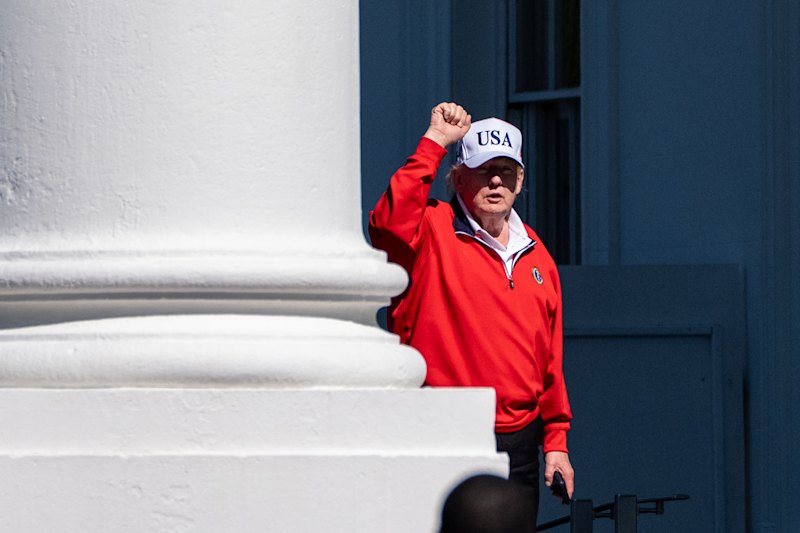
After months of suggesting a deal was imminent, even President Trump appears to be tempering his expectations. When questioned about the status of negotiations with Iran, he recently remarked, “I don’t care if they’re over, honestly. I really don’t care. I couldn’t care less.” He added, “I think they took too much time. Frankly, I thought they started to get very boring.”
Smith expressed little optimism for a significant breakthrough in the near future. “Trump always has these fantasies about making deals very quickly, which he may have been able to do in the world of real estate, but takes a lot longer in the world of international relations,” he commented. “That’s part of his whole promise that he makes, but we’re really seeing him coming up against the limits of reality now.”