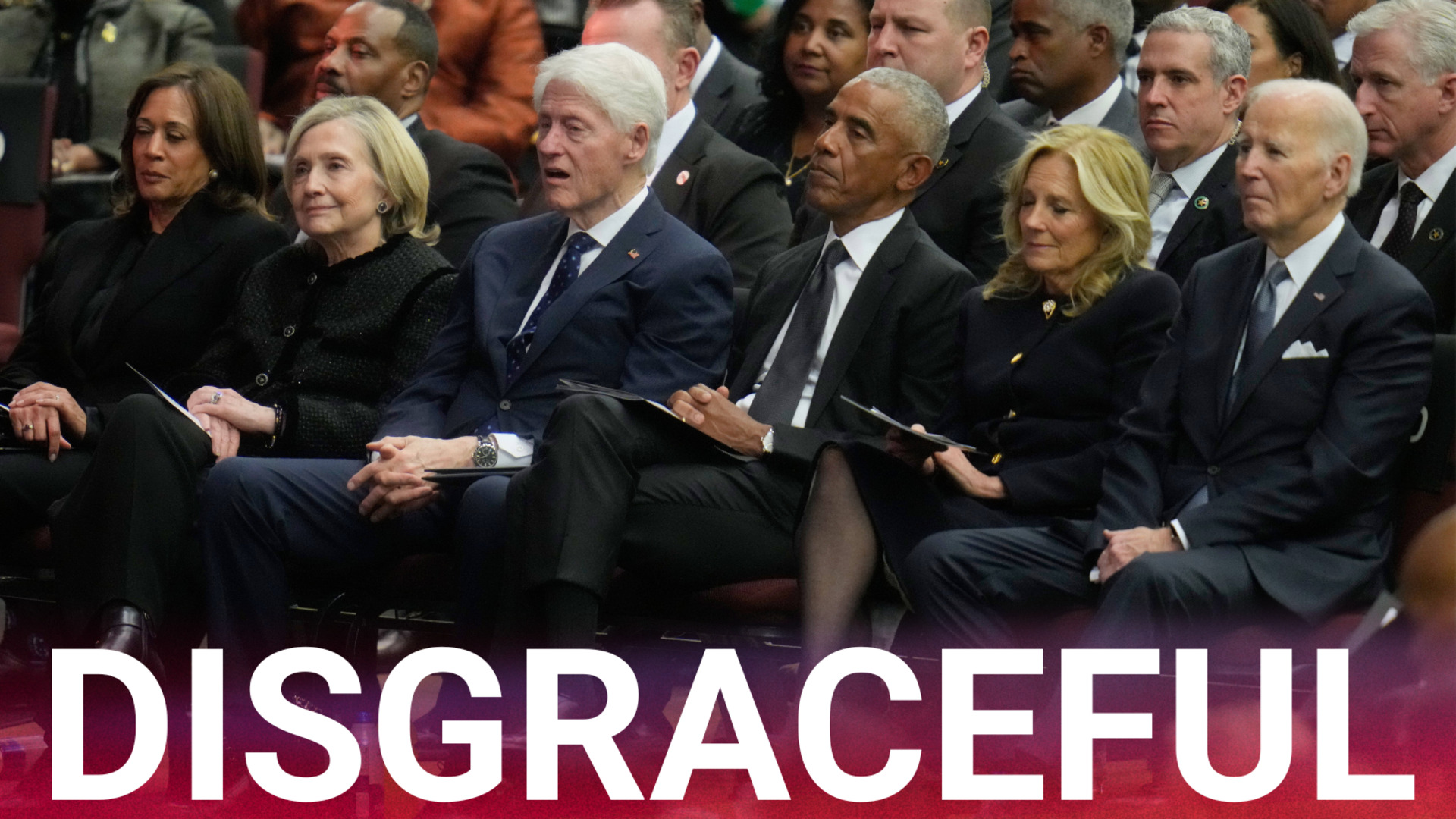
Jesse Jackson Jr has voiced his strong disapproval of several former US presidents, including Bill Clinton, Barack Obama, and Joe Biden, for what he deemed politically charged remarks made during his father’s memorial service. In a candid address delivered shortly after the service concluded, Jackson Jr asserted that these prominent figures did not truly grasp the essence of his father, Reverend Jesse Jackson Sr.
“Yesterday, I sat and listened for several hours to three United States presidents who, I believe, did not truly know Jesse Jackson,” Jackson Jr stated, his voice resonating with conviction. He elaborated on his sentiment, explaining that his father’s enduring legacy was built on a complex and often strained relationship with the established political order. This tension, Jackson Jr emphasized, was not rooted in racial dynamics but in the unwavering commitment his father held to advocating for the marginalized.
“He maintained a tense relationship with the political order, not because the presidents were White or Black, but due to the demands of our message,” he explained. “The demands of speaking for the least of these — those who are disinherited, the damned, the dispossessed, the disrespected — demanded not Democratic or Republican solutions, but demanded a consistent, prophetic voice that at no point in time sold us out as a people.” This powerful statement underscored his father’s steadfast dedication to a moral compass that transcended partisan politics.
Sources indicate that despite explicit requests from Jackson Jr and the family to keep the proceedings focused on celebrating Reverend Jackson’s life and legacy without partisan political commentary, all three presidents – Obama, Clinton, and Biden – incorporated political elements into their eulogies. This decision has evidently caused significant friction and disappointment for the Jackson family, particularly for Jesse Jackson Jr, who felt it undermined the solemnity and purpose of the occasion.
A Legacy of Prophetic Voice
Reverend Jesse Jackson Sr’s life was a testament to the power of a prophetic voice in American society. Throughout his decades of activism, he consistently championed the rights of the oppressed, the voiceless, and the underserved. His work extended beyond civil rights, encompassing economic justice, voter registration, and international diplomacy. He was a formidable force, challenging the status quo and pushing for a more equitable and just society.
His approach often placed him at odds with those in power, regardless of their political affiliation. Jackson Jr’s critique suggests that the presidents, in their attempts to honour his father, failed to acknowledge the fundamental nature of his activism – its independence from, and often its opposition to, the very political systems they represented. The memorial, in Jackson Jr’s view, should have been a space to celebrate this unique and unwavering commitment, rather than an opportunity for political posturing.
The Nature of Political Eulogies
The dynamics of political figures delivering eulogies for other prominent leaders are often fraught with complexity. While the intention is typically to honour the deceased, the ingrained nature of political discourse can make it challenging to separate personal tributes from policy pronouncements or partisan appeals. In this instance, Jackson Jr’s reaction highlights a perceived disconnect between the presidents’ understanding of his father’s core mission and the way they chose to express their tributes publicly.
The expectation, as articulated by Jackson Jr, was for a focus on the moral and spiritual dimensions of his father’s work. This would involve acknowledging the sacrifices made, the battles fought for fundamental human dignity, and the consistent call for a higher moral ground. The inclusion of what Jackson Jr termed “politically charged speeches” suggests a departure from this expectation, leading to a feeling that the essence of Reverend Jackson’s struggle and advocacy was either misunderstood or deliberately recontextualized.
A Call for Deeper Understanding
Jesse Jackson Jr’s remarks serve as a powerful reminder of the importance of understanding the full spectrum of a person’s life and work, especially when commemorating their contributions. His father’s legacy is deeply intertwined with his role as a moral conscience for the nation, a role that often required him to stand apart from and critique the prevailing political landscape.
The controversy surrounding the memorial speeches underscores the ongoing debate about how to best honour complex public figures. It raises questions about the appropriate boundaries of political discourse at solemn occasions and the importance of respecting the expressed wishes of a deceased’s family. For Jesse Jackson Jr, the memorial was an opportunity to celebrate his father’s enduring commitment to justice and equality, a commitment that he felt was not fully captured by the political narratives presented by the former presidents. His words challenge us to look beyond superficial tributes and engage with the profound, and sometimes uncomfortable, truths that shaped Reverend Jesse Jackson Sr’s remarkable life and activism.