

More than a century and a half ago, in the imposing stone walls of Adelaide Gaol, Elizabeth Woolcock faced her final moments, a lone figure awaiting a fate that would forever mark her as the only woman to be hanged in South Australia. Convicted of poisoning her husband, Thomas Woolcock, with mercury, the 25-year-old’s story is one that continues to resonate, particularly with Leeza Peters, who has dedicated four decades to unearthing and sharing the complex narrative.
“That feeling of being alone, sitting in a jail cell and how lonely it felt and how cold and isolating it is,” Ms Peters reflects, her voice tinged with the weight of Woolcock’s presumed anguish. “The emotion that she must have gone through… how could it happen?”
The circumstances surrounding Woolcock’s execution in December 1873 have been a subject of intense scrutiny and debate since her death. Ms Peters, alongside a collective of legal experts, firmly believes that Woolcock was an innocent woman unjustly sent to the gallows. They are now making a final, determined push for a posthumous pardon, seeking to clear her name from history’s ledger.
The Tragic Tapestry of Elizabeth Woolcock’s Life
Born in 1848 in the South Australian town of Burra, Elizabeth Woolcock’s early life was a landscape scarred by hardship and profound personal loss. Ms Peters’ own deep dive into the case was an inheritance of sorts, stemming from her father, Allan Peters, who had meticulously researched and published two books delving into the intricacies of Woolcock’s trial and life.
According to their extensive research, Woolcock’s early years were marked by abandonment. Her mother left her at a tender age, leading to a move with her father to the bustling Victorian goldfields near Ballarat. It was here, at the tender age of seven, that Woolcock endured a horrific abuse by a miner, a trauma that, Ms Peters explains, led to a debilitating dependence on opioids.
A glimmer of hope appeared when, at 17, she reunited with her mother and relocated to Moonta, South Australia. It was in this new setting that she met and married Thomas Woolcock. However, the union soon revealed a darker reality.
“After that time, she found out what sort of a person he was,” Ms Peters recounts. “He used to drink and gamble and used to become quite abusive, so she tried to leave him several times. She couldn’t run away; she actually tried to kill herself several times but couldn’t succeed.”
Thomas Woolcock’s eventual illness saw him treated by various medical practitioners. Ms Peters points to one doctor who prescribed him tablets containing mercury – a crucial detail in the unfolding tragedy. Following his death weeks later, Elizabeth Woolcock became the prime suspect. Her trial in the Supreme Court of Adelaide was swift; a jury deliberated for less than 30 minutes before returning a guilty verdict.
“She was given an inexperienced lawyer who’d only really dealt with petty theft and property disputes,” Ms Peters laments. “She wasn’t even allowed to speak for herself, she was in front of an all-male jury, it was very misogynistic times — just an unfair trial at the time.”
Adding to the injustice, Ms Peters notes that a chemist later penned a letter to the governor, outlining 26 compelling reasons why Woolcock should not be hanged. This plea, however, was disregarded, and crucially, it was never definitively proven that mercury poisoning was the actual cause of Thomas Woolcock’s death.
A Renewed Call for Justice: The Push for a Posthumous Pardon
Now, Ms Peters has spearheaded a new petition, a powerful call for a posthumous pardon for Elizabeth Woolcock. The document meticulously outlines 11 distinct reasons why she believes the case warrants a thorough re-examination. This marks the third concerted effort by her family to vindicate Elizabeth Woolcock, but this iteration carries the significant weight of support from seasoned legal professionals.
David Plater, an Associate Professor at the Adelaide University School of Law and Deputy Director of the South Australia Law Reform Institute, has lent his considerable expertise to the cause. He unequivocally describes Woolcock’s conviction as a “glaring case of injustice” and has joined Ms Peters in formally petitioning for the reconsideration of her conviction.
“The case, once you look at it carefully and methodically, seems to rely on a lot of stereotype, rumours, and the evidence just doesn’t cut it,” Dr Plater states with conviction. “In all likelihood, she was wrongly convicted and was an innocent victim of circumstance, who’d been convicted on very tenuous evidence by the prosecution.”
Dr Plater also casts significant doubt on the reliability of any confession Woolcock may have made prior to her death. “Confessions, frankly in the 1800s, were about as reliable as reading the entrails of a fish,” he explains. “There was a very strong view that you wanted to repent your crimes… it was not uncommon for condemned prisoners just before they were hanged to make all kinds of confessions.”
The authority to grant a posthumous pardon rests with the Governor of South Australia, a power that Dr Plater acknowledges is exercised under “extremely rare” circumstances. “Very understandably, the government of the day is reluctant to constantly agitate old convictions,” he notes. “It should be done unusually, sparingly, where there’s really very strong doubts as to the conviction of the accused. I think this is one of those unusual cases where the circumstances of Elizabeth Woolcock’s conviction can be reconsidered.”
Reimagining History: The Adelaide Fringe Festival’s Take
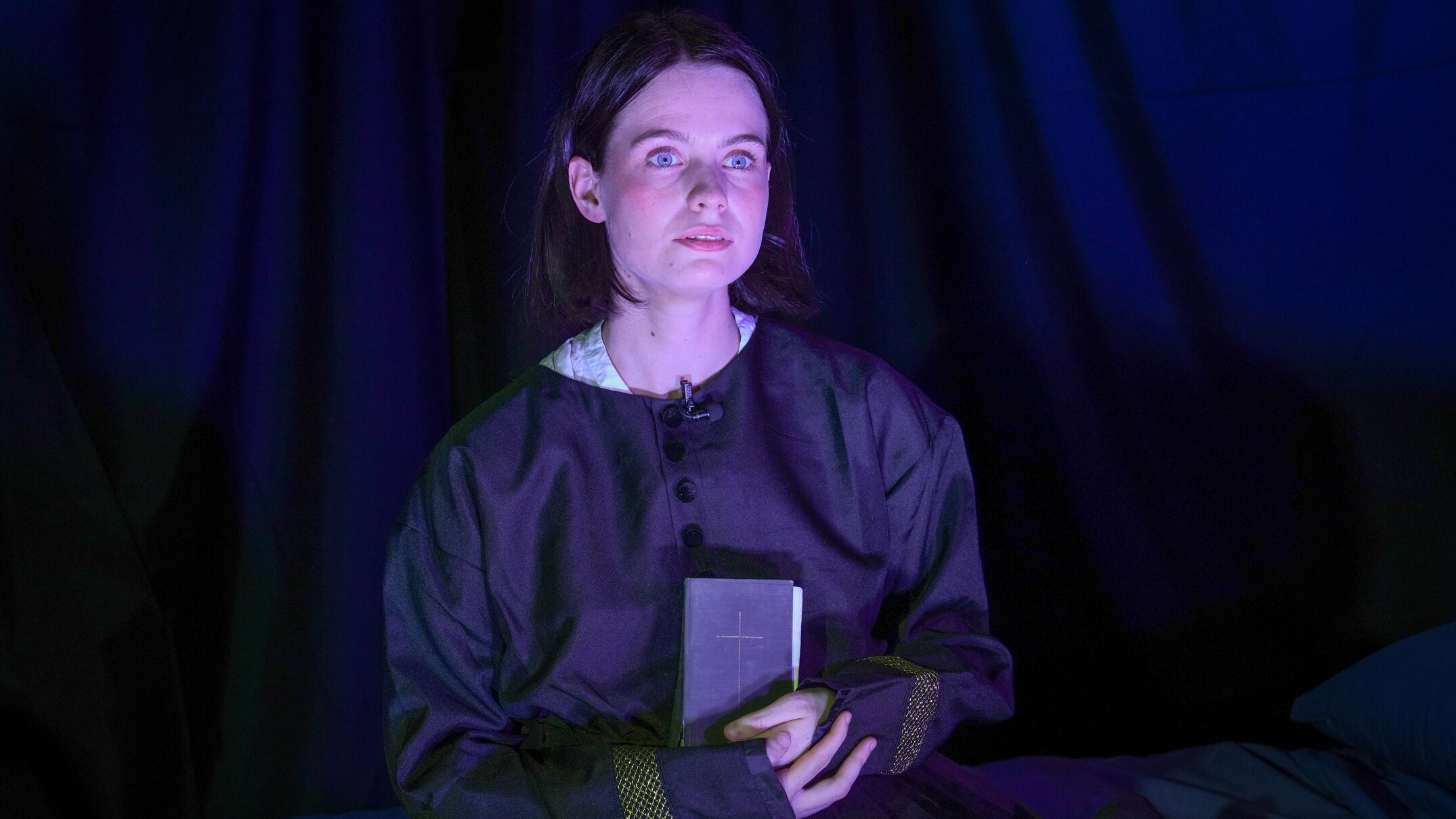
Elizabeth Woolcock’s enduring story is also being brought to a contemporary audience through a compelling theatre performance at the Adelaide Fringe festival. Set within the very gaol where she was executed and buried, the production aims to shed new light on her life and the injustices she may have faced.
Hilary Boyce, the actor portraying Elizabeth Woolcock, highlights the importance of such narratives. “We finally are letting women tell their stories, we’re not hiding them, we’re not making them disappear,” Boyce asserts. “There are still women out there like Elizabeth that people don’t believe, they’re pushed aside, they’re forgotten, they disappear — it just shows that it’s still relevant.”
For Boyce, embodying Woolcock’s trauma has been an “emotionally taxing” experience. “I really want the audience to, at the end of this play, think, ‘did she or didn’t she?’, and not judge either decision,” she expresses. “If she did do it, do you judge her for it? And would you have done the same thing?”
Roy Maloy, the production’s director and a noted true crime author, hopes the play will reframe Woolcock’s narrative, shifting the perception from perpetrator to victim. “I absolutely think it’s a crime that we haven’t pardoned her,” Mr Maloy states passionately. “This is a moment in time where we can really look at that and say, that was so unfair, not just unfair, that was deliberately unfair and cruel. Being able to tell stories that aren’t comfortable are what leads us to the truth.”