The Unsung Heroes: Keeping Kyiv Warm Amidst the Winter of War
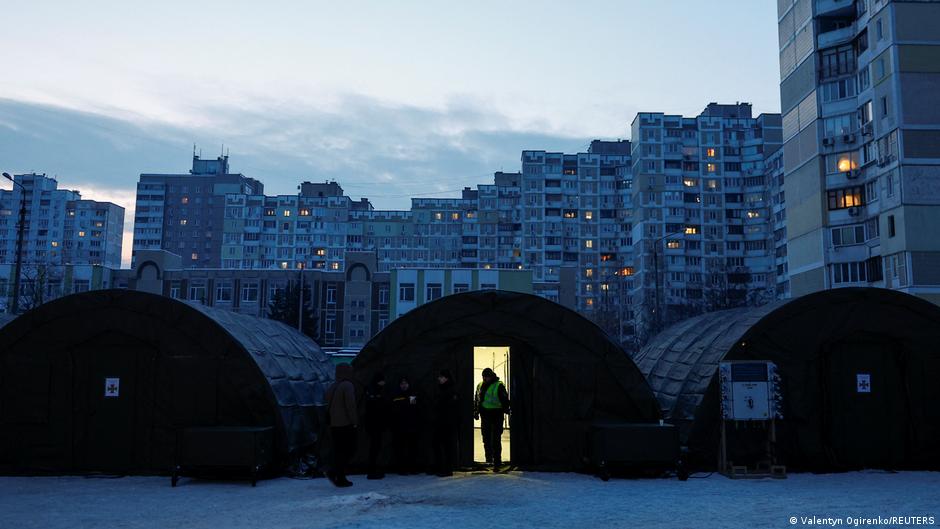
Kyiv endures a harsh reality this winter: no electricity, no heating, and no running water. The biting cold amplifies the devastation wrought by war, transforming apartment blocks into frigid shells of concrete. Russian missile strikes targeting Ukraine’s energy infrastructure have plunged hundreds of residential buildings into darkness and icy silence. While the focus often remains on the broader conflict, a dedicated cadre of workers—from energy company employees to private contractors, electricians, and plumbers—are engaged in a relentless battle to restore essential services and bring life back to these frozen homes. Their often-unseen efforts in the icy depths of basements are crucial, and their skills are in high demand.
In the Ukrainian capital, securing private contractors capable of replacing burnt-out power cables or draining frozen heating pipes has become a significant challenge. Entire neighbourhoods are cut off from district heating systems due to the destruction of power plants. Nevertheless, plumbers, electricians, and heating engineers are working tirelessly wherever possible to reconnect households to vital water, heating, and electricity supplies.
Gruelling Hours, Little Respite
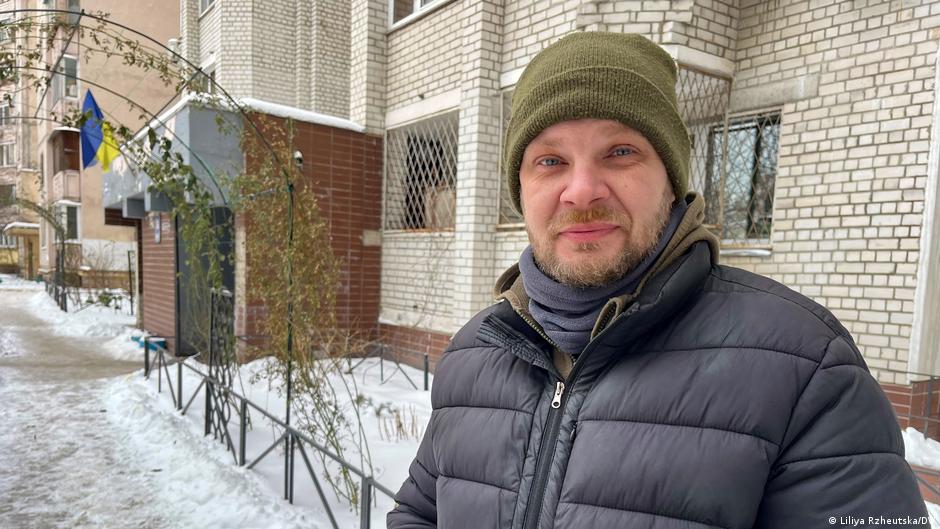
Oleh Karpov, who heads a company specializing in sanitation and heating engineering, exemplifies the dedication of these essential workers. His firm is contracted by homeowners’ associations to maintain the critical plumbing and electrical systems within Kyiv’s apartment blocks. Karpov describes this year as an extreme test of endurance. His days commence before dawn, often between 4:00 and 5:00 AM, and extend well past midnight.
Since the beginning of January, his team has been operating on a near-constant duty cycle. Karpov highlights the profound physical and emotional exhaustion his employees are experiencing, noting that some continue to work even with high fevers. “Sometimes we manage to get two or three hours of sleep,” he states. “Yesterday, I came home, didn’t even wash, went to bed at 2:00 AM and was woken again at 5:30 AM. We’re tired, and we’re sick, but we go where we’re needed. We know that otherwise it’ll just get even worse for the building and for the people living there.”
A Scramble for Skilled Labour
Karpov, a war veteran medically discharged from the army, leads a team composed predominantly of older men. Many bear the physical limitations of serious injuries sustained on the front lines.
The scarcity of qualified personnel is a critical issue. Karpov explains, “Out of 25 workers, I have eight left. Some are at the front. Others have gone abroad. People who work for private companies can’t get an exemption from military service like employees of state or municipal companies. There’s a huge lack of qualified personnel.” He elaborates on the age and health challenges within his team: “I have a welder who’s 62 years old and an electrician who’s over 60. Then there’s one guy who’s seriously disabled, and an installer who’s an internally displaced person from the Russian-occupied territories and who also has health problems. Young people don’t want to do this work, so we do it.”
Facing Life-Threatening Conditions
Emergency repair teams, comprised of engineers and electricians, are tasked with working at breakneck speed to assist the maximum number of people. However, the sheer scale of the problem is overwhelming. Oleksiy Kucherenko, a member of parliament and former minister of housing and communal services, posted on Facebook, “There aren’t enough emergency personnel, so people are working for two or three days without a break. They’re on the verge of collapse. Two emergency repair workers recently died from excessive overwork. Many are suffering from physical and psychological exhaustion or frostbite.”
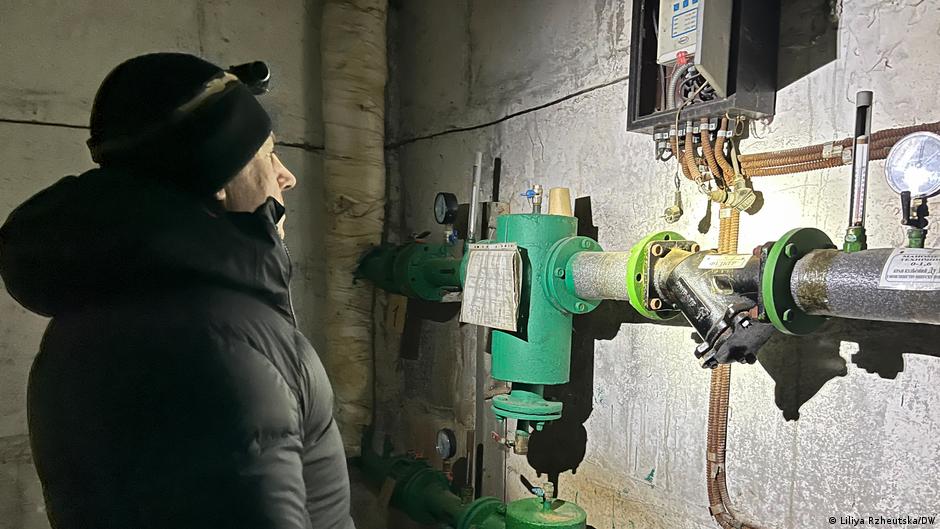
The gravity of the situation was underscored by Kyiv’s Mayor, Vitali Klitschko, who confirmed the death of a 60-year-old fitter in January while on duty at an apartment building. In response, the city council is initiating a program to provide one-off financial assistance of 50,000 hryvnia (approximately 1,000 euros) to the families of workers who have lost their lives while performing their duties at apartment blocks and communal facilities.
The Unseen Toll: Lack of Recognition and Discouragement
The challenges faced by private contractors like Karpov extend beyond the physical demands. Their contracts, typically established through long-term business plans with homeowners’ associations, do not account for the extraordinary circumstances created by Russian air strikes. This often means they cannot charge higher rates to cover the increased workload and risk. Karpov mentions that he sometimes steps in to perform electrical or installation tasks himself to give his team a much-needed break.
For Karpov, the most difficult aspect of the job isn’t the exhaustion, the aging infrastructure, or the damaged electrical systems. It is the pervasive lack of appreciation. “They accuse us of being lazy, curse us, are aggressive and expect us to defy the laws of physics,” he confides. “In a building of 300 apartments, there might be one person who thanks us, while the rest say we’re doing a poor job. You just get really discouraged in situations like that, and feel like giving up.”
A Duty to Fellow Citizens
Leonid Kulytskyi, a 59-year-old electrician with nearly three decades of experience, echoes the sentiment that this winter has been the most challenging of his career. His ability to rest at home is limited to a few hours at a time.
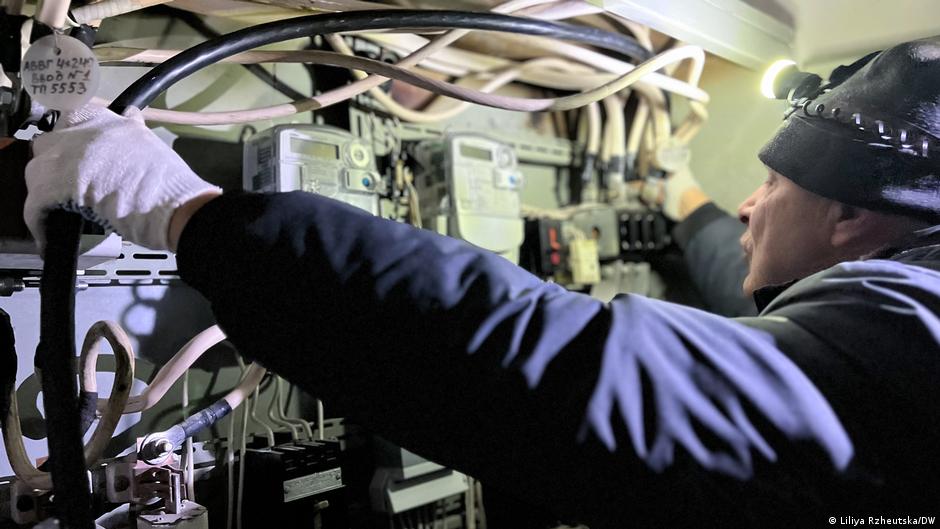
Many Kyiv residents are left without heating due to the attacks on power plants. They attempt to maximize the limited hours of electricity availability by powering numerous appliances simultaneously. However, the power grids are not equipped to handle such a surge in demand, leading to overloaded circuits. Kulytskyi explains, “As soon as there’s electricity, people switch everything on at once: boilers, heaters, kettles. Cables, wiring, and switch boxes burn out as a result. But we have to go out and help people because they’re freezing and they’ll have no electricity at all otherwise. We have to do something, so they can get themselves warm again.”
Despite the immense pressure and workload, Kulytskyi does not view himself as a hero. He sees his work as a fundamental duty to his fellow citizens, particularly as his own son is actively serving on the front lines. He believes the soldiers in the trenches face far greater hardships. “Russia is driving us to exhaustion. But we’re hanging in there. I do my work as best I can. The main thing is for our children to come out of this war alive and healthy.”