

The Age-Old Restaurant Dilemma: Scientists Uncover the Secret to Maximising Your Dining Satisfaction
It’s a culinary conundrum many of us have faced: standing at the counter of your favourite eatery, or perhaps a new spot you’re keen to try, and grappling with the age-old question – do you play it safe with your tried-and-true favourite, or venture into the unknown for the possibility of discovering something even more spectacular? This common dilemma, a dance between familiarity and novelty, has long puzzled diners and, it turns out, even brilliant minds. Now, after decades of mystery, a team of researchers has cracked the code, developing a definitive strategy to maximise your overall dining satisfaction.
The breakthrough comes from a sophisticated blend of mathematical modelling and extensive behavioural experiments, all aimed at solving the “explore versus exploit” problem. This fundamental concept, applicable far beyond the realm of restaurants, concerns the optimal approach to making decisions when faced with a set of options, some known and reliable, others uncertain but potentially rewarding. The researchers have not only deciphered the problem but also provided a clear, actionable solution, all rooted in a fascinating historical anecdote involving a Nobel Prize-winning physicist.
Feynman’s Lunchtime Puzzle: A Decades-Old Mystery
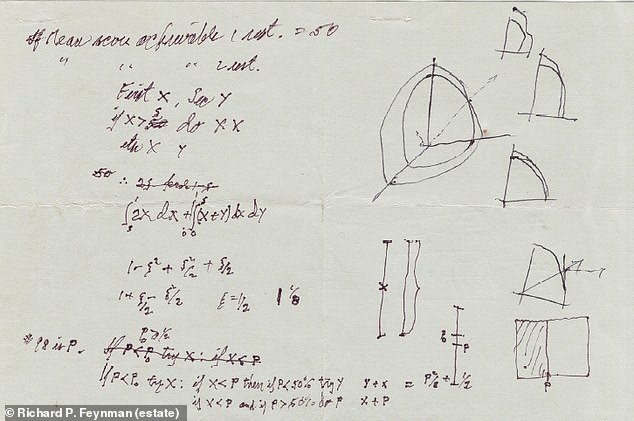
The origins of this complex problem can be traced back to the 1970s, to a seemingly ordinary lunch between the legendary physicist Richard Feynman and his friend, Ralph Leighton. While dining at a Thai restaurant in Glendale, California, Mr. Leighton found himself in the very predicament we’ve all experienced – torn between ordering his beloved ginger chicken or taking a punt on a new dish. Professor Feynman, renowned for his revolutionary work in quantum physics, transformed this everyday indecision into a mathematical challenge. He reportedly solved it on the spot, but his detailed analysis remained unpublished, existing only as handwritten notes that Mr. Leighton meticulously preserved.
For decades, these cryptic notes were a source of intrigue. As the researchers from Princeton University noted in their publication, “The notes remained inscrutable for decades, until we managed to decipher them and reconstruct Feynman’s original problem and solution.” This painstaking work has finally brought Feynman’s elegant solution to light.
The Mathematical Blueprint for Culinary Bliss
The mathematical model developed by the researchers, building upon Feynman’s original insights, outlines a clear “threshold rule.” The core principle is remarkably intuitive: the value of exploring new options is directly tied to the number of future opportunities you anticipate having.
-
Early Stages: The Joy of Exploration
When you’re new to a restaurant, or have many more meals planned there in the future, it’s highly beneficial to explore. This period is prime time for trying new dishes. The reasoning is simple: the more you explore early on, the higher your chances of discovering a truly exceptional dish that could become your new favourite. Even if a new dish isn’t a home run, the knowledge gained about the menu is valuable for future decisions. -
Later Stages: The Sweetness of Exploitation
Conversely, as your dining opportunities at a particular restaurant dwindle, the strategy shifts. As the number of remaining visits decreases, the threshold for sticking with your known favourite becomes lower. By the time you’re nearing your last few meals, it becomes optimal to “exploit” – that is, to consistently choose the best dish you’ve already identified. This ensures you maximise your satisfaction from the limited remaining chances, rather than risking disappointment with an untested option.
Human Behaviour Meets Mathematical Optimality
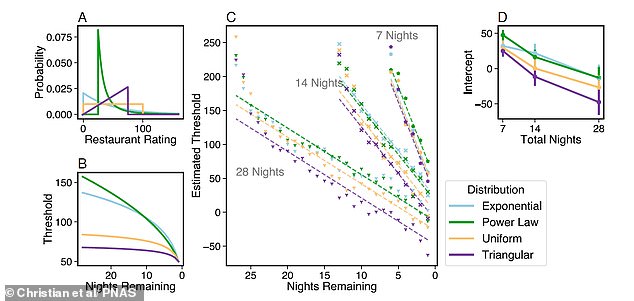
To test the practical application of this theory, the researchers conducted large-scale behavioural experiments involving 2,520 participants. These individuals were presented with a series of decision-making tasks designed to simulate the restaurant dilemma. The experiments were carefully crafted to vary key factors such as the number of remaining choices, the quality of the currently identified “best” option, and the degree of uncertainty surrounding unexplored dishes.
The findings were compelling. The experiments revealed a strong tendency for human behaviour to naturally align with the predicted mathematical rule. Participants, much like the model suggests, began by exploring new options and gradually transitioned to favouring their established favourites. Interestingly, the study noted that participants often explored slightly more than the mathematically optimal strategy, particularly in the initial stages.
“We find definitive evidence that humans use a decision threshold that decreases linearly with the proportion of trials remaining, achieving performance remarkably close to the optimal solution found by Feynman,” the authors stated in their findings. This suggests that while humans might have a slight penchant for adventure beyond pure mathematical optimisation, our innate decision-making processes are remarkably adept at navigating this “explore versus exploit” scenario.
The Takeaway: It’s All About the Future
So, what is the ultimate advice derived from this groundbreaking study? It’s not a blanket recommendation to always try something new, nor is it a directive to perpetually stick to your comfort zone. The sophisticated answer, validated by both mathematical rigour and human experimentation, is that your optimal dining strategy is contingent on your future plans.
The next time you find yourself deliberating over a menu, consider this: how many more meals do you envision yourself enjoying at this establishment, or even within this city? Your answer will guide you towards the perfect balance of exploration and exploitation, ultimately leading to a more satisfying culinary journey.