
North Korea Conducts Ballistic Missile Tests Amidst Regional Diplomatic Shifts
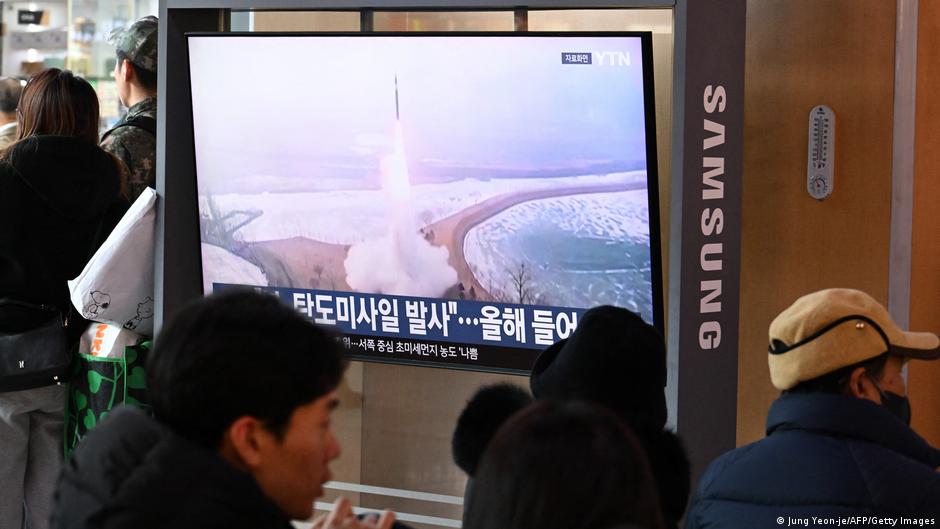
North Korea launched multiple ballistic missiles from its capital region towards the sea off its eastern coast on Sunday, marking its first significant weapons demonstration in two months and its initial missile test of the new year. The timing of this display of firepower is particularly noteworthy, occurring just hours before South Korean President Lee Jae Myung’s scheduled visit to China for a crucial summit.
South Korean military officials reported the detection of several ballistic missile launches originating from the Pyongyang area around 7:50 a.m. local time. These missiles were reportedly aimed at the East Sea, also known internationally as the Sea of Japan. According to Seoul, the projectiles traveled approximately 900 kilometers (560 miles). Both South Korean and United States authorities are closely monitoring the situation.
“The military is maintaining a full readiness posture, having strengthened surveillance and vigilance against possible additional launches,” a statement from the South Korean Ministry of National Defense indicated.
Japan also confirmed the detection of ballistic missiles. Defense Minister Shinjiro Koizumi stated that at least two North Korean missile launches had been verified. He emphasized the gravity of these actions, declaring, “They are a serious problem, threatening the peace and security of our nation, the region and the world.”
Strategic Implications of the Missile Launches
The significance of North Korea’s ballistic missile launches extends beyond a mere show of military capability. The last instance of Pyongyang firing ballistic missiles was in November, a period that followed the United States’ approval of South Korea’s plan to develop a nuclear-powered submarine. This historical context suggests a pattern of responsive testing by North Korea to perceived strategic advancements by its adversaries.
The current launch occurs on the eve of President Lee Jae Myung’s diplomatic engagement with Chinese President Xi Jinping in Beijing. China stands as one of North Korea’s principal allies and a key economic and political supporter, making any escalation on the Korean Peninsula a matter of significant concern for Beijing. This summit presents an opportunity for dialogue and de-escalation, but North Korea’s actions may complicate such efforts.
Furthermore, Sunday’s missile test follows closely on the heels of a significant geopolitical event: the United States’ intervention in Venezuela, a nation that has been one of Pyongyang’s few international partners.
Some analysts suggest that the recent US actions in Venezuela could be a contributing factor to North Korea’s decision to conduct these missile tests. Hong Min, an analyst at the Korea Institute for National Unification, commented on the potential motivations behind Pyongyang’s actions.
“They likely fear that if the United States so chooses, it could launch a precision strike at any moment, threatening the regime’s survival,” Hong Min explained to the AFP news agency. He further posited that the underlying message North Korea aims to convey is likely one of deterrence: “The underlying message is likely that attacking North Korea would not be as easy as a strike on Venezuela.” This suggests a strategic calculation by Pyongyang to demonstrate its retaliatory capabilities and dissuade potential military action against it, drawing a parallel between its own perceived vulnerability and that of its ally.
The ongoing development and testing of ballistic missile technology by North Korea remain a persistent challenge to international security and a focal point of diplomatic efforts in the region. The recent launches underscore the volatile nature of the Korean Peninsula and the complex web of alliances and rivalries that define its geopolitical landscape.