The Rise of the Affordable Coupé: Opel Manta’s Bid for the Everyday Dream
The early 1970s marked a significant shift in the automotive landscape, with manufacturers recognising a lucrative market for more accessible two-door coupés. Inspired by the runaway success of models like the Ford Mustang and the European adaptation seen in the Ford Capri, carmakers across the globe, from Renault and General Motors to various Japanese brands, swiftly introduced their own interpretations. These weren’t always groundbreaking engineering feats; rather, they were clever products of market research and cost-effective design. The goal was to offer a perceived sense of exclusivity and style – that desirable fastback profile – at a price point that appealed to a broader audience, often by utilising existing saloon underpinnings.
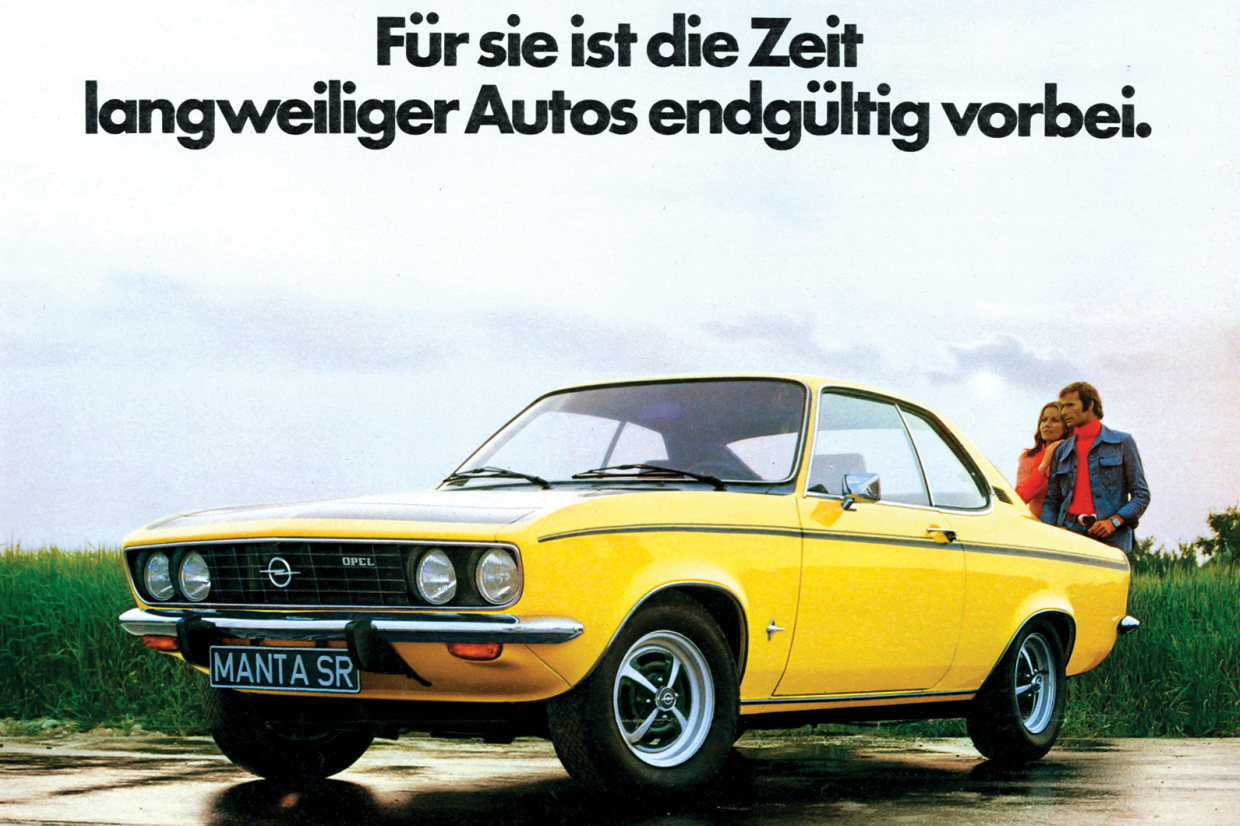
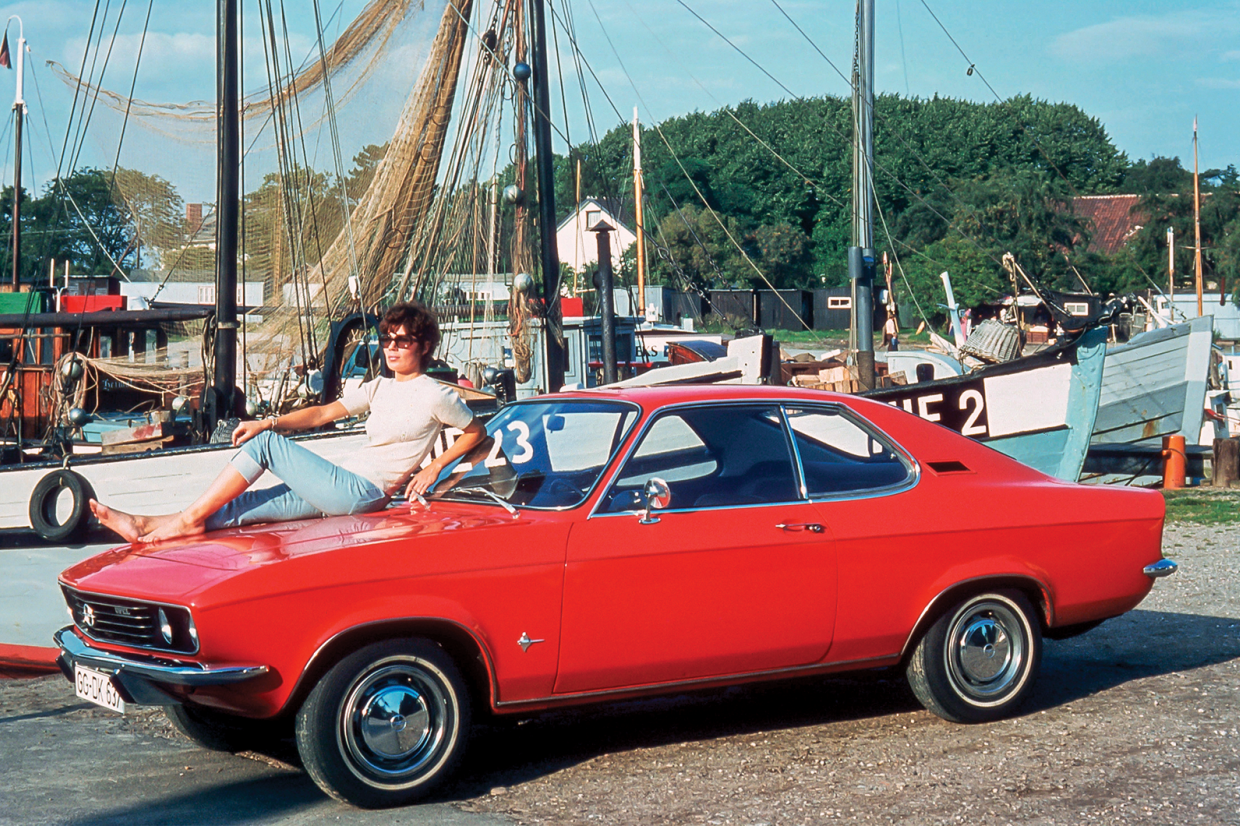
These “bread-and-butter” coupés were largely the brainchild of accountants and market strategists, designed for mass production and a wide array of trim levels, engine options, and price points. Buyers were willing to trade the practicality of extra doors and a bit more rear-seat room for the sleek aesthetics of a coupé. Advertising campaigns of the era often tapped into aspirational fantasies, portraying ordinary individuals transforming into suave, confident figures once behind the wheel, a testament to the power of image-making in selling cars.
While some coupés were merely two-door versions of their saloon counterparts, others managed to forge a more distinct identity. The Opel Manta, unveiled at the Paris Salon in September 1970, is a prime example of the latter. Although it shared its underpinnings with the forthcoming Ascona, a rear-drive mid-range saloon, the Manta presented itself as a standalone model. Opel actively promoted its lineage from the sporty, two-seater Opel GT concept, a car that had helped build brand recognition in North America through Buick dealerships.
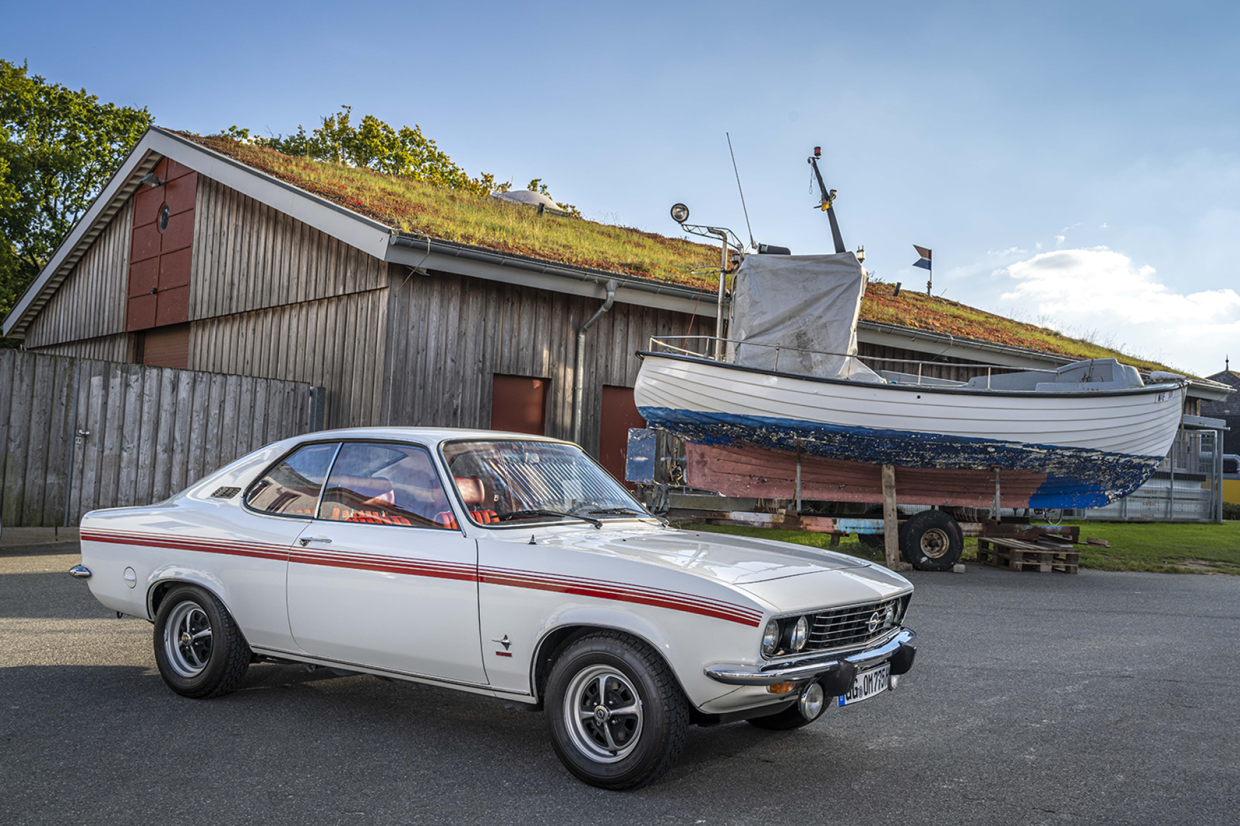
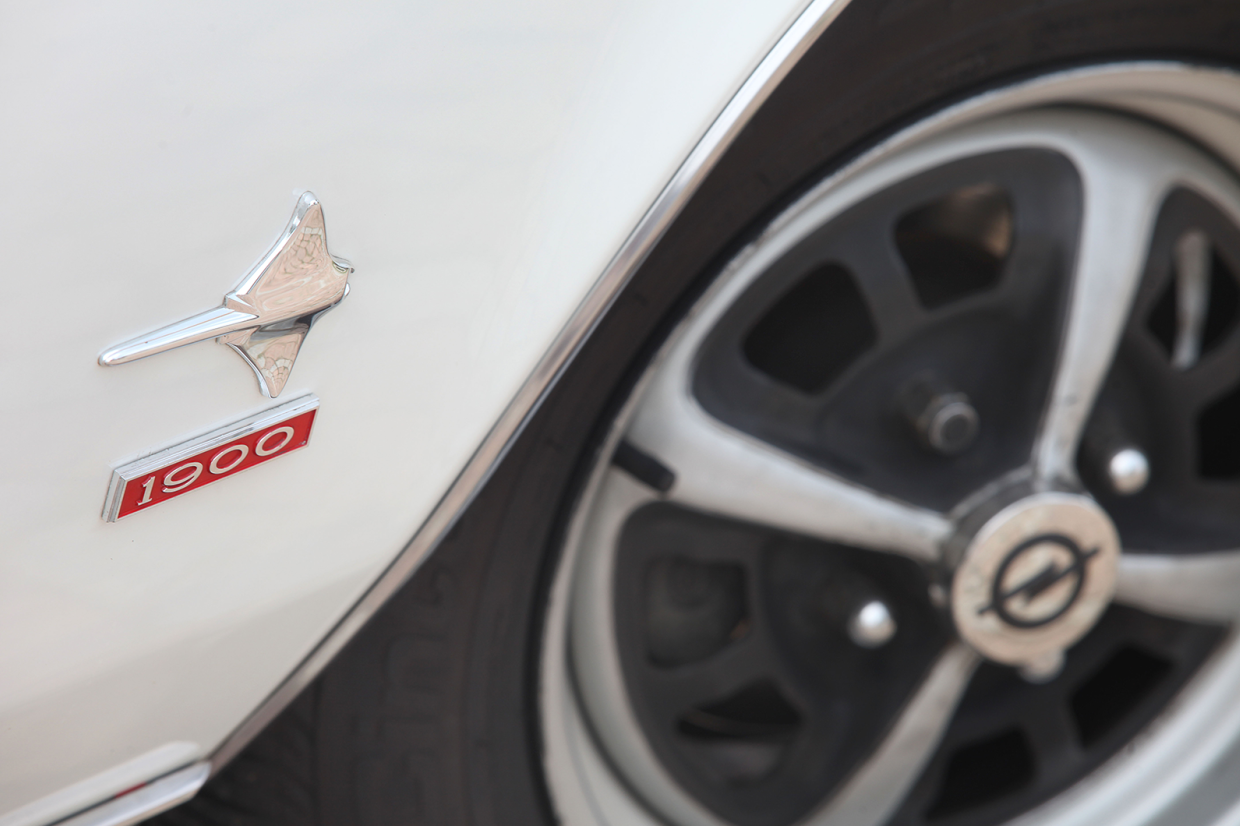
The Manta was designed to capitalise on this momentum in the United States, where it was initially marketed as the 1900 Sports Coupe and later as the 1973 Manta Luxus. Despite the unfortunate addition of 5mph “park-bench” bumpers and a gradual reduction in power, it found a niche as a popular second car, aligning with the growing demand for smaller, European-style economy vehicles. The Manta’s styling was the work of 32-year-old American designer George Gallion, who had joined Opel in 1969 as deputy design director.
Gallion was given a tight deadline of just six weeks during the summer of 1969 to style the car, internally known as Project 1450. Despite official statements to the contrary at its launch, it was widely understood that Gallion’s brief from Chuck Jordan was to create a car that could directly compete with, and ideally outperform, the Ford Capri. The Manta’s name, like those of other sporty cars of the era such as the Chevrolet Stingray and Ford Mustang, was chosen to evoke a sense of dynamism and power, drawing inspiration from the animal kingdom. Gallion even sought inspiration for the car’s badge design from underwater life, visiting Jacques Cousteau in Paris.
Loosely drawing inspiration from the Manta Ray concept car and the C3 Corvette, the new Opel boasted unique body pressings, setting it apart from any other model in Opel’s lineup. Its wheelbase was slightly longer than the Kadett’s but a full five inches shorter than the Ford Capri’s. For a company that had previously been somewhat hesitant to break away from American styling influences, the Manta was a revelation. Its sleek fastback silhouette and subtly integrated rear spoiler in its truncated tail were widely praised, making it arguably the most attractive Opel in recent memory and significantly more appealing than the rather staid Vauxhall Firenza, which was based on the 1971-’73 Viva. The sales figures spoke volumes: the first-generation Manta sold over 52,000 units in 1970-’71, and Opel went on to sell nearly half a million units in total, a stark contrast to the mere 18,000 Firenzas sold.
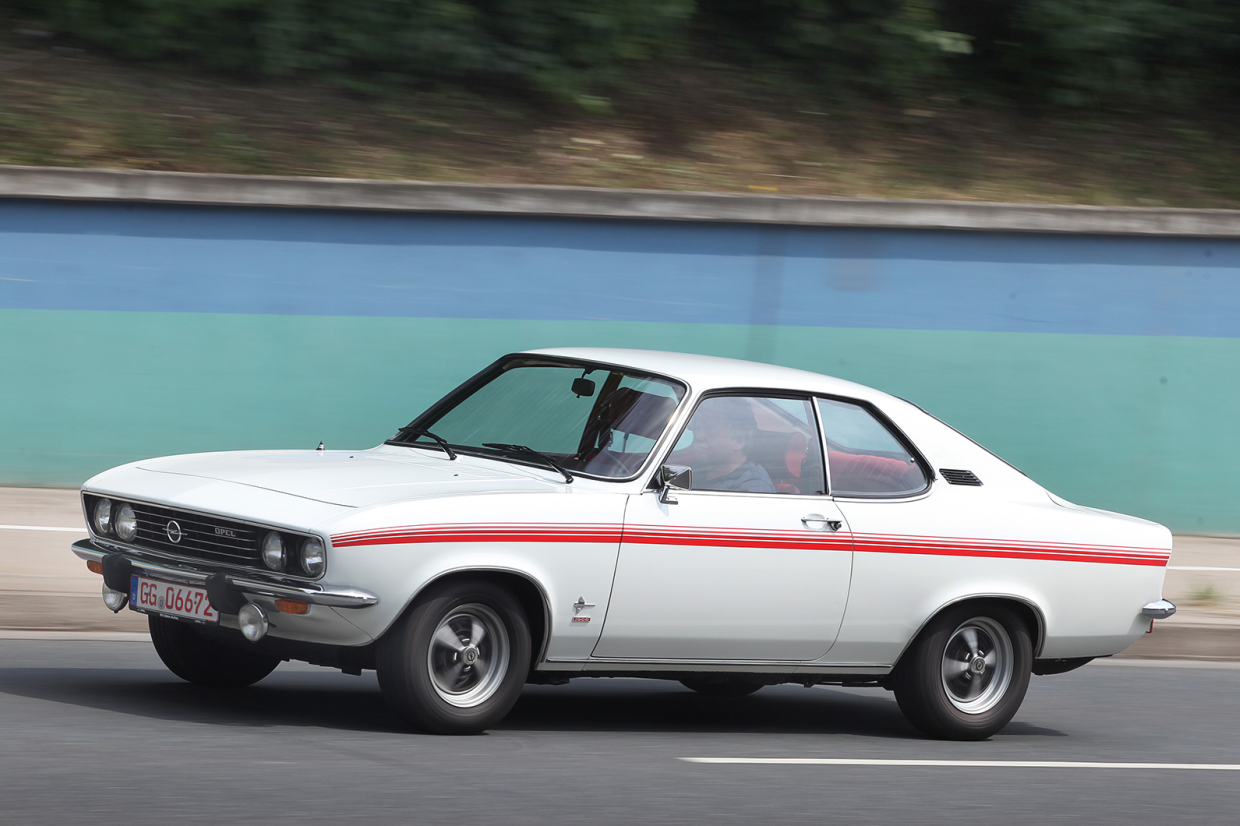
Vauxhall’s inability to capture the coupé zeitgeist meant that subsequent Vauxhall Cavalier Coupés would be based on the far more successful Manta ‘B’ model, produced from 1975 to 1988. Commentators universally agreed that the 1970 Manta was a handsome car. Even the optional matte-black bonnet treatment couldn’t detract from its clean lines and confident stance, supported by what were considered chunky 185-section radial tyres for the era. While many German cars of the period featured rectangular headlights, the Manta’s quad circular lamps gave it an aggressive, purposeful look, reminiscent of the Fiat Dino coupé. Opting for the halogen setup provided impressive lighting power by early 1970s standards.
While the blind quarter panels may have compromised rearward visibility, the Manta offered more glass area than the Capri. It prioritised a long, deep boot, albeit with a high loading sill, over generous rear-seat space. In the UK, advertisements for the £1474 newcomer boldly claimed five-seat capability, with taglines like “Why should bachelors have all the fun?” However, most buyers understood that, much like the Capri, Rapier, or even the BMW 2002, this was a car for young families with small children looking to upgrade from something like an MGB GT, rather than a direct replacement for a conventional saloon.
Despite retaining the simplicity of rear-wheel drive and a live rear axle, Opel’s engineers were given considerable freedom to innovate. The rear axle was located by trailing arms and a long Panhard rod, complemented by vertically mounted progressive-rate dampers. Additional lateral and longitudinal forces were managed by a torque tube that extended along half the length of the propshaft. The Manta featured rack-and-pinion steering, split-circuit disc front and drum rear brakes, and anti-dive geometry integrated into its well-insulated double-wishbone front suspension. This thoughtful engineering approach resulted in a car that was conventionally sound rather than crudely built. It was noted at its launch that the Manta was slightly longer and taller than the best-selling Ford, but shared almost identical track dimensions of 4ft 4½in (1333.5mm). However, unlike the Ford, which offered an optional 3-litre V6, the Manta was officially limited to four-cylinder engines throughout its five-year production run.
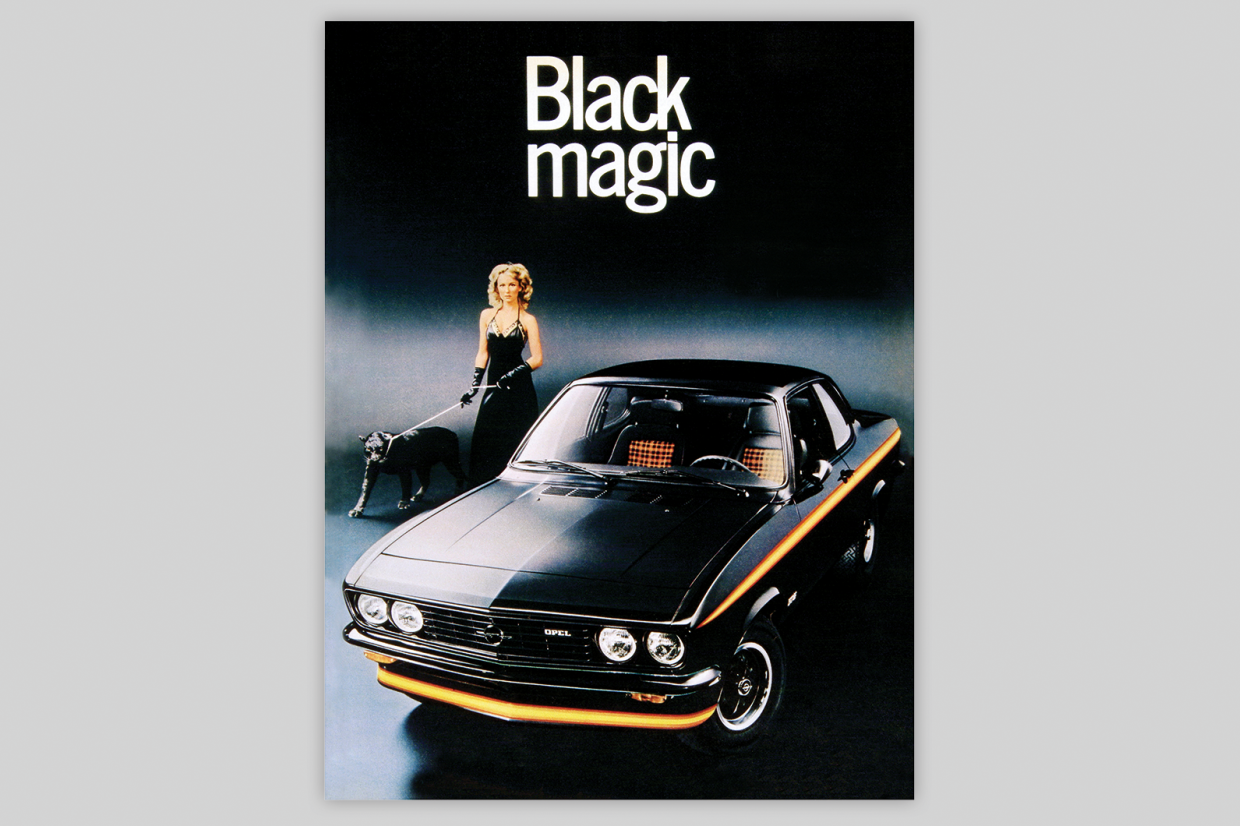
Special TE2800 models, equipped with Commodore engines and built in Belgium by Transeurop Engineering, offered performance comparable to a Porsche 911, though these were not officially sanctioned by Opel. Opel’s preferred route to a faster Manta involved turbocharging, but the story of the turbocharged versions built by Broadspeed for Dealer Team Opel in the UK is a tale for another time. Only 28 of these 125mph Mantas were produced, all in black and with right-hand drive.
From the showroom floor in 1970, Manta buyers could choose from standard, L, or DL trim levels, or opt for the SR Rallye package, which included additional instrumentation and a stiffer suspension setup. All models were powered by Opel’s familiar cam-in-head engine. In its 1.6-litre, single-carburettor, single-choke configuration, it produced 68bhp. The more potent 1897cc 1.9 S engine, featuring a twin-choke carburettor, delivered 90bhp. This latter engine was capable of propelling the Manta to a top speed of 105mph and could achieve 0-60mph in 12.5 seconds when paired with a four-speed manual gearbox, utilising the same gear ratios as the Rekord Sprint. A three-speed GM Strasbourg automatic transmission was also available with either of the twin-choke S engines.
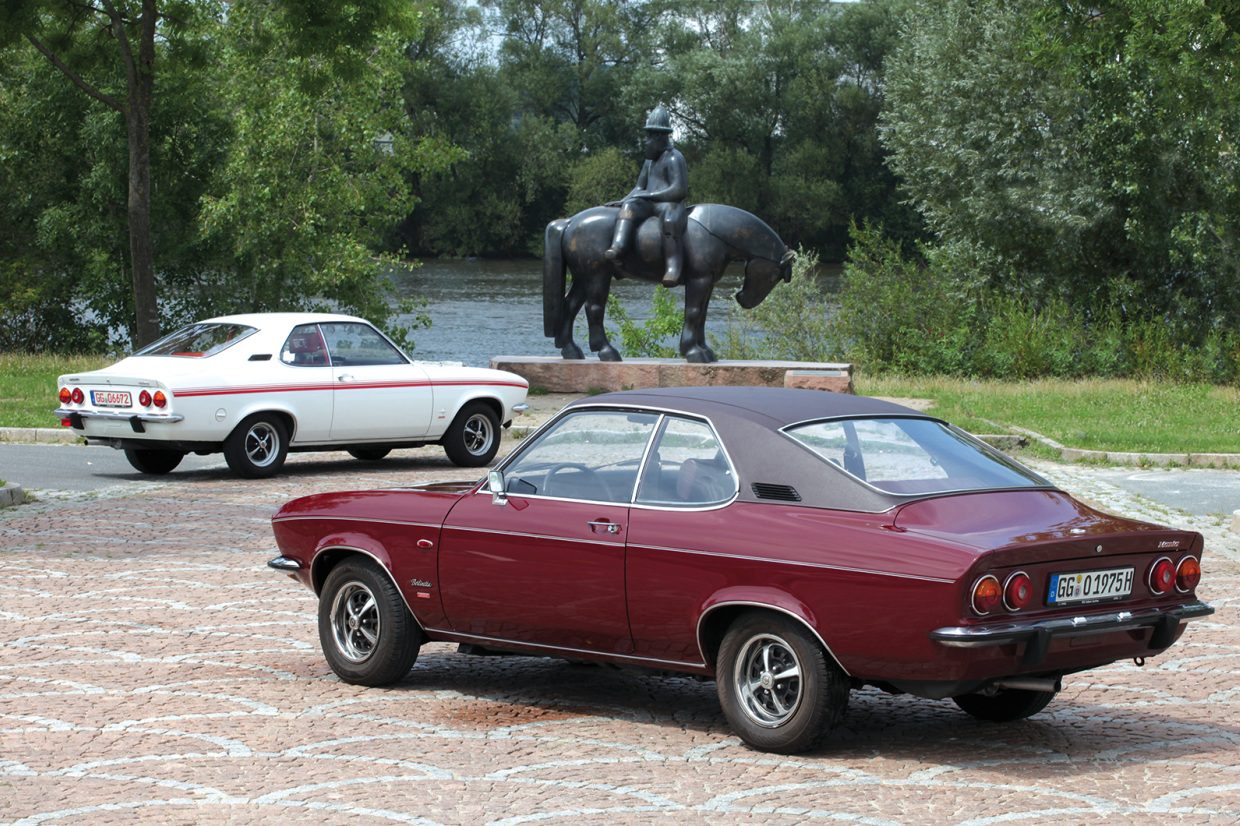
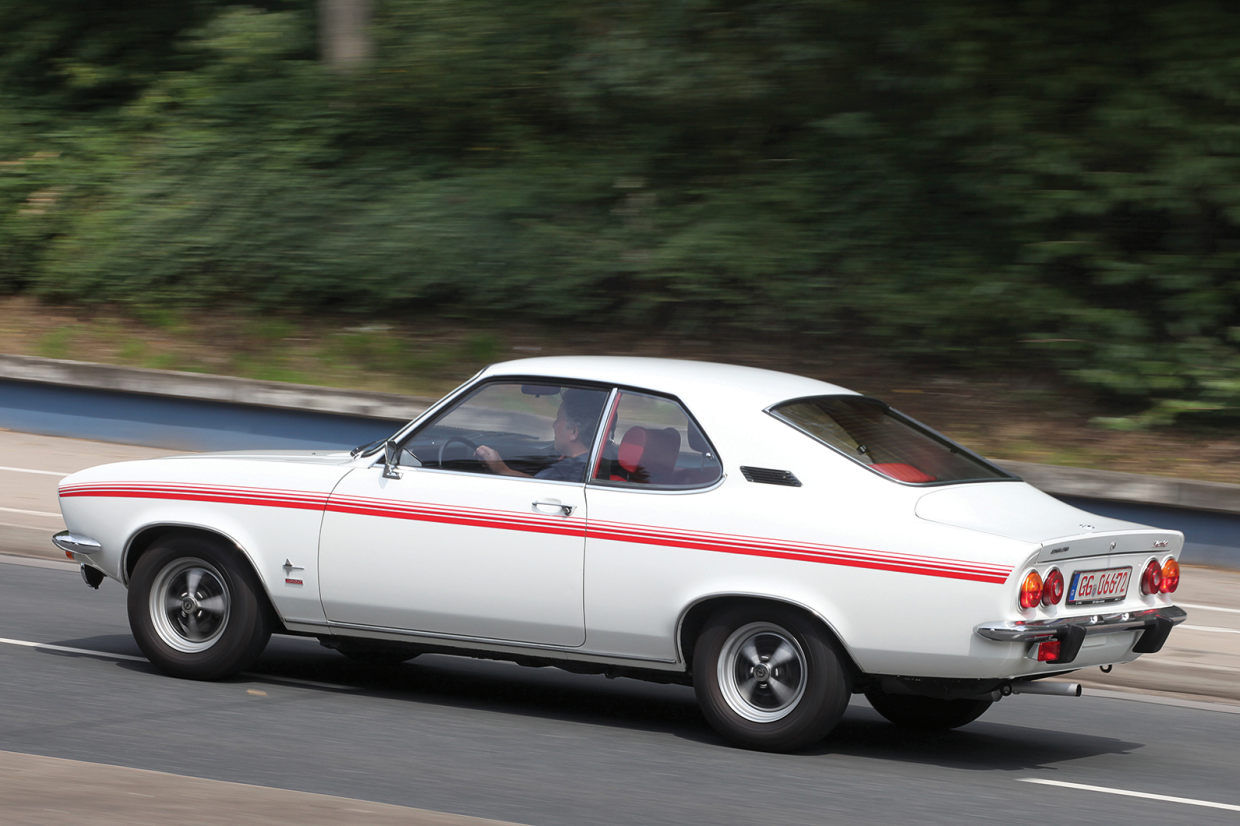
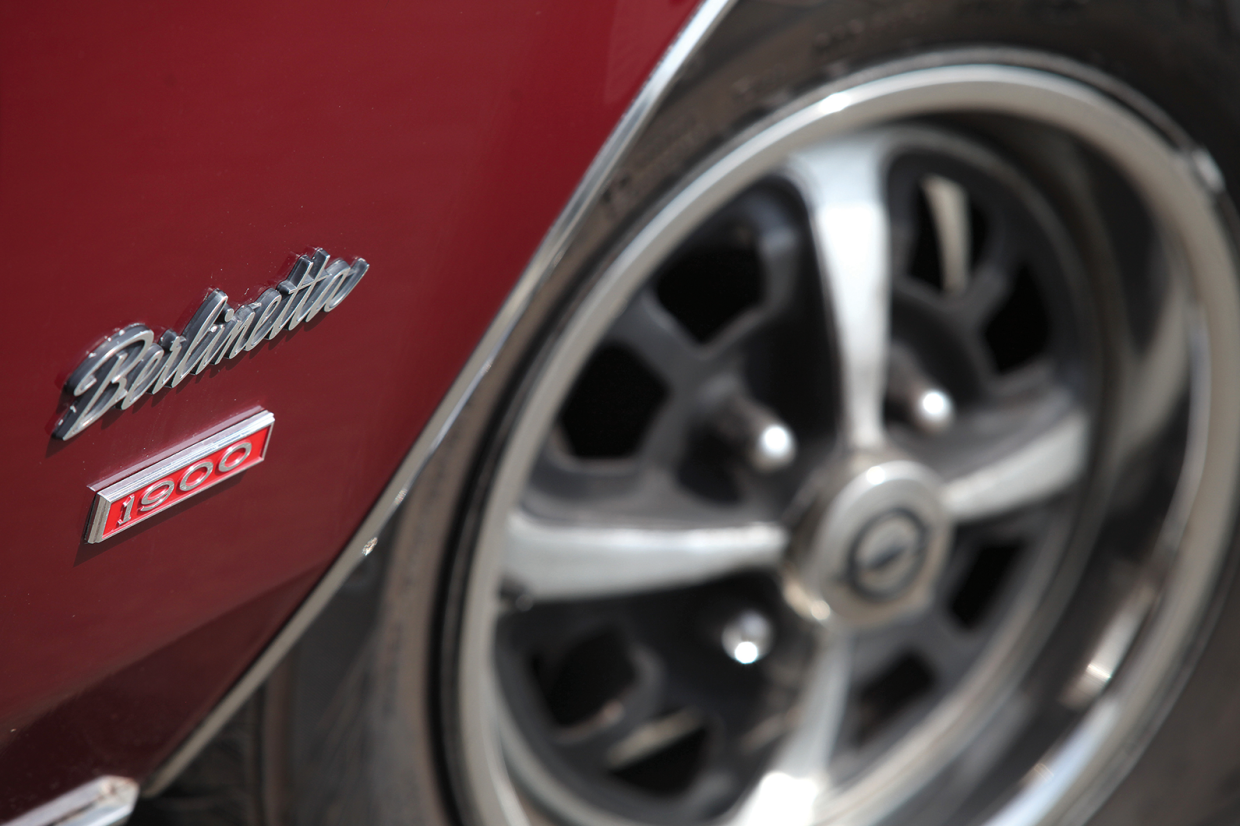
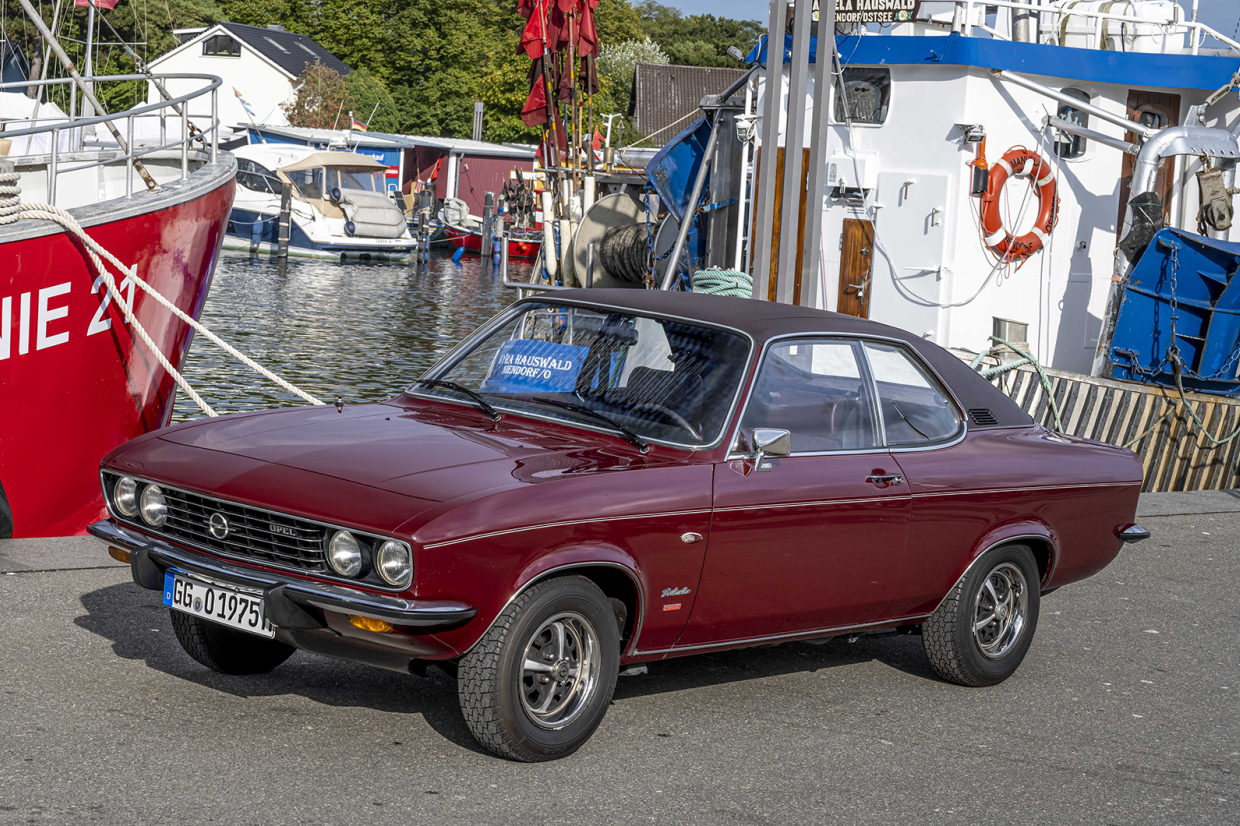
A more significant development arrived in 1974 with the GT/E model. This variant boasted 109bhp, achieved through a fuel-injected engine managed by Bosch L-Jetronic system, which had become standard on Mantas destined for the American market. In Britain, the GT/E was offered, but buyers were spared the less potent single-choke 1.6-litre engine and the 1972 1.2-litre model with its modest 60bhp. Various German-market special editions, including the Manta Plus, Holiday, Black Magic (based on the GT/E), and Summer Bazar, were also not available in the UK. However, the UK market did receive the luxurious Manta Berlinetta, complete with a sports steering wheel, heated rear window, and a vinyl roof, exemplified by the striking burgundy model pictured. The accompanying white car, adorned with red stripes, is a limited-edition Swinger, named during a time when the term carried more innocent connotations. Both vehicles are part of Opel’s historic fleet.
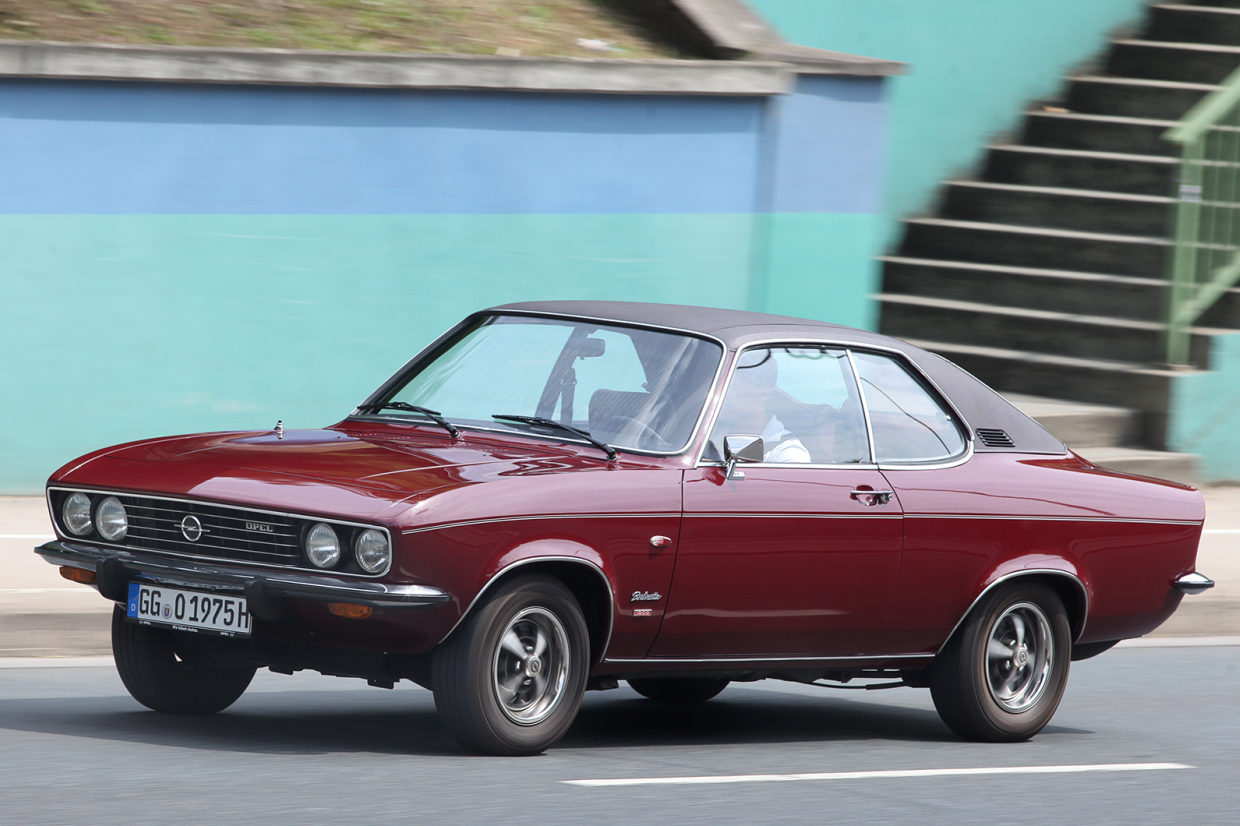
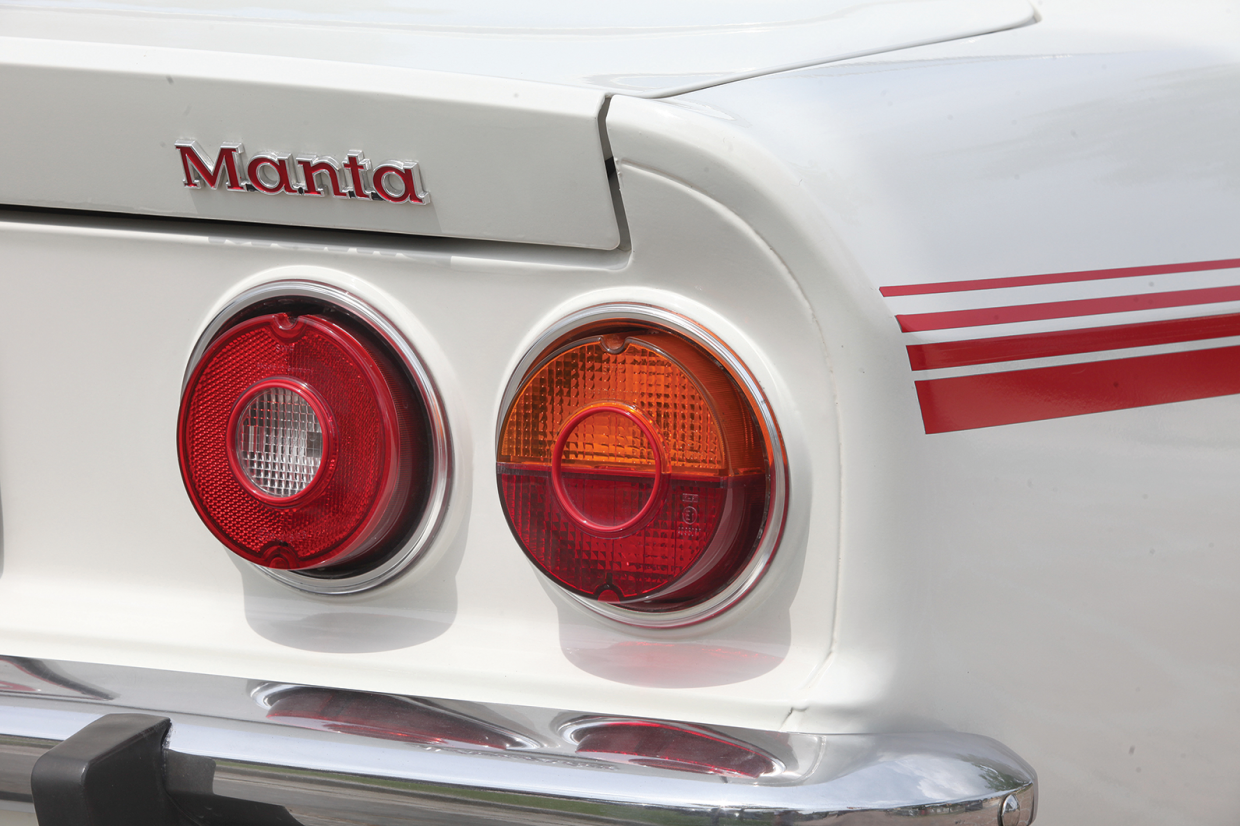
To the modern eye, the Opel Manta remains an attractive car, though perhaps appearing a little narrow and slightly over-bodied in proportion to its modest 13-inch wheels. It exhibits less fussy detailing than its Ford rival, the Capri, and lacks the latter’s overtly macho swagger. The distinctive circular tail-lights make the Manta instantly recognisable from the rear, and the slender B-pillar, combined with frameless door windows, lends a sense of visual lightness to the roofline. Both the Berlinetta and Swinger models shown are 1900 variants.
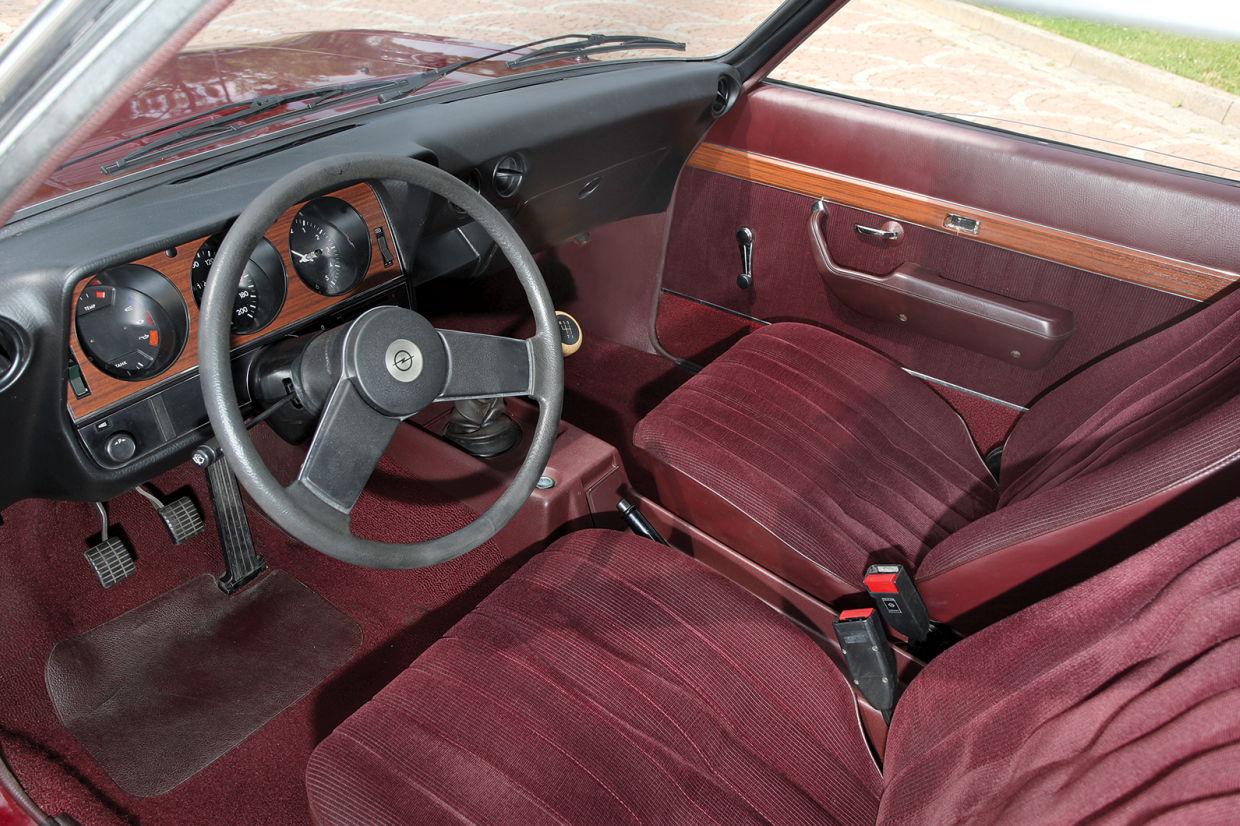
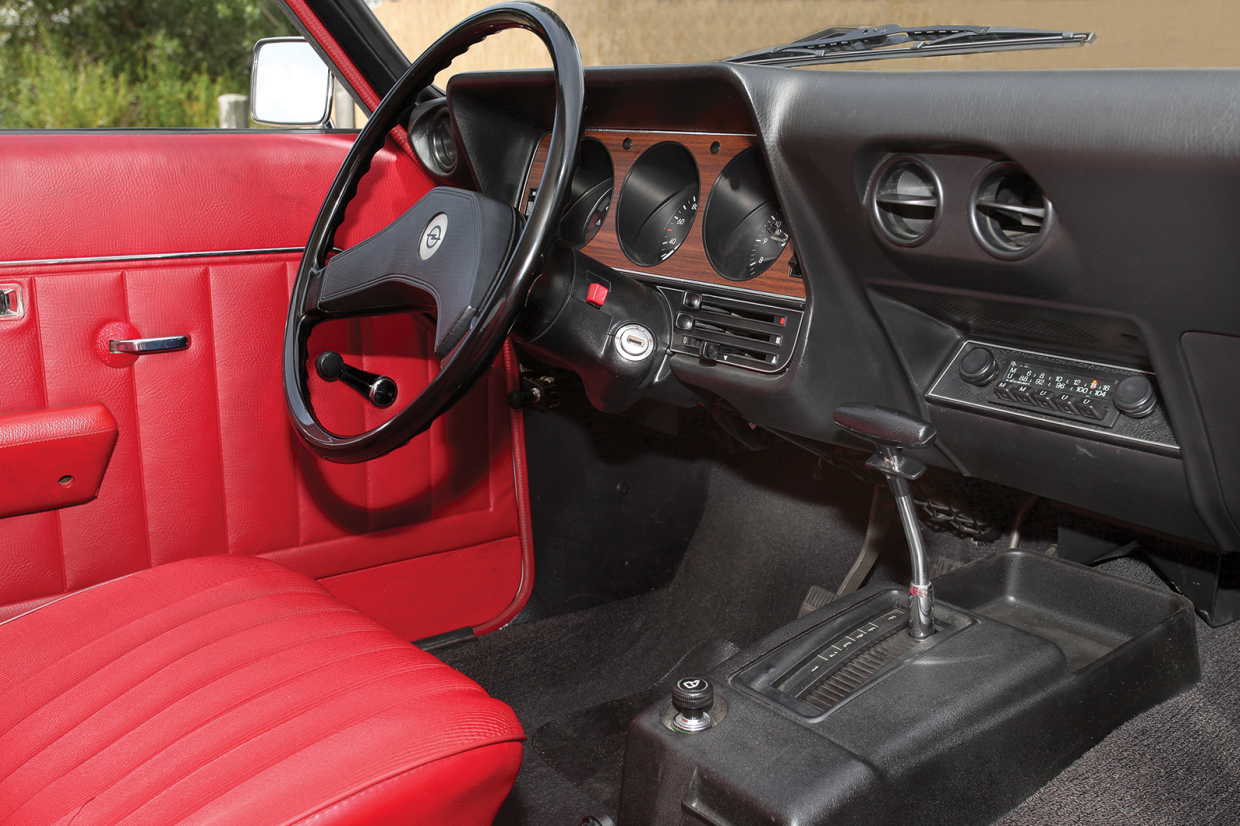
Lifting the front-hinged bonnets reveals Opel’s ubiquitous, oversquare cam-in-head engine. This all-iron unit, a non-crossflow design, originated in Detroit in the early 1960s. While it can be described as rugged and adaptable, its aesthetic appeal is debatable, and its all-iron construction means it’s not particularly lightweight. Inside and out, these two Manta variants share design elements such as styled steel wheels and faux wood trim surrounding a basic instrument cluster, notably lacking a rev counter in both instances.
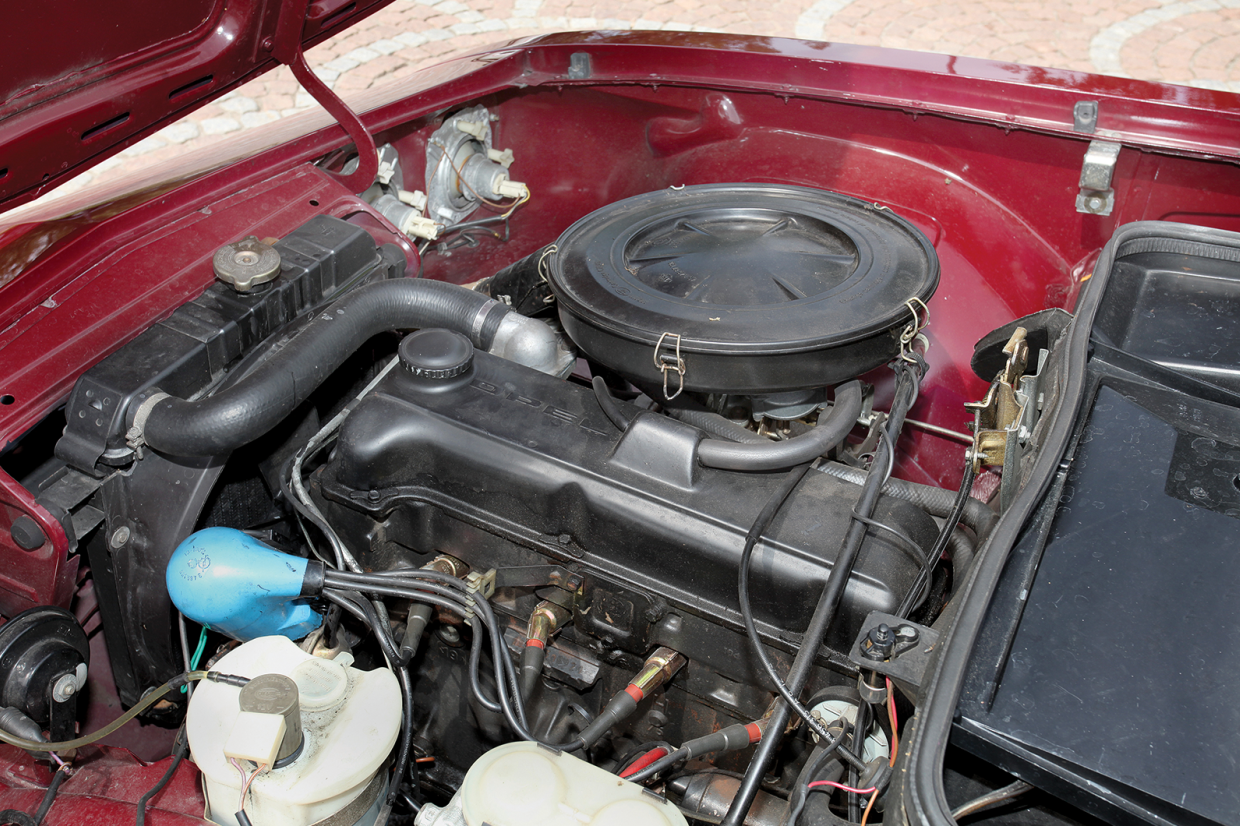
The Swinger features a three-speed automatic gearbox, with bright red cloth trim and headrests on seats that are more comfortable than they initially appear. Its door cards are simpler than those of the Berlinetta, which boast plush, velvety facings and wooden inserts. On the two-pedal Swinger, the driver interacts with Opel’s standard, rather hard and shiny steering wheel, whereas the Berlinetta is equipped with a chunkier “sports” version. The switchgear, including the heater controls, is logically grouped around the instrument cluster. Surprisingly, the substantial C-pillars that flow into the receding tail do not significantly hinder the driver’s all-around visibility.
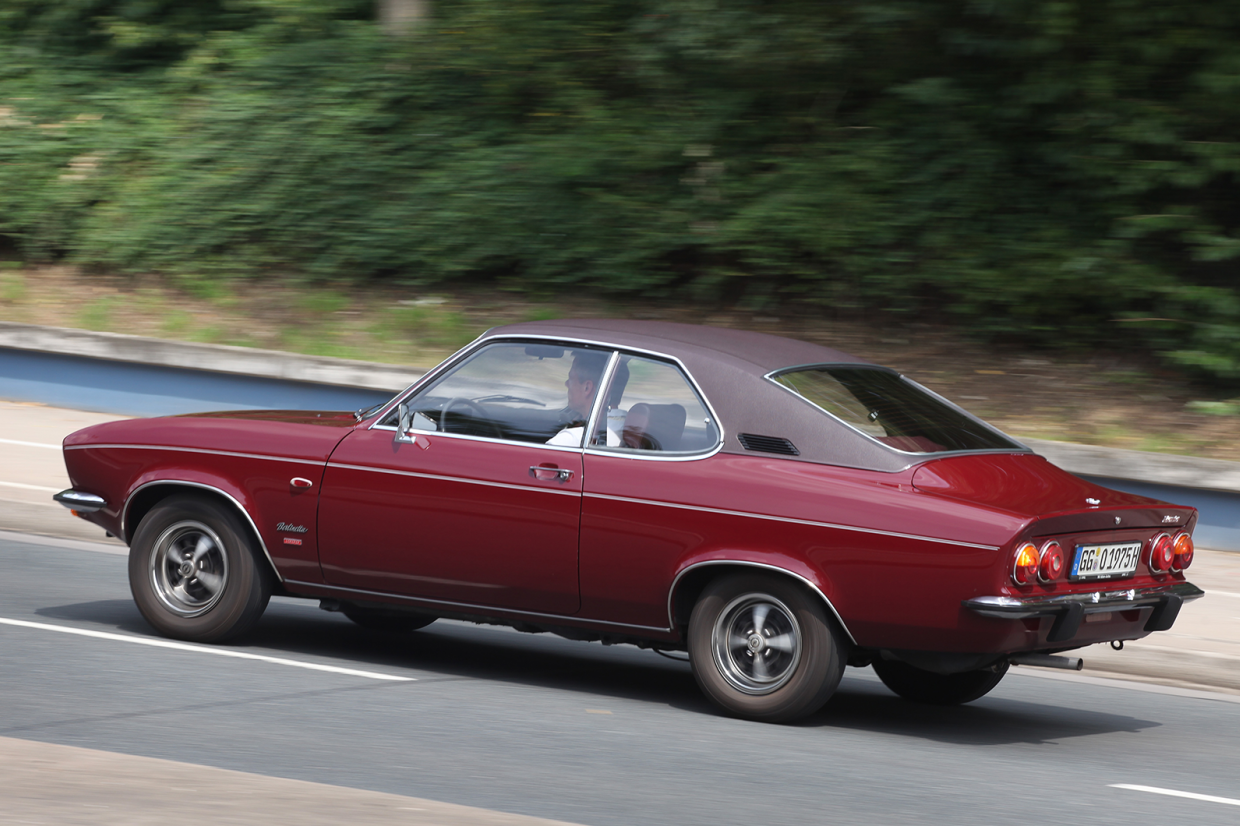
With its relatively low gearing and engines that become rather vocal when pushed hard, the Opel Manta wouldn’t be the first choice for a long European road trip or even a spirited drive on the autobahn. However, when judged as competitively priced and thoroughly competent transportation from 50 years ago, they remain willing, lively, and stable cars. They brake straight and short, offer a firm yet comfortable ride without feeling harsh, and exhibit less wind and road noise than one might expect. The Berlinetta, with its progressive clutch and light, reasonably precise gear change, allows for smooth, sprightly progress, enabling the driver to exploit its ample torque. Third gear can take you beyond 80mph, provided you can tolerate the engine’s rather strained tone when the second choke on the carburettor engages.
Thanks to its tendency to kick down, the automatic Swinger doesn’t feel significantly disadvantaged on the road. However, with fewer gear ratios to choose from, it offers less scope for the driver to fully exploit the chassis’s capabilities. Both Mantas exhibit a degree of predictable understeer, which enhances driver confidence. Firm damping helps maintain composure through corners, and the steering, despite a relatively slow 4.1 turns lock-to-lock, is more responsive than its ratio might suggest. They are agile, inherently safe, and possess no unpredictable vices that could catch out an unwary driver.
Opel’s rallying heritage is strongly associated with the Ascona and Manta ‘B’ models, yet the link to those cars can still be felt in the Manta ‘A’, demonstrating that there was still considerable life left in traditional chassis designs. In a 1970s automotive world that had already established that a saloon could handle as well as, if not better than, a sports car, a saloon-based coupé like the original Manta was never going to be a poor proposition. While rare, luxurious, and expensively engineered coupés were often the domain of marques like Lancia, Alfa Romeo, and BMW, Opel recognised an opportunity to offer a similar dream at a more accessible price point, making it attainable for a wider range of buyers.
Factfile: Opel Manta A
- Sold/number built: 1970-’75 / 498,553
- Construction: Steel monocoque
- Engine: All-iron, cam-in-head 1897cc ‘four’, single Solex carburettor
- Max power: 90bhp @ 5100rpm
- Max torque: 108Ib ft @ 2800rpm
- Transmission: Four-speed manual or three-speed automatic, RWD
- Suspension:
- Front: Independent, by upper wishbones, lower transverse links, anti-roll bar
- Rear: Live axle, trailing arms, torque tube, Panhard rod; coil springs, telescopic dampers f/r
- Steering: Rack and pinion
- Brakes: Discs front, drums rear, with servo
- Length: 14ft 1in (4293mm)
- Width: 5ft 4in (1626mm)
- Height: 4ft 5½in (1359mm)
- Wheelbase: 7ft 11¾in (2432mm)
- Weight: 2111Ib (958kg)
- 0-60mph: 12.2 secs
- Top speed: 105mph
- Mpg: 25
- Price new: £1474