

Pope Renounces War as Divine Justification Amidst Escalating Global Tensions
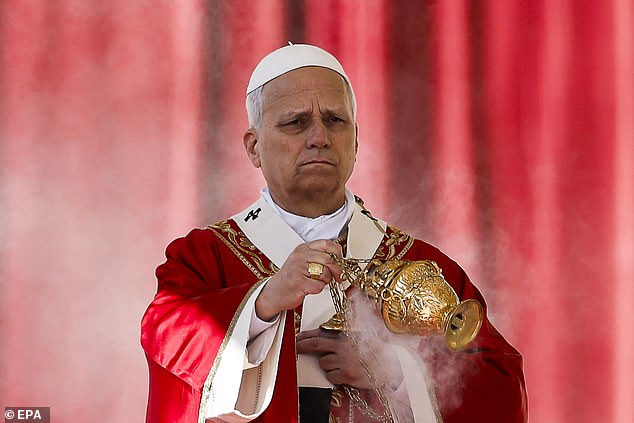
In a powerful address delivered before tens of thousands gathered in St. Peter’s Square, Pope Leo unequivocally rejected any notion that God endorses warfare. His pronouncements on Palm Sunday, a day commemorating Jesus’s triumphant entry into Jerusalem, served as a stark counterpoint to escalating global conflicts and reports of potential military escalations.
“Brothers and sisters, this is our God: Jesus, king of peace, who rejects war, whom no-one can use to justify war,” the Pope declared. “He does not listen to the prayers of those who wage war, but rejects them.” His message resonated deeply as he emphasised God’s role as a source of comfort for the oppressed, a stark contrast to the rhetoric of violence that has unfortunately permeated discussions surrounding international relations.
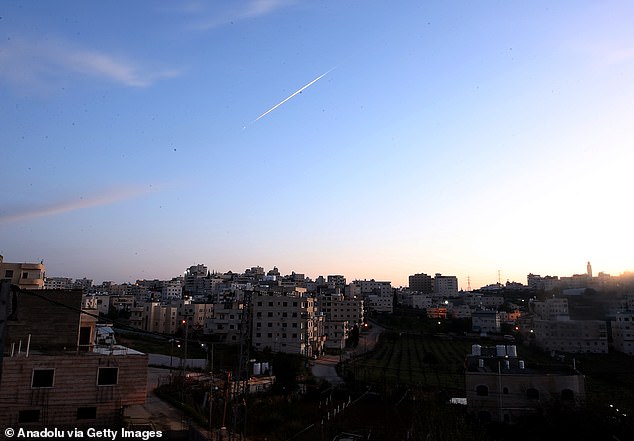
The Pope’s sermon comes at a time of heightened geopolitical anxiety. Reports suggest that the United States may be preparing for a ground invasion of Iran. Adding to the volatile atmosphere, the Speaker of the Iranian Parliament, Mohammad Bagher Ghalibaf, was quoted as saying that Iranian forces are “waiting for American soldiers to enter on the ground so they can rain fire upon them.” Ghalibaf also alleged that while public discourse from figures like Donald Trump focuses on peace negotiations, secret preparations for an attack are underway.
This complex geopolitical landscape has seen religious justifications wielded by various parties to legitimise their actions. In the Middle East, leaders on all sides have invoked faith to support their respective causes. Notably, some US officials, including Defence Secretary Pete Hegseth, have framed the ongoing conflict through the lens of their Christian faith, portraying it as a righteous battle waged by a Christian nation against its adversaries.
Palm Sunday and the Significance of Holy Week
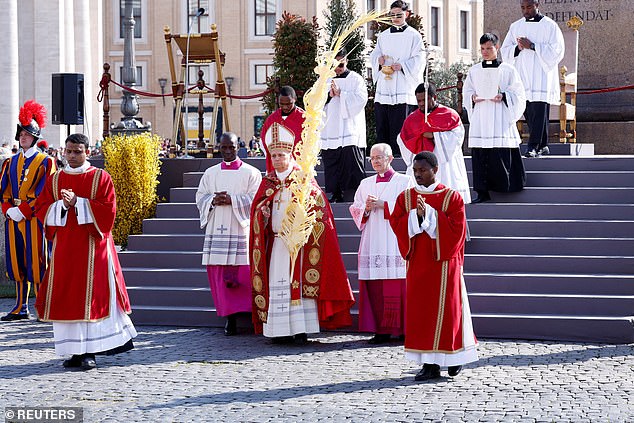
Palm Sunday marks a pivotal moment in the Christian calendar, symbolising Jesus’s arrival in Jerusalem prior to his crucifixion on Good Friday, culminating in his resurrection on Easter Sunday. The celebrations commenced with a solemn procession through St. Peter’s Square. Cardinals, bishops, priests, and laypeople, many bearing olive branches and palm fronds, walked in procession. The ceremony included an opening prayer led by Pope Leo at the central obelisk, followed by the commencement of Mass at the altar.
This year’s observance also carries a poignant historical context, recalling the recovery of Pope Francis during Holy Week of the previous year. After a prolonged hospital stay for double pneumonia, he had delegated liturgical duties. However, he rallied to greet the faithful on Easter Sunday from the loggia of St. Peter’s Square, completing what would become his final popemobile procession. Pope Francis passed away the following morning, Easter Monday, after suffering a stroke. His nurse, Massimiliano Strappetti, later shared Pope Francis’s touching words: “Thank-you for bringing me back to the square” for that final farewell.
A Return to Tradition and a Message of Humility
Pope Leo is set to preside over the entirety of this week’s liturgical events. He is also reinstating a significant tradition with the Holy Thursday feet-washing ceremony, which commemorates the Last Supper shared by Jesus and his disciples.
During his twelve-year pontificate, Pope Francis had famously taken this ritual beyond the confines of the Vatican. He travelled to prisons and refugee centres in the Rome area, washing the feet of individuals on the margins of society. His intention was to powerfully convey the ritual’s core message of service and humility, often reflecting during his homilies: “Why them and not me?” This gesture was widely lauded as a concrete demonstration of his belief that the Church must actively reach out to those most in need of God’s love and mercy.
However, some critics found these annual excursions, particularly when Francis extended the gesture to individuals of other faiths, to be controversial.
In contrast, Pope Leo, the first American-born Pope in history, is returning the Holy Thursday foot-washing tradition to its long-standing venue: the Basilica of St. John Lateran, where popes performed the ceremony for decades. While the Vatican has not yet disclosed who will participate, it is noted that his predecessors, Popes Benedict XVI and John Paul II, typically washed the feet of twelve priests.
The Climax of Holy Week
The solemn Good Friday procession at Rome’s Colosseum, commemorating Christ’s Passion and crucifixion, will be led by Pope Leo on Friday. Saturday will feature the Easter Vigil, a late-night service during which Pope Leo will baptise new Catholics. A few hours later, on Easter Sunday, Christians will celebrate the resurrection of Jesus. Pope Leo will conduct the Easter Sunday Mass in St. Peter’s Square and subsequently deliver his Easter blessing from the basilica’s loggia.


