
The eastern Sydney suburbs of Kensington and Kingsford, a stone’s throw from the bustling University of New South Wales (UNSW), are currently a hive of construction activity. Cranes and scaffolding are a common sight, but the focus of this development boom isn’t on traditional homes for families or individuals. Instead, the skyline is increasingly dominated by purpose-built student accommodation, leading to a stark imbalance in housing approvals.
A Development Imbalance: Student Housing Overwhelms Residential Builds
In the past six years, a staggering statistic has emerged from this 2.5-kilometre stretch of Anzac Parade. Local council figures reveal that less than 500 residential dwellings have been approved for construction. In stark contrast, over 5,200 student rooms have been greenlit during the same period. This “perverse” ratio, as described by Randwick Mayor Dylan Parker, has ignited a debate about the future of housing in these rapidly transforming suburbs.
Mayor Parker has voiced concerns that the area has been “monopolised” by commercial student housing providers. “We are very supportive of the university and having student education in that precinct, but it’s about getting a reasonable mix,” he stated. “A factor of 10 to one is pretty hard to justify.”
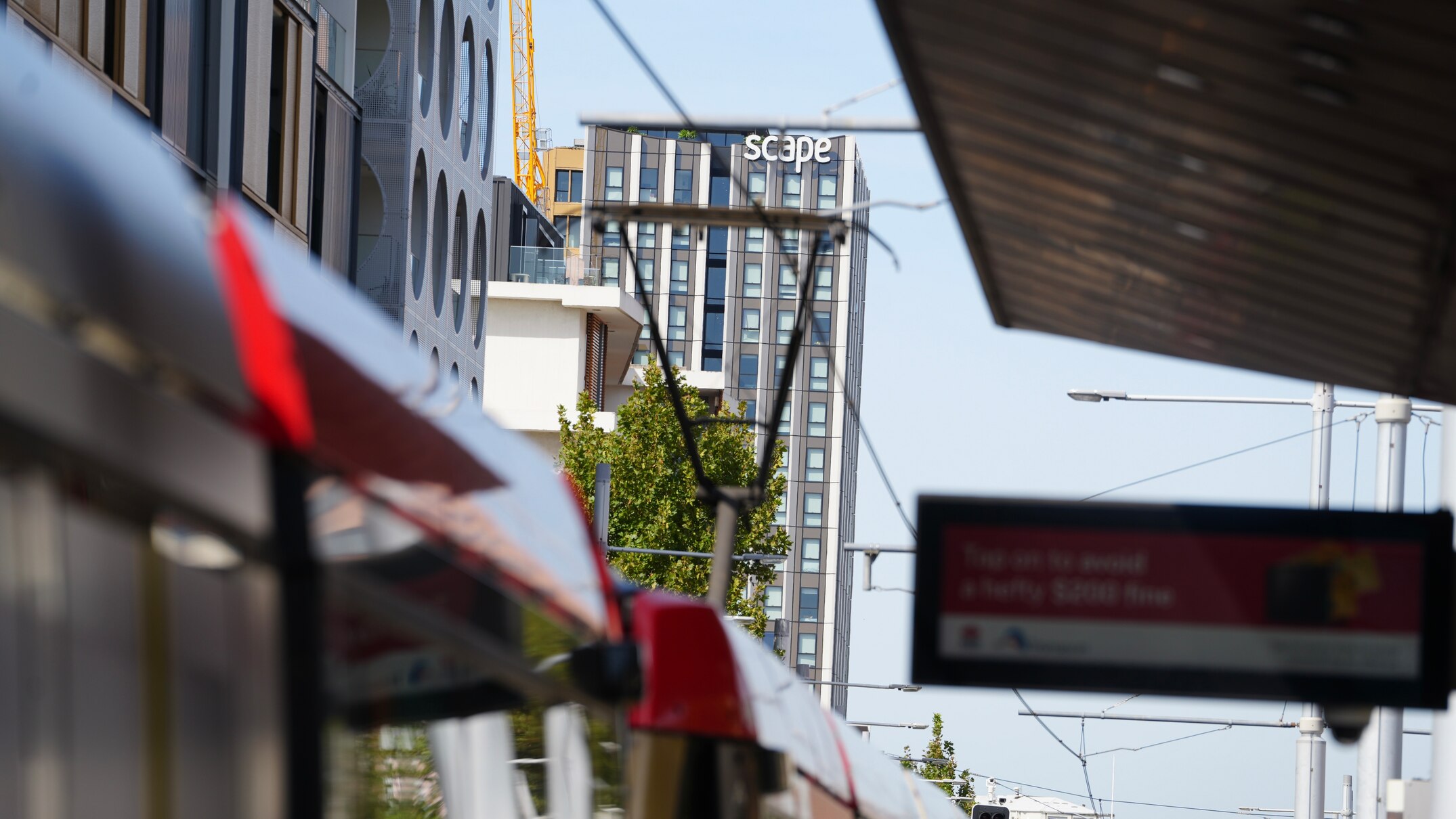
The Kensington to Kingsford corridor is strategically positioned, bordering UNSW, which caters to approximately 70,000 students. Its proximity to the CBD, coupled with a robust public transport network featuring numerous bus stops and light rail stations, makes it an attractive proposition for large-scale student accommodation developments by companies such as UniLodge and Scape.
Council’s Stance: A Call for a Moratorium
In response to the escalating imbalance, Randwick City Council has taken a firm stance. At their initial meeting of the year, councillors unanimously voted to reiterate their “in-principle support” for a moratorium on any further for-profit commercial student accommodation within the local government area (LGA).
Furthermore, the council is set to formally communicate with NSW Planning Minister Paul Scully. They are requesting that specific sections of the area be excluded from current policies that apply to co-living housing, including student accommodation. The objective of this move is to disincentivise the rapid expansion of student housing and create more opportunities for the development of much-needed residential homes.
“It means that there can be bonus floor space, it exempts developers from the apartment design guide, exempts them from parking requirements, and allows developers to provide essentially micro rooms,” Mayor Parker explained, highlighting the perceived loopholes that favour student accommodation. “Here is a clear and easy regulatory change which could deliver real housing for people to live in quite quickly.”
However, NSW Planning Minister Paul Scully has indicated that the state government is “not considering blanket exemptions for any councils” regarding these policies, suggesting a potential roadblock for the council’s proposed measures.
Industry Perspectives: The Role of Purpose-Built Student Accommodation
Despite the council’s concerns, proponents of purpose-built student accommodation (PBSA) argue that it plays a crucial role in alleviating broader housing pressures. Scape, a prominent provider, has opened three buildings in the corridor over the past two years, with a fourth nearing completion.
Anouk Darling, CEO of Scape, stated that PBSA “played a vital role” in easing pressure on other housing markets. “Constraining new supply simply pushes more students into an already stretched rental market, to the detriment of all residents,” the company said in a statement. Scape’s view is that the Kensington to Kingsford corridor “has the energy and character of a genuine university town and Scape has been central to that transformation.”
Student Experiences: Navigating a Competitive Rental Market
The reality on the ground for students seeking accommodation can be challenging. Lars Nolles, a UNSW student who relocated from Orange, described his experience searching for a share house. “The houses anywhere around the university were just absolutely flooded with applicants,” he recounted. “It was either that or I would go somewhere too far out of area, and we would be facing up against families.”
After what he described as an “extremely difficult” search, Nolles eventually secured a flat outside the Randwick LGA. He noted the intense competition for rentals in the area, which includes hospital workers, university professors, and established residents of the eastern suburbs, in addition to students.
Sylvia Wang, another UNSW student who does not reside in dedicated student housing, pointed to the sense of community offered by co-living spaces as a significant benefit. “Suburbs like Kingsford and Kensington have always been characterised by the university and students,” she observed.
While acknowledging that commercial student accommodation can be more expensive than traditional rentals, Wang highlighted its particular value for international students. “For regular apartments … you have to be at the inspection in order to qualify to even apply for the place, and that’s just not viable for a lot of international students,” she explained. “They can just order a room online when they’re overseas … and can move in without any sort of hassle or drama.”
Advocacy Groups Weigh In: A “Baffling” Council Stance
Housing advocacy group Sydney YIMBY has labelled the council’s position as “baffling.” Matt Arkell, a representative from the group, emphasised the economic and social contributions of UNSW. “UNSW brings a huge amount of value to Randwick and Sydney, and tertiary education is one of Australia’s biggest exports,” he said. “We’d really like to know why they’re trying to kill the goose that keeps on laying golden eggs.”
In response, Mayor Parker acknowledged the significant value that students bring to the community. However, he maintained that the primary focus must remain on the needs of existing residents. “Everyone would agree that in the hierarchy of needs, housing should come before an export industry,” he asserted. “Clearly, housing and shelter for the individuals who live in this community is the principal concern.” The ongoing tension between development, student needs, and resident housing requirements is set to continue shaping the future of these vibrant eastern Sydney suburbs.