


Unexpected Interruption Dominates Health Briefing
The first White House press briefing of the new year, intended to unveil revised US dietary guidelines for 2025-2030, was unexpectedly punctuated by a loud, quacking duck. The sound, emanating from the mobile phone of Health and Human Services Secretary Robert F. Kennedy Jr., brought an immediate wave of laughter from both the assembled health officials and the White House press corps.
This moment of shared amusement provided a rare instance of levity, uniting typically adversarial parties in a collective chuckle. Secretary of Agriculture Brooke Rollins, FDA Commissioner Marty Makary, Administrator for the Centers for Medicare & Medicaid Services Mehmet Oz, National Nutrition Advisor Ben Carson, and Press Secretary Karoline Leavitt were all observed smiling at the ill-timed interruption.


Secretary Kennedy, appearing momentarily flustered, fumbled in his pocket to silence the offending device. He eventually managed a smile and handed the phone to Mehmet Oz, who promptly ended the avian serenade.
Seizing the opportunity for a lighthearted moment, Secretary Rollins quipped, “Duck is a good thing to eat, everybody!” She humorously connected the interruption to the briefing’s core message, highlighting duck’s rich protein content, a key focus of the new dietary recommendations.
Redefining Nutrition: Protein Takes Center Stage
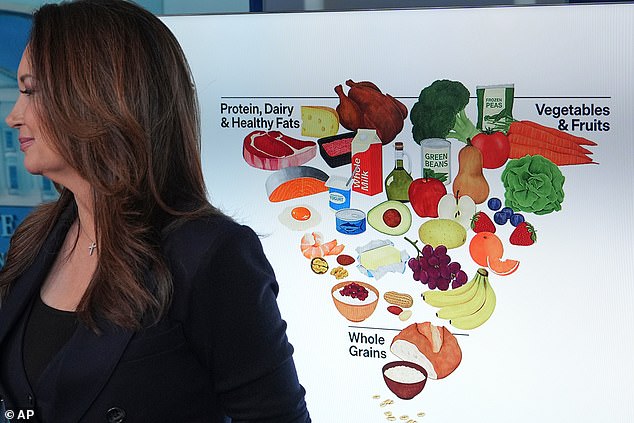
The revised dietary guidelines represent a significant departure from previous models, inverting the traditional food pyramid. The new framework places protein, dairy, healthy fats, vegetables, and fruits at the apex, emphasizing their crucial role in a healthy diet.
Secretary Kennedy articulated a clear shift in perspective, stating, “Protein and healthy fats are essential and we’re wrongly discouraged.” He further elaborated on the outdated nutritional advice, announcing, “In prior dietary guidelines, we are ending the war on saturated fats, diets rich in vegetables and fruits reduce disease risk more effectively than any drugs.”
His overarching message was unequivocal: “My message is clear, eat real food. Nothing matters more for healthcare outcomes, economic productivity, military readiness and fiscal stability.”
FDA Commissioner Marty Makary underscored the practical implications of these changes, noting that the new guidelines recommend a substantial increase in protein intake for children. Specifically, the revised recommendations suggest between 50 to 100 percent more protein for children compared to previous guidance.
Broader Implications and Future Directions
This shift in dietary recommendations by the Trump administration, particularly with Secretary Kennedy at the forefront, has sparked considerable discussion. The emphasis on “real food” and the reevaluation of previously demonized food groups like saturated fats suggest a potential pivot in America’s approach to public health.
The administration’s focus on protein and healthy fats aligns with a growing body of research that challenges long-held nutritional dogma. This renewed emphasis could have far-reaching consequences for public health initiatives, food policy, and the agricultural sector.
The implications of these new guidelines extend beyond individual dietary choices, potentially influencing:
- Public Health Campaigns: A greater focus on protein and healthy fats could lead to new public health campaigns promoting these nutrient-rich foods.
- Food Industry Practices: Food manufacturers may adapt their products to align with the new recommendations, potentially leading to healthier options on store shelves.
- Agricultural Policy: The emphasis on certain food groups could inform agricultural subsidies and support for farmers producing these key ingredients.
- Healthcare Outcomes: Proponents argue that a diet rich in whole, unprocessed foods, including adequate protein and healthy fats, can contribute to reduced chronic disease risk and improved overall health.
The “Make America Healthy Again” movement, championed by Secretary Kennedy, appears to be gaining traction, challenging established norms within the FDA and the broader healthcare landscape. The administration’s commitment to a more holistic and less restrictive approach to nutrition signals a potentially transformative era for American wellness. The controversial nature of some of Secretary Kennedy’s past statements and initiatives adds another layer of intrigue to this evolving health agenda.