Science’s Unexpected Alliance: New Book Argues Discoveries Point to Divine Creator
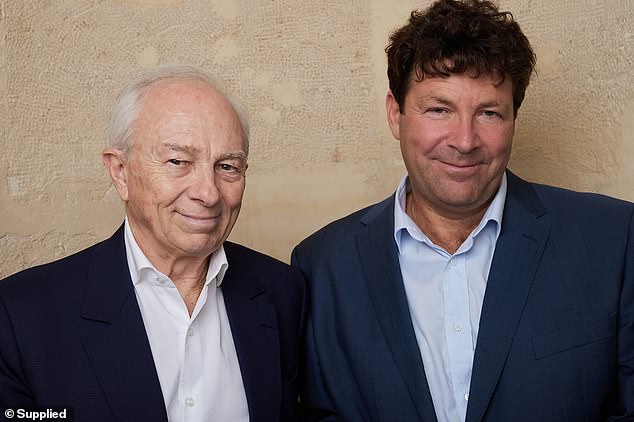
For centuries, the discourse surrounding the existence of God has often positioned science as a counterpoint to faith. However, a compelling new perspective is emerging from the world of mathematics. French mathematicians Olivier Bonnassies and Michel-Yves Bolloré propose in their recent book that scientific advancements are no longer adversaries to the concept of a divine creator, but rather, have become its unexpected ally.
Drawing upon the insights of 62 Nobel laureates and over 100 prominent scientists, Bonnassies and Bolloré have identified key scientific discoveries that they argue could offer tangible evidence for the existence of God. Their analysis spans from the fundamental origins of the universe, such as the Big Bang, to the intricate complexity of DNA and the human genome.
“Until recently, believing in God seemed incompatible with science,” the authors state. “Now, unexpectedly, science appears to have become God’s ally.” While the ultimate interpretation of science’s relationship with the divine remains a subject of ongoing debate, these scientific findings present a fascinating glimpse into the possibility that our universe is not merely a product of chance, but rather, the result of deliberate design.
The Big Bang: A Cosmic Genesis and the Question of Origin
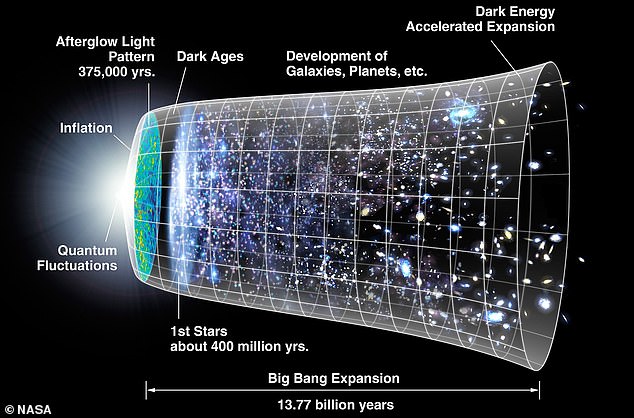
The Big Bang theory, the prevailing cosmological model for the universe’s origin, posits that all matter and energy, along with space and time itself, exploded into existence from an infinitely dense single point approximately 14 billion years ago. This cataclysmic event, unfolding in a fraction of a second, gave birth to the cosmos as we know it.
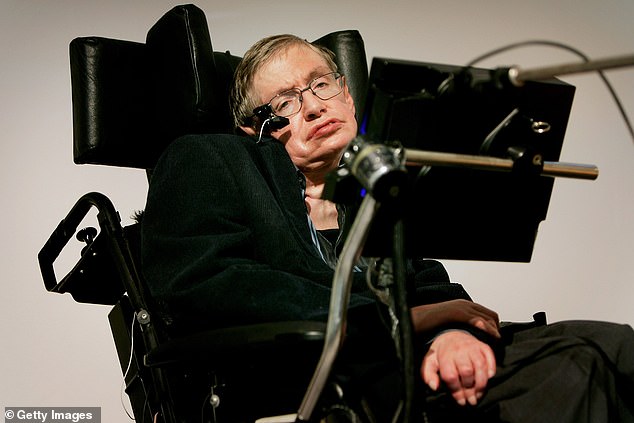
While prominent scientists like the late Professor Stephen Hawking have expressed skepticism about a divine hand in the Big Bang, Bonnassies and Bolloré, both Christians, contend that such a singular, universe-initiating event implicitly suggests the involvement of a higher power. They question whether it is “really such a leap to entertain the possibility of a creative act” behind the Big Bang.
The authors argue that the Big Bang theory “forces us into a corner,” bringing humanity face-to-face with the concept of God. The very notion that time, space, and matter did not exist prior to the Big Bang, and that our understanding breaks down at that point, lends credence to the idea of a preceding creative act. The question then arises: if mathematical information existed before the Big Bang, who or what was the “incredible ‘programmer’” behind such fundamental code?
The Big Bang Theory Explained
The Big Bang theory is a scientific framework that describes the universe’s beginning and subsequent evolution. It asserts that the universe began in an extremely hot and dense state before commencing its expansion roughly 13.7 billion years ago. This theory is underpinned by crucial observational evidence. In 1920, astronomer Edwin Hubble observed that galaxies are moving away from each other, indicating that they must have been closer in the past.
The pivotal confirmation of the Big Bang theory came in 1965 with the discovery of cosmic microwave background (CMB) radiation by two astronomers in New Jersey. This faint afterglow is considered residual radiation from the universe’s inception. Despite decades of research, the mathematicians note that no alternative theory has emerged that is supported by comparable experimental observations, leaving the Big Bang as the dominant explanation.
A Universe Fine-Tuned for Life
The existence of life on Earth is contingent upon an astonishingly precise confluence of factors. These include ideal temperature ranges, a protective magnetic field, and a specific atmospheric composition, particularly the proportion of oxygen. Other critical parameters include the precise inclination of Earth’s axis and the thickness of its ozone layer, which shields us from harmful solar radiation.
On a grander scale, the fundamental forces governing the universe – such as the strong nuclear force, the weak nuclear force, and the electromagnetic force – are characterized by constants with specific numerical values. Scientists like Albert Einstein have meticulously calculated these constants. Bonnassies and Bolloré posit that these “fine-tuned” numbers are either an infinitesimally improbable result of chance or the product of “complex calculations of a highly intelligent creator God.”
They emphasize that even minor deviations in these fundamental constants, by a fraction of a decimal point, would have resulted in a universe unrecognizable to us, rendering life impossible. This perspective, known as the fine-tuned universe hypothesis, evokes the image of a divine architect meticulously adjusting universal parameters. Conversely, the alternative belief that the universe is a “purposeless accident” appears less consistent with the finely calibrated nature of these fundamental numbers.
DNA and the Human Genome: The Blueprint of Life
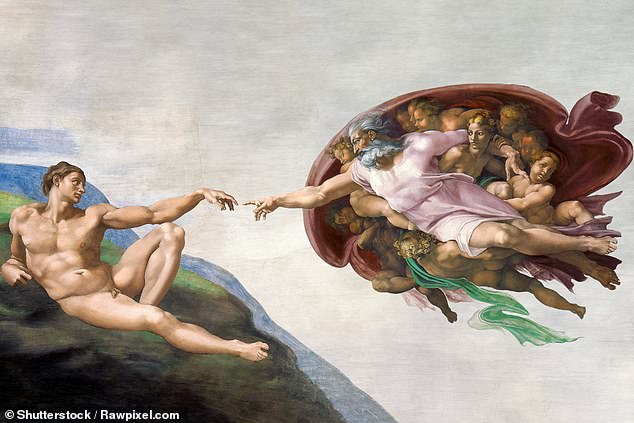
While Earth might have existed without the vast diversity of plant and animal life, life somehow emerged. Approximately four billion years ago, inanimate matter transitioned into primitive life forms, and DNA mysteriously appeared. The mathematicians describe the “dizzying” improbability of this “enormous leap” from inert matter to life, asserting that chance alone cannot account for its appearance.
The groundbreaking discovery of DNA’s double-helix structure by Sir Francis Crick and James Watson in 1953 revealed a universal encoding language common to all life. Later, in 2003, scientists built upon this work to map the human genome, the complete set of genetic instructions within a cell. Even Crick, an atheist, acknowledged that a structure as complex as DNA could not have arisen by chance, describing it as “almost a miracle.”
Bonnassies and Bolloré suggest that DNA represents a “unique, sophisticated and coordinated coding system” that points towards an intelligent designer. They propose that life’s emergence was either a consequence of natural laws established by God at the universe’s inception or the result of direct divine intervention. “In the last 50 years, we have discovered that the complexity of life surpasses anything we could have imagined,” they state. “Today’s leading figures in science have been humbled by this fact.”

Professor Stephen Hawking’s Stance
It is worth noting the contrasting view of Professor Stephen Hawking. In his final reflections, Hawking stated, “There is no God.” He believed that “No one created the universe and no one directs our fate.” For him, the simplest explanation was the absence of a divine being, and he saw belief in an afterlife as wishful thinking, lacking scientific evidence and contradicting known scientific principles. He posited that upon death, “we return to dust,” with our legacy living on through our influence and the genes passed to our children.
Einstein’s Theory of Relativity and the Nature of God
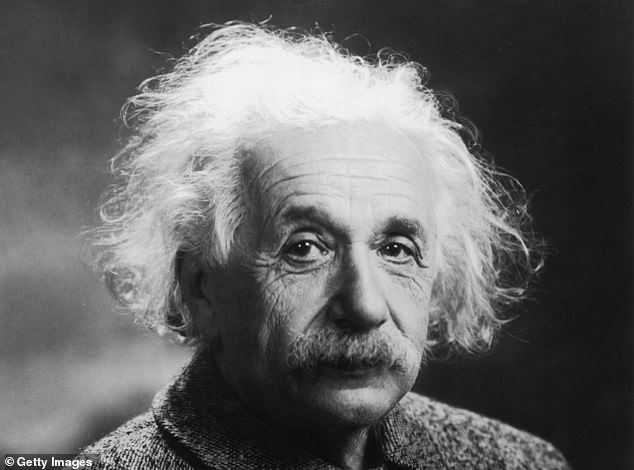
Albert Einstein, who described himself as “not an atheist” but also not religious, developed his Theory of Relativity between 1905 and 1917. This theory revolutionized our understanding of physics, revealing the interconnectedness of time, space, matter, and energy. It established light, and specifically its speed, as the universe’s sole constant, with all other aspects being relative, including time.
Some interpretations of Einstein’s theory have drawn parallels between light and God, both being perceived as unchanging constants. This is supported by biblical references such as “God is light” and “I am the light of the world.” The theory suggests that time would cease to exist at the speed of light, mirroring the concept of God’s eternal nature, without beginning or end.
Einstein’s “God Letter”
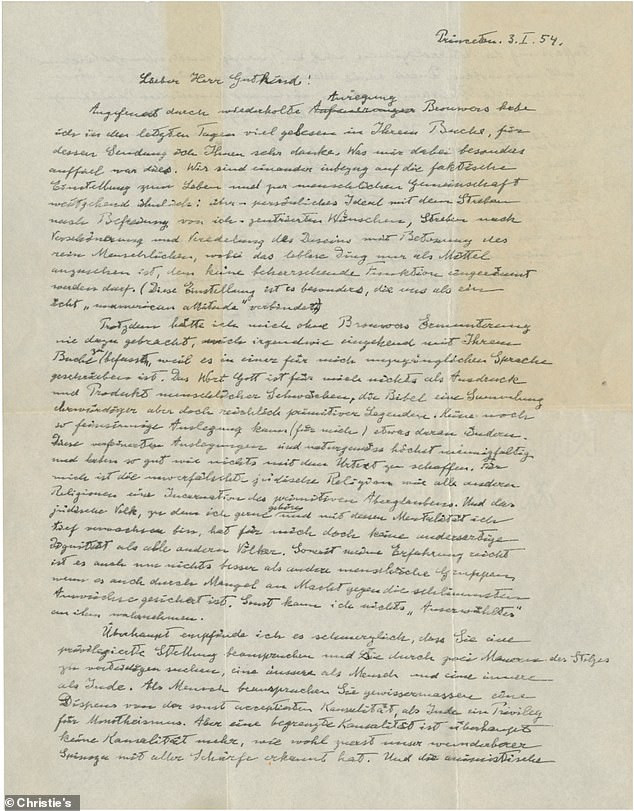
In a 1954 letter to religious philosopher Erik Gutkind, famously dubbed Einstein’s “God letter,” he expressed his view that the word “God” was a human construct born of weakness, and the Bible a collection of primitive, albeit honorable, legends. He maintained that no interpretation could alter this perspective for him. While Einstein did not present these views as definitive proof against religious belief, aspects of his scientific theories have been interpreted by some as supportive of a divine existence.
Quantum Mechanics: Unveiling a Layer of Reality
Quantum mechanics, a 20th-century scientific revolution, has left many scientists grappling with its implications for our understanding of reality. Classical physics fails to adequately explain the phenomena observed at the quantum level. A prime example is quantum entanglement, where two particles become linked, sharing properties instantaneously regardless of distance.
French physicist Alain Aspect, a Nobel laureate, has experimentally demonstrated quantum entanglement between particles separated by significant distances, exhibiting instantaneous correlation. These experiments, the authors suggest, reveal “another layer of reality” within the realm of physics. The quantum nature of our world, characterized by indeterminacy and an inherent element of chance, is “metaphysically essential,” they argue.
This quantum indeterminacy, they propose, indirectly supports the thesis of God’s existence while challenging the deterministic views held by 19th-century atheist scientists.
Conclusion: A Rational Case for Divine Presence
Bonnassies and Bolloré maintain that the evidence for God’s existence is “abundant, clear and rational,” grounded in reason and rigorous analysis. They contend that the “traces of God’s actions” in the universe are far more discernible than those of potential extraterrestrial life, yet scientists often dedicate more effort to the latter.
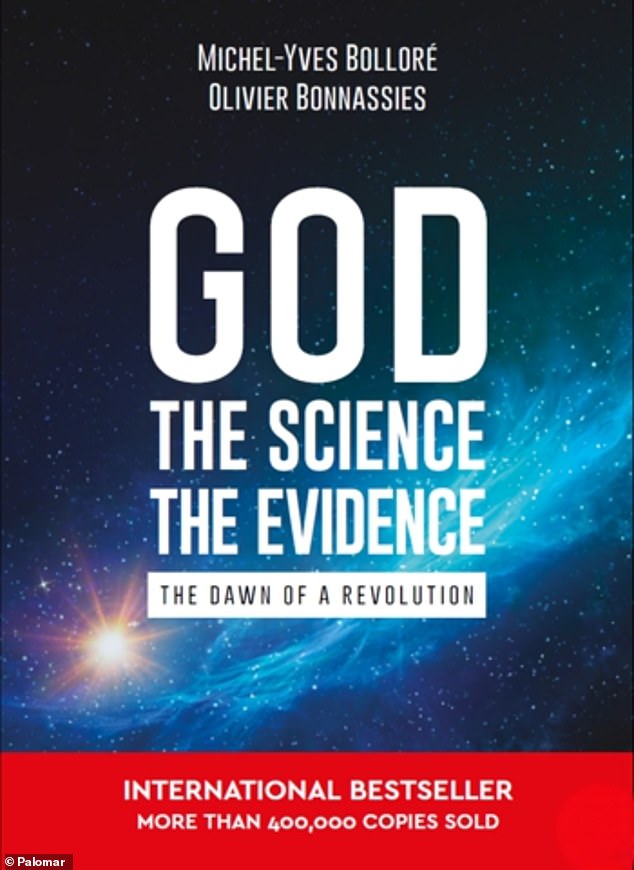
The authors conclude that we are experiencing an “intellectual paradigm shift” that is fundamentally altering our approach to the question of God’s existence, even if this shift has largely gone unnoticed by the public. The English-language version of their book, “God, the Science, the Evidence,” offers a comprehensive exploration of these ideas, inviting readers to reconsider the intersection of science and faith.
Professor Stephen Hawking’s Key Questions and Answers:
- Is there a God?
“There is no God. No one directs the universe.” - How did it all begin?
“In a hot Big Bang.” - Is there other intelligent life in the Universe?
“There are forms of intelligent life out there. We need to be wary of answering back until we have developed a bit further.” - Can we predict the future?
“No and yes. In principal the laws allow us to predict the future but in practice it is too difficult.” - What is inside a Black Hole?
“Falling into a black hole is definitely bad news. If it were a stellar mass black hole your would be made into spaghetti before reaching the horizon.” - Is Time Travel Possible?
“Travel back in time can’t be ruled out according to our present understanding.” - Will we survive on Earth?
“The present world order has a future but it will be a very different one.” - Should we colonise space?
“I expect within the next hundred years we will be able to travel to anywhere in the Solar System.” - Will Artificial Intelligence outsmart us?
“A super-intelligent AI will be extremely good at accomplishing goals and if those goals aren’t aligned with ours we’re in trouble.” - How do we shape the future?
“Remember to look up at the stars and not down at your feet.”