
Rooftop Solar Push: A Nationwide Divide and Lingering Concerns
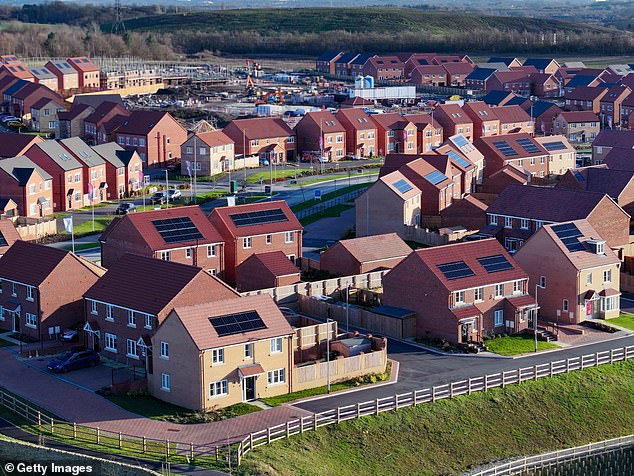
The push to blanket Britain’s rooftops with solar panels, a key initiative championed by the Labour government, has revealed a stark geographical divide across the nation. While over 1.6 million homes have already embraced this renewable energy source, often utilising Chinese-manufactured panels costing homeowners up to £8,000, significant swathes of the country remain “solar dead-zones.” An analysis of constituencies across England and Wales has identified Plymouth Moor View as the current leader in domestic solar installations, boasting an impressive 144 panels per square kilometre.
Following closely behind are Leicester East (122), Bristol Central (117), Manchester and Withington (116.9), and Nottingham East (106.9), rounding out the top five constituencies embracing rooftop solar. In stark contrast, areas like Hexham in Northumberland register a mere one installation per square kilometre, highlighting the uneven adoption of this technology.
Critics have labelled the government’s aggressive drive as “tone deaf,” particularly in light of rising household bills. Richard Tice, Reform’s shadow business, trade, and energy secretary, has voiced strong opposition, stating, “We do not support Mad Miliband’s Net Zero push that risks wrecking our countryside and valuable agricultural land.” He added, “At a time when household bills are already skyrocketing, it is completely tone deaf for Labour to push the public into buying expensive plug-in solar panels.” Reform has pledged to “scrap these Net Stupid Zero policies and bring energy bills down.”
Expanding Solar Access: New Options on the Horizon
Under ambitious plans to significantly increase solar panel installations, Britons may soon have access to more affordable, plug-in versions available from major retailers like Lidl and Amazon. Labour’s Energy Secretary, Ed Miliband, has expressed his desire for homeowners to have this option “within months.” He argues that the economic ramifications of global conflicts, such as those in the Middle East, underscore the “essential” nature of his Net Zero agenda. These plug-in units, designed for patios or balconies, are expected to cost around £400, offering a more accessible entry point for households and potentially easing pressure on the national grid.
Furthermore, a significant initiative aims to see the majority of new homes constructed with integrated renewable electricity generation, with solar power being the likely primary source. This expansion of solar technology, a cornerstone of Labour’s “Great British Energy” ambition, has also fuelled the development of large-scale solar farms. These vast expanses of black panels are increasingly dominating rural landscapes across England.
Controversial Solar Farms Spark Local Resistance
One of the most contentious proposals involves Lime Down in Wiltshire, a planned 500-megawatt solar farm spanning 3,000 acres north of the M4 motorway near Malmesbury. Despite two years of opposition from local communities, energy firm Island Green Power formally submitted plans in January. Wiltshire Council has publicly declared its intention to contest the development.
Since Labour’s return to power in June 2024, Energy Secretary Ed Miliband has been a driving force behind the “Great British Energy” initiative, a publicly funded green energy venture supported by taxpayer-backed subsidies. The push for solar panel adoption has been a significant component of this strategy, with over 177,000 domestic installations completed in 2025 alone – averaging an impressive 485 per day.
The government’s “Warm Homes” plan, backed by £15 billion in taxpayer funding, is set to offer homeowners low and zero-interest loans for solar panel installations, a move described as a “rooftop revolution.” Last year, solar power contributed approximately 6 per cent of the UK’s annual electricity generation, significantly boosted by the warmest summer on record. Wind and gas, however, remain the dominant sources of power. Labour’s long-term vision is for 95 per cent of Great Britain’s electricity to be sourced from clean energy, including nuclear, solar, and wind.
International Comparisons and Expert Reservations
Globally, the UK’s current solar capacity stands at around 22 gigawatts (GW). This pales in comparison to China, which leads the world with a staggering 887 GW of solar capacity, accounting for over half of the global total.
Experts have raised significant questions about the UK’s suitability for a large-scale solar energy strategy, citing the nation’s often inclement weather as a barrier to consistent year-round power supply. Professor Peter Dobson, a supernumerary fellow at The Queen’s College, Oxford, articulated these concerns, suggesting that domestic investment should instead be prioritised for nuclear energy. “The UK is one of the worst countries in the world to invest in a solar energy scenario,” he stated.
Professor Dobson further criticised the strategic approach to renewable energy policy:
- “None of the political parties have addressed the issue properly and strategically.”
- “The timescales have been made too short for proper planning and too few engineers have been involved in the decision making.”
- “It is time to stop policy decisions being made without a detailed techno-economic assessment.”
- “The timescales have been made too short for proper planning and too few engineers have been involved in the decision making.”
Geopolitical Dependencies and National Security
A critical point of contention for Ed Miliband is the potential reliance on China for solar power components. MI5 has identified China as a significant threat to the UK’s economic and national security, and intelligence officials harbour concerns about Beijing’s influence over the UK’s energy infrastructure, particularly in light of ongoing global instability.
Chancellor Rachel Reeves has attempted to reassure the public by promising support for those most affected by volatile oil and gas prices. The UK Solar Alliance, an advocacy group that campaigns against the rapid expansion of solar technology, has echoed concerns about its inefficiency and over-reliance on China. A spokesperson for the alliance remarked, “Net Zero cannot mean blind speed.”
They further elaborated on the strategic risks:
- “Where a critical infrastructure programme relies heavily on manufacturing concentrated in one geopolitical sphere, that is a strategic dependency and it deserves open and sober assessment, not dismissal.”
- “Decarbonisation should reinforce resilience, not quietly introduce new structural exposure.”


