Night Vision Reveals Rare Wildlife on Truwana/Cape Barren Island
Night-vision cameras deployed across the rugged landscapes of Truwana/Cape Barren Island, a jewel off Tasmania’s northeast coast, have begun capturing intriguing glimpses of nocturnal activity. These cameras, part of a vital wildlife monitoring initiative spearheaded by the Truwana Rangers with support from WWF Australia, were initially set up to document the island’s natural inhabitants. While most frames offered routine footage of animals navigating the scrub and grasslands after dark, a select few quickly stood out, revealing species rarely documented on the island. Among these remarkable findings were a minuscule marsupial and an echidna sporting an unusually pale coat. Crucially, these images suggest that ongoing conservation efforts may be playing a significant role in the persistence of native wildlife.
For Senior Ranger Buck Brown, the discovery resonated deeply, bringing back a vivid memory from six years prior. During a controlled burn, he witnessed small animals scattering from the flames near his vehicle. He managed to briefly secure a couple of these creatures before they vanished back into the bush.
“I was on my hands and knees grabbing them and putting them under the tyre of the ute,” Brown recounted. At the time, he lacked any photographic evidence of these elusive animals, but the recent trail camera survey has now provided the definitive visual confirmation he sought. The captured images unequivocally show that at least one of these species continues to thrive on the island.
White-Footed Dunnart: A Significant Confirmation
One of the most pivotal images to emerge from the survey is that of a white-footed dunnart, marking the first confirmed camera record of this species on Truwana/Cape Barren Island. This tiny marsupial, scientifically known as Sminthopsis leucopus, measures less than 10 centimetres in length and primarily subsists on insects and small invertebrates found in grassland environments.
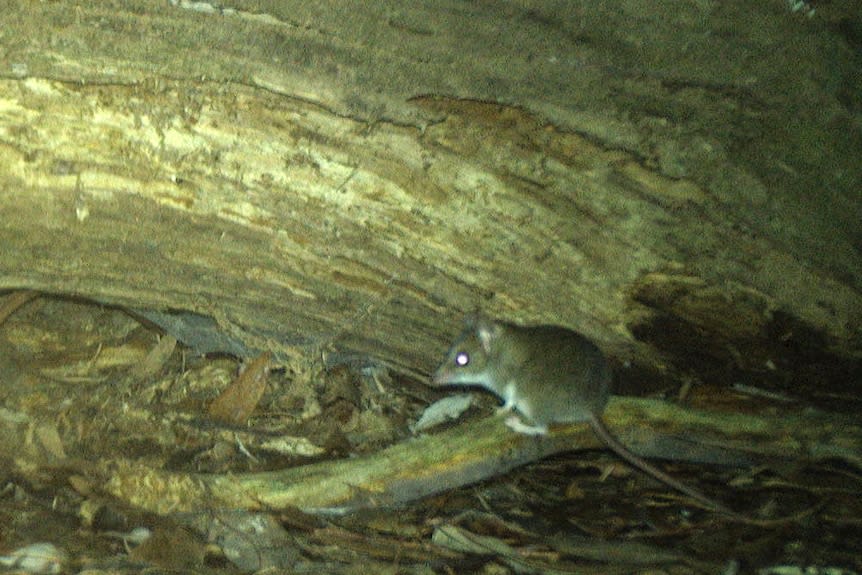
Researchers estimate that fewer than 5,000 individuals of the white-footed dunnart remain across Tasmania. The species is also listed as threatened in New South Wales, underscoring the immense importance of confirmed sightings for effective conservation monitoring.
Upon reviewing the trail camera footage, Brown immediately recognised the animal, noting that the image perfectly matched his recollection of the creatures he had seen years earlier during the controlled burn. The footage has finally settled his long-held belief. “That’s the little fella I saw six years ago,” he stated, a sense of vindication evident in his voice.
The discovery adds a crucial new wildlife record for Truwana/Cape Barren Island. The trail camera evidence confirms that the white-footed dunnart is actively moving through the island’s bushland, providing invaluable data for researchers aiming to track the species, particularly in remote and difficult-to-access areas.
The Striking Appearance of a Pale Echidna
Another image that immediately captured the attention of the rangers featured an echidna with a distinctly unusual appearance. The camera frame revealed a pale echidna, its spines and fur appearing a light blond hue under the infrared illumination.
Ranger Shane Hughes expressed the team’s surprise at encountering this individual on camera. While echidnas are known inhabitants of the island, this particular specimen exhibited a noticeably lighter coloration than typically observed. “It would have been good to see it in the flesh,” Hughes commented, highlighting the rarity of such a sighting.
Scientists believe this unusual colouring is likely a result of leucism, a genetic condition that leads to a partial loss of pigmentation. Unlike albinism, which results in a complete absence of pigment and can affect the eyes, leucism typically manifests as lighter fur or feathers while the eyes retain their normal colouration.
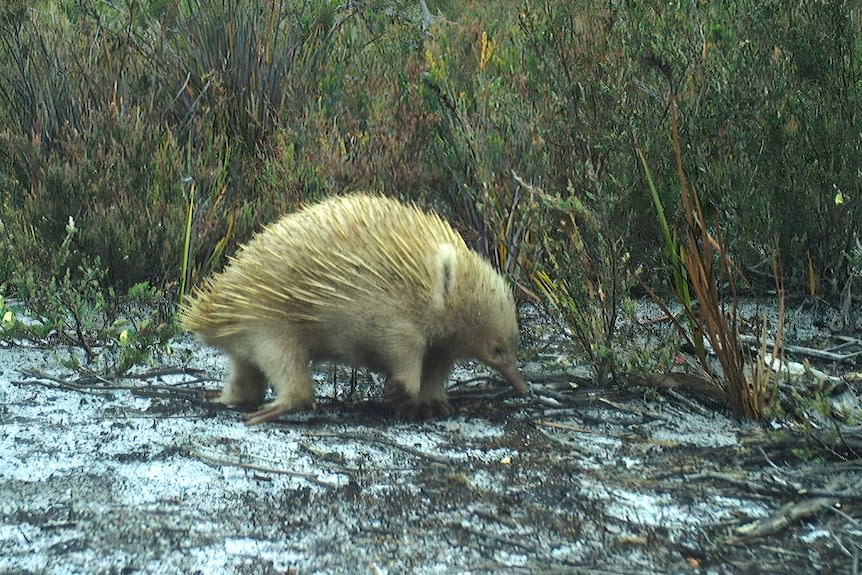
Wildlife ecologist Dr Liz Znidersic from Charles Sturt University explained that leucism can occur more frequently than albinism. She noted that small and isolated populations can sometimes exhibit such traits more often. “Leucism occurs slightly more frequently than albinism,” Znidersic stated.
In island ecosystems like Truwana/Cape Barren Island, with their often limited gene pools, rare colour traits can become more apparent within wildlife populations. Similar pale echidnas have been reported in the past on nearby Flinders Island, suggesting a potential genetic link within the broader island chain.
Migratory Bird: A Visitor from Distant Lands
The camera network also recorded the presence of a migratory bird that does not reside on the island year-round. One image captured a Latham’s snipe, a species renowned for its extensive travels between Japan, Russia, and Australia.
According to Dr Liz Znidersic, this particular species had not been previously photographed on Truwana/Cape Barren Island, making its appearance a source of considerable surprise for the researchers involved in the monitoring program. “I’m a bird nerd, so I was pretty excited,” she admitted.
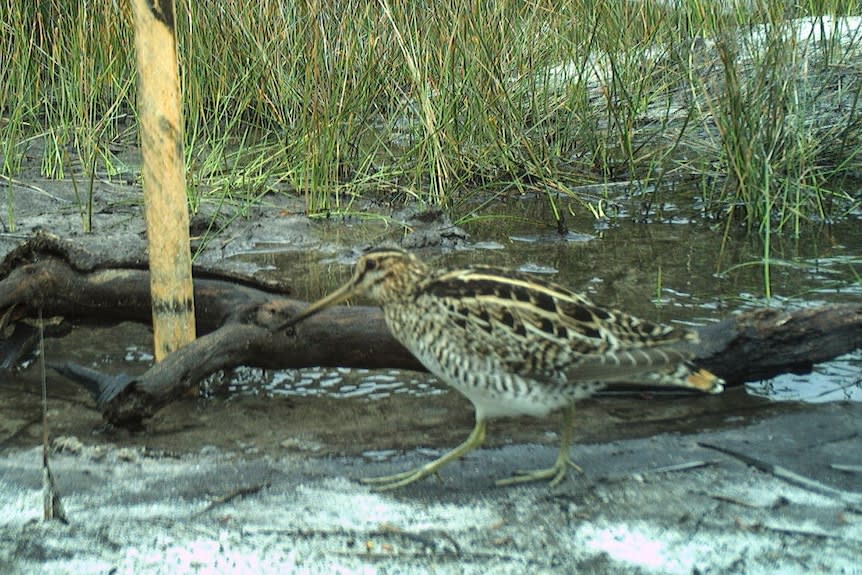
Latham’s snipe spends the southern hemisphere’s summer in Australia before undertaking its journey north to breed in northern Asia. These birds rely on suitable wetland and grassy habitats where they can forage for insects and worms. Their presence on Truwana/Cape Barren Island indicates that the island continues to provide essential habitat for migratory species. Healthy wetlands are, therefore, critical for the survival of birds undertaking such arduous long-distance migrations.
Feral Cat Control: An Ongoing Priority
Despite the exciting discoveries of native and migratory species, rangers emphasise that predators remain a significant challenge for wildlife conservation on the island. Feral cats pose a substantial threat, preying on small mammals and ground-dwelling birds. For vulnerable species like the white-footed dunnart, the presence of cats can drastically reduce their chances of survival. Consequently, predator control is a cornerstone of conservation efforts on Truwana/Cape Barren Island.
Rangers actively engage in setting baited traps across the island, particularly during the winter months. These traps, typically baited with sardines, are checked frequently to ensure the swift removal of captured animals. Brown reported that the program has already seen considerable success in reducing predator numbers. “We’re getting around 30-odd cats every winter,” he disclosed.
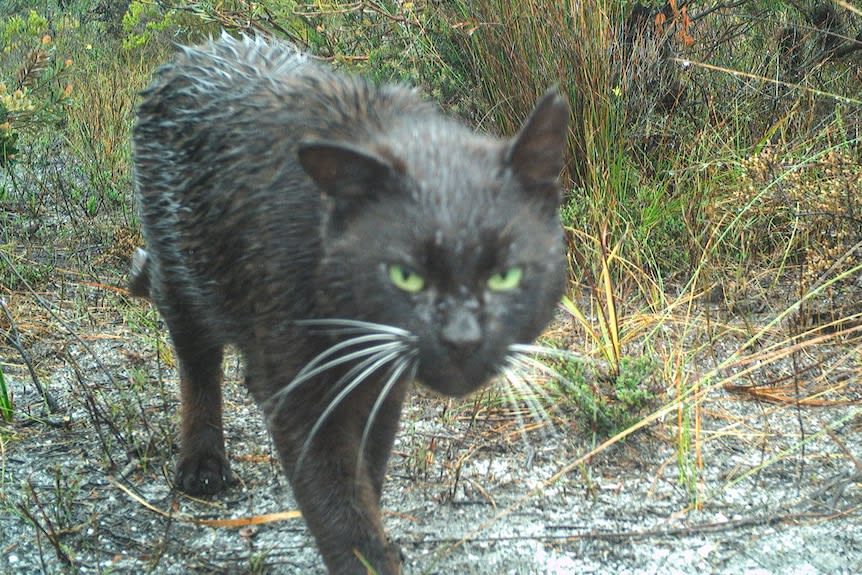
In the context of a relatively small island ecosystem, the removal of dozens of predators annually can significantly alleviate pressure on the island’s delicate wildlife populations. This vital trapping program continues in parallel with a suite of other conservation activities.
Cameras: Unveiling the Island’s Enduring Wildlife
The wildlife monitoring program is a testament to the collaborative efforts between the Truwana Rangers, WWF Australia, and researchers dedicated to studying the unique ecosystems of the Bass Strait islands. The use of trail cameras allows rangers to observe wildlife behaviour and activity patterns without disturbing the animals or their natural environment.
The images collected from Truwana/Cape Barren Island are instrumental in confirming which species are actively present and thriving across the island’s diverse grasslands and wetlands. Each new record contributes to building a more comprehensive and detailed picture of the island’s rich biodiversity.
For Buck Brown, the trail cameras have offered a profound confirmation of what he had suspected since that fateful burn years ago: the small marsupials he encountered were indeed real, and they continue to inhabit the island.