
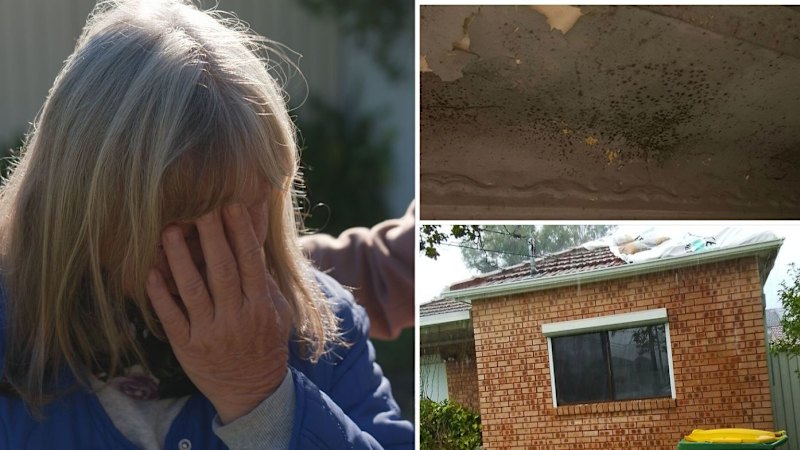
Lily’s dream home has become a decade-long nightmare. What started as a seemingly minor repair after a truck clipped her roof in 2016 has escalated into a saga of mould, asbestos, and an unliveable property. Ten years on, the 70-year-old is homeless, her house gutted and riddled with hazards, while she continues to battle her insurer, GIO, for a resolution.
“I’ve got no home, they’ve made me homeless, and they don’t want to fix my home,” a visibly distressed Lily shared. “It’s very hard.”
The Initial Incident and a Cascade of Problems
The trouble began when an overheight truck severed powerlines, causing damage to Lily’s guttering and roofing. Believing it to be a straightforward claim under her $1500-a-year policy with GIO Suncorp Insurance, Lily expected a swift repair. However, the contractors assigned to the job, she alleges, did not complete the work correctly.
“They came and they just replaced the gutter and eave, and they didn’t do it properly,” she explained.
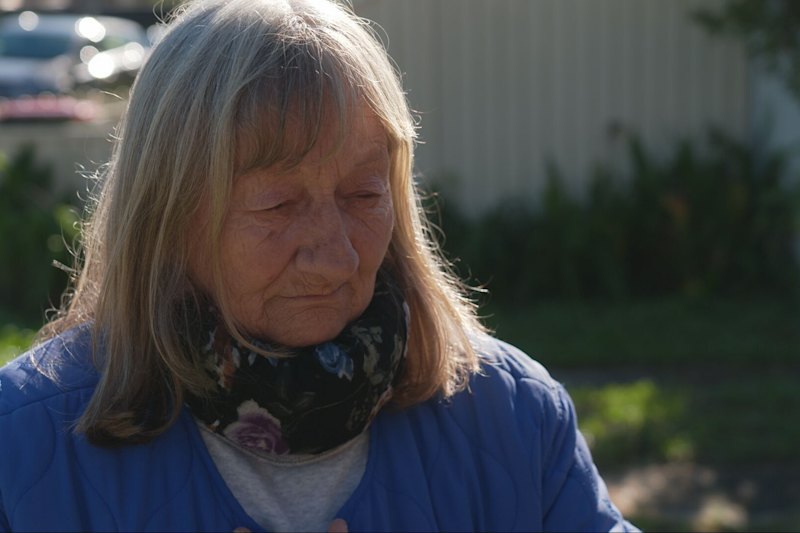
The inadequate repairs meant that every time it rained, water poured into her home. “It was like a spout, basically like a waterfall,” Lily recalled. Over the next three years, Lily claims that GIO’s contractors, through their repeated attempts to fix the issue, inadvertently caused further damage. This led to the insidious growth of toxic mould within her cupboards and across the roof.
“Mould was really, really bad. It was black and smelled, especially when it was raining, you could not breathe,” she said, describing the suffocating conditions.
Escalating Concerns and Independent Assessments
Despite Lily’s efforts to escalate the matter, she maintains that GIO failed to adequately address the mould infestation. “They were trying to say it’s only surface mould, regardless, GIO already had pictures of the black mould,” she stated.
Alarmed by the situation, Lily commissioned an independent report. The findings were stark: “extremely high” mould concentrations were discovered in the front bedrooms and ceiling, with the report recommending a full replacement of gyprock and timber. Living with a disability, the pervasive mould forced Lily to sleep in her lounge room for years, enduring the constant presence of mouldy furnishings and a contaminated environment.
“Because my bed was mouldy, I was sleeping on a mouldy bed, I was sleeping for how many years in a mouldy house,” she lamented.
Lily asserts that GIO delayed commencing remediation works, and within seven months, the mould had spread to the rear of her home.
The Discovery of Asbestos and a Stalled Process
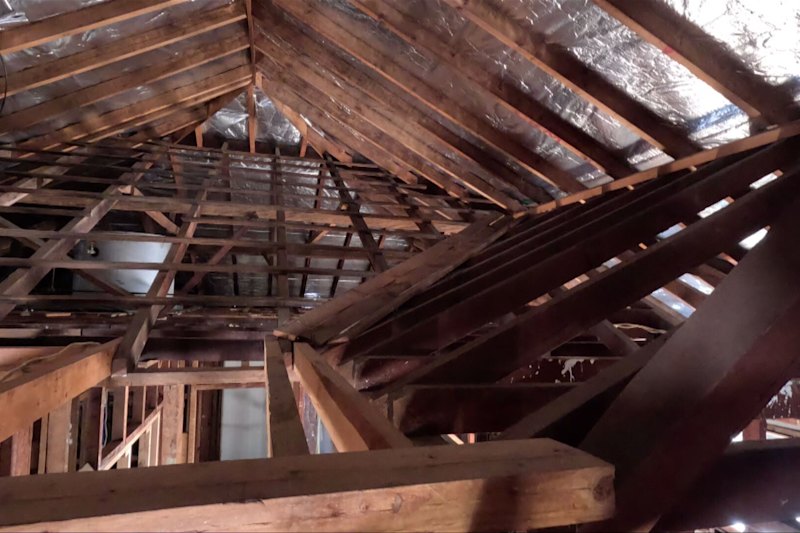
Significant remediation works finally commenced in April of the previous year. However, the scale of the damage meant that a simple fix was no longer an option. Lily had to move into a rental property, leaving behind her beloved chickens. The situation took an even more alarming turn just before Christmas last year when she discovered disturbed asbestos within the walls of her home.
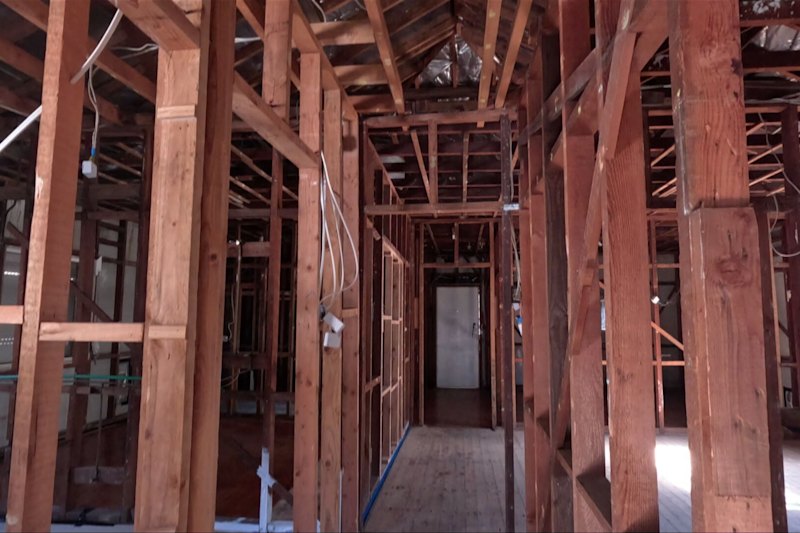
This prompted another independent report, which confirmed her worst fears: the home was no longer safe for habitation. Lily claims she felt pressured by GIO to accept a cash settlement, a proposal she ultimately rejected.
Industry Concerns and Regulatory Scrutiny
This protracted and distressing situation highlights broader issues within the insurance industry. Last year, the Australian Securities and Investments Commission (ASIC) identified that insurers, including GIO, needed to improve their practices regarding the fair and timely handling of home insurance claims.
Tyrone Shandiman from the Australian Insurance Consumer Lobby expressed his concerns, noting a significant power imbalance between insurers and policyholders. “There’s a massive power imbalance there,” he said. “We’ve had government inquiries about cash settlements. It is used in a way to coerce consumers sometimes into taking a settlement they don’t necessarily want, but there’s no other option.”
Shandiman further critiqued the industry’s structure, suggesting it favours insurers and their associated contractors. “It’s a system that is open to abuse, because when you’re incentivised by a person who might be incentivised to reduce a claim, how is that a fair process?” he questioned.
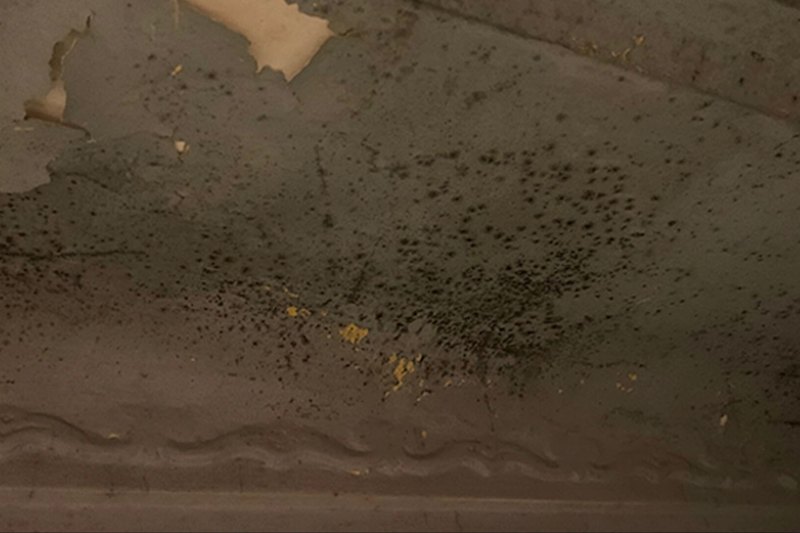
Currently, the works at Lily’s home have been on hold for 10 months, with the dispute now being reviewed by the Australian Financial Complaints Authority (AFCA). All the while, Lily continues to pay her insurance premiums for a home she cannot inhabit.
Insurer’s Response and Ongoing Standoff
In a statement, GIO acknowledged the complexity and difficulty of Lily’s situation. “This is a complex matter, and we acknowledge how difficult this situation has been for Lily,” a GIO spokesperson stated. “We have provided additional support beyond the standard scope of repairs and temporary accommodation.”
However, Lily claims that GIO has since withheld all claims-related costs, a significant blow given that her pension barely covers her rental expenses.
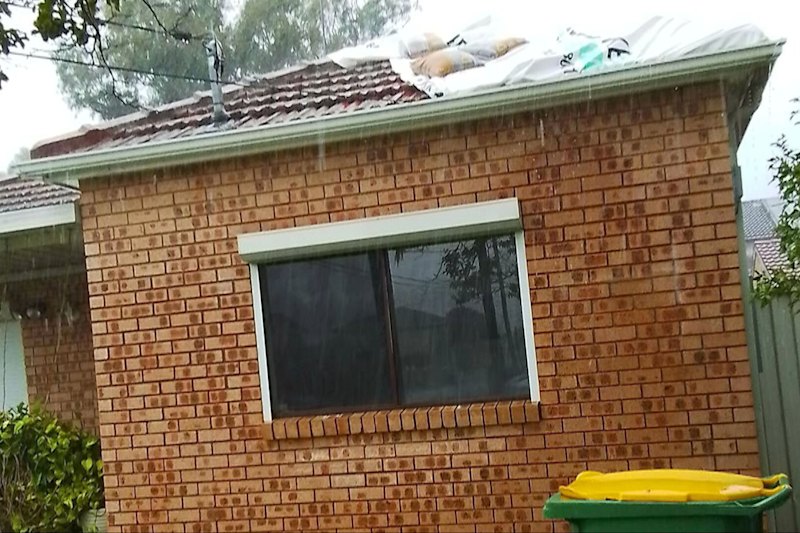
The independent review is still awaiting the assignment of an ombudsman by APRA. Shandiman expressed his disbelief at the prolonged timeline. “I’ve never seen a claim of this nature take any longer than two or three years. For 10 years, this is completely unacceptable,” he stated.
Lily’s own words convey the emotional toll of the ordeal: “Are they waiting for me to die? Are they hoping? I’m not going to die, I’m going to die the day I settle, not before.”
Full Statement from GIO Insurance:
“This is a complex matter, and we acknowledge how difficult this situation has been for Lily and the entire family.
We have continued to engage constructively with the customer to progress the claim. This has included providing significant additional support beyond the standard scope of repairs and temporary accommodation, such as funding independent claims advisors, reimbursing mobile and internet expenses to improve communication, offering support services to multiple family members, and buying and maintaining a new chicken coop.
Our current settlement offer is $912,600, which is more than three times the insured value of the home. Despite our efforts, we have been unable to reach an agreement, with the customer seeking $1.3 million to fund the purchase of a new home while also retaining the existing property.
We are actively engaging with AFCA to support an independent determination and to bring this matter to finalisation as quickly as possible. We remain committed to participating in good faith and working towards a fair and reasonable resolution.”

