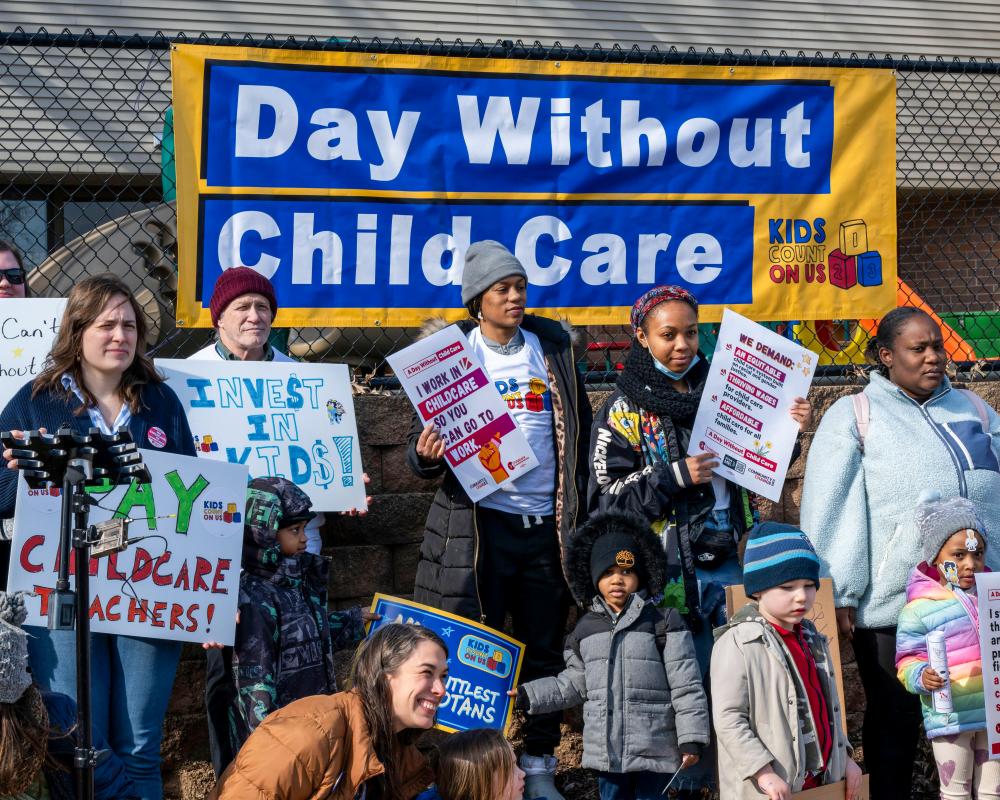
Federal Government Halts Childcare Payments Nationwide, Demands Greater Accountability
The Department of Health and Human Services (HHS) has implemented a nationwide freeze on all childcare payments to states, a move that will require extensive documentation and justification before federal funds are released. This significant policy shift, confirmed by an official within Donald Trump’s administration, signals a heightened level of scrutiny over how taxpayer dollars are allocated to childcare programs across the country.
The announcement follows a video message released by HHS Deputy Secretary Jim O’Neill and Assistant Secretary Alex Adams, who oversees the Administration for Children and Families (ACF). In their message, O’Neill stated that the department had “activated our defend-the-spend system for all ACF childcare payments across America.” This system mandates that recipients must now provide “justification, receipt or photo evidence before we make a payment.”
Initially, O’Neill and Adams’s remarks were interpreted by some as an indication that HHS was only targeting childcare funding for Minnesota. However, subsequent reports clarified that the freeze applies to all 50 states. This means that every state will need to furnish more detailed documentation regarding their childcare programs to receive federal financial assistance.
An HHS spokesperson, Andrew Nixon, articulated the department’s stance to ABC News, stating, “It’s the onus of the state to make sure that these funds, these federal dollars, taxpayer dollars, are being used for legitimate purposes.” This underscores a clear expectation that states must actively demonstrate the proper utilization of federal funds.
Recipients of childcare funding will be required to submit comprehensive documentation to HHS. This may include, but is not limited to:
- Attendance records
- Licensing information
- Inspection and monitoring reports
- Records of complaints and investigations
These new requirements are part of a broader response to a viral video that alleged widespread fraud within daycare centers operated by Somali Americans in Minneapolis. The video, created by an individual identifying as an “independent journalist” and a right-wing influencer, brought significant attention to the issue.
While the video sparked controversy and led to the federal action, other news organizations have reportedly been unable to independently verify the specific claims made within it. The issue of potential exploitation of Minnesota’s social safety net has been a subject of extensive coverage by local and national media over the past several years. Notably, prosecutors did bring charges related to a significant alleged scheme during the Biden administration, indicating that concerns about program integrity have been present for some time.
The timing of the federal freeze also coincides with an intensification of public statements by former President Donald Trump targeting Somali Americans. These remarks have included criticism directed at Representative Ilhan Omar, a Minnesota congresswoman who is of Somali descent and immigrated to the U.S. as a refugee. Trump has made disparaging comments about Omar and the country of Somalia, raising concerns about the motivations behind the policy shift.
Minnesota Governor Tim Walz, a Democrat, denounced the Trump administration’s decision to freeze funding for his state as part of what he described as “Trump’s long game.” Walz stated on social media platform X that while addressing fraud in childcare programs is a serious matter that his administration has been actively working to combat, he views the federal action as a politically motivated strategy.
The implications of this nationwide freeze are significant. Childcare providers and state agencies will face increased administrative burdens to ensure compliance with the new documentation requirements. The ultimate goal, as stated by HHS, is to ensure that federal funds are used appropriately and effectively to support legitimate childcare services, benefiting children and families across the United States. The long-term impact on the accessibility and affordability of childcare remains to be seen as states navigate these new federal mandates.