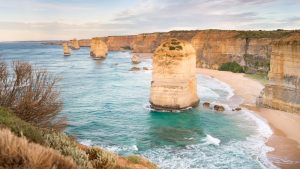
Iconic Twelve Apostles Set for Entry Fee as New Visitor Centre Nears Completion
A significant shift is on the horizon for one of Australia’s most celebrated natural landmarks. Visitors flocking to witness the majestic Twelve Apostles on Victoria’s iconic Great Ocean Road will soon be required to pay an entry fee to access the site, as a new, state-of-the-art visitor centre prepares for its grand opening. The introduction of a booking system alongside the fee is also anticipated, aiming to manage the immense visitor numbers drawn to this world-renowned destination.
While the exact cost of entry remains undisclosed, the Victorian government is set to commence crucial consultations with stakeholders on Monday to finalise the details. Environment Minister Steve Dimopoulos articulated the rationale behind this decision, stating, “It’s only fair that visitors to the region pay a small fee to visit this world-class destination so that we can maintain it for future generations.”
The ambitious new visitor centre, a project representing a substantial $126 million investment from both state and federal governments, is slated for completion by the end of the year. Minister Dimopoulos emphasised the long-term vision for the region, affirming, “We’re investing in the future of the Great Ocean Road region and making sure every single cent spent in the region stays there.” Importantly, the state government has confirmed that local residents and members of the Eastern Maar Indigenous community will be exempt from the new entry fee, recognising their unique connection to the land.

This move towards a user-pays model follows a joint statement issued in September by the Corangamite Shire Council and the Great Ocean Road Regional Tourism Board. They urged the state government to embrace what they termed a “once-in-a-generation opportunity” to implement such a system for accessing the Twelve Apostles.
Andrew Jeffers, chairman of the Great Ocean Road Regional Tourism Board, highlighted the dual benefits of introducing a charge. He believes it will facilitate better visitor management and bolster the protection of the fragile coastal environment. “As stewards of the visitor economy in this extraordinary region, we believe a thoughtfully introduced user-pays system is not only fair, it is essential,” he remarked.
Encouraging Longer Stays and Economic Benefits
Beyond site management and preservation, the tourism board and Corangamite Shire harbour a broader objective: to encourage visitors to extend their stay in the region. Currently, a significant number of tour groups undertake day trips to the Twelve Apostles from Melbourne, a pattern that the local tourism sector feels deprives the area of crucial economic benefits. For years, the industry has voiced concerns about missing out on the economic uplift generated by this natural tourism drawcard when visitors depart the region at the close of the day.
The Twelve Apostles, despite the natural erosion that has reduced the original twelve limestone stacks to seven, continues to exert an immense pull on tourists. Figures from a Development Victoria report paint a stark picture of the site’s popularity, indicating that approximately 2.8 million people visited in 2019. This number was projected to surge to 4 million by 2026, underscoring the growing need for sustainable management strategies.

David Rae, Chief Executive of Corangamite Shire, echoed these sentiments in September, stating that the introduction of a charge is vital for ensuring the long-term economic viability of maintaining the site as a premier tourism attraction. “Individuals benefiting from that experience should pay for it,” he asserted, reinforcing the principle that those who directly experience the wonder should contribute to its upkeep and the economic prosperity of the surrounding region. The new visitor centre, with its integrated fee and booking system, represents a significant step towards achieving these goals, promising a more sustainable and economically beneficial future for the Twelve Apostles and the wider Great Ocean Road tourism landscape.