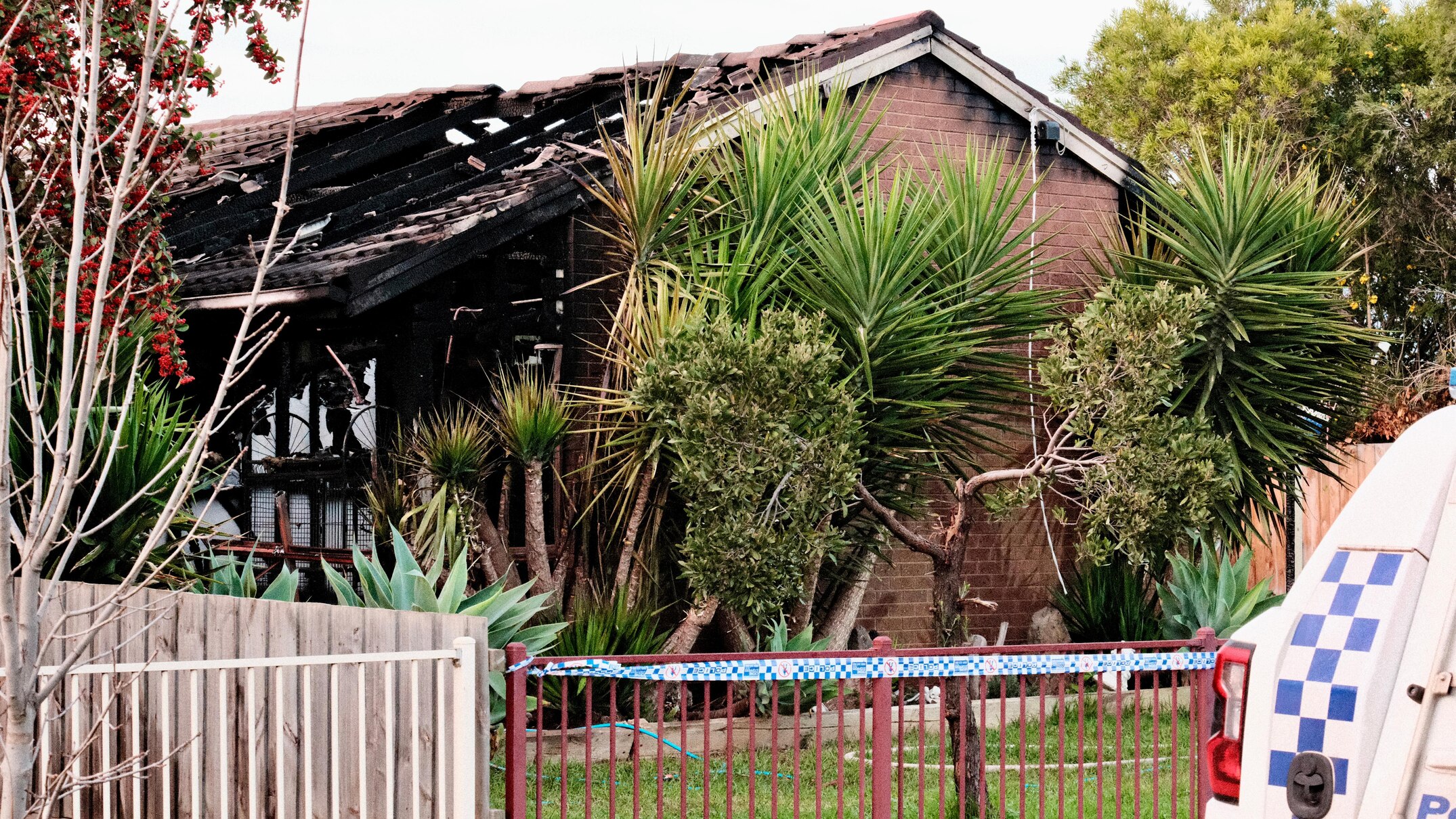
Tragedy in Werribee: Under-resourcing Alleged in Fatal House Fire
A devastating house fire in Werribee, Victoria, which tragically claimed the life of a three-year-old boy, has ignited serious concerns about the adequacy of fire service resourcing in the rapidly developing area. The young victim, Jordan Dashwood, died in the blaze that engulfed his family home on Newbury Street just after midnight. His father sustained serious burns and was hospitalised, while another child managed to escape the inferno by leaping from a window.
The incident has brought the issue of response times and resource allocation under intense scrutiny. Fire crews from the Country Fire Authority (CFA) were the first to arrive at the scene, but reports indicate they took over nine minutes from the time the fire was reported. Fire Rescue Victoria (FRV) crews arrived several minutes after the CFA, missing the FRV’s target response time of 7.7 minutes.
Union Slams Resource Shortfalls
The United Firefighters Union (UFU) has pointed the finger directly at under-resourcing, arguing that the delay in response was a direct consequence of insufficient equipment at the local fire station. Peter Marshall, the union secretary, stated that the nearest fire station to the Newbury Street address is equipped with only a single fire truck. This lone vehicle had already been dispatched to another incident at the time of the Werribee fire, leaving the station unable to respond promptly.
“Firefighters have been advocating for a second vehicle at that station for a decade,” Mr. Marshall explained. He firmly believes that had the station been better resourced, crews would have been able to reach the scene well within the target response time.
Leading Firefighter Josh Mitchell, based at the Tarneit station, expressed the profound devastation felt by his colleagues. “We should have been first in the door at that house fire,” he said, his voice heavy with emotion. “Unfortunately, our truck was at Lara fire station covering Lara as a result of Lara having a mechanical issue with their truck. We were meant to be here, and we weren’t.”
Mr. Mitchell highlighted the heart-wrenching “what ifs” that haunt the firefighters. “I don’t know if us getting there six, seven minutes quicker could have made a difference, but you do ask yourself that question,” he admitted.
A Growing Community Needs More
The Tarneit station, according to Mr. Mitchell, is simply not equipped to handle the demands of an area experiencing significant population growth. He pointed to the proliferation of new housing estates, data centres, and factories in the vicinity, underscoring that one fire truck is wholly inadequate. “The station is built for four [trucks] and should have at least two,” he asserted.
Government Response and Initial Discrepancies
A spokesperson for the Victorian government acknowledged the tragic loss and extended their deepest sympathies to the family. They stated that resourcing decisions are typically made at an agency level and highlighted a record allocation of $1.12 billion to Fire Rescue Victoria for the 2024-25 financial year.
“Operational decisions like the deployment of resources are made by the relevant fire agencies,” the spokesperson added, noting that Victoria Police are preparing a report for the coroner.
Initially, a list of incidents released by Fire Rescue Victoria on Monday morning claimed that “crews arrived on scene within three minutes.” However, by Monday evening, the fire service acknowledged this was inaccurate. A spokesperson confirmed that while FRV crews did arrive “promptly,” it was “not within the three minutes initially noted.” The original list containing the erroneous three-minute arrival time was subsequently recalled.
The FRV spokesperson further explained that under Victoria’s complementary fire services model, the closest available resource responded, which in this instance meant CFA crews were the first on scene. “FRV resources arrived on scene as soon as they became available,” they stated, reiterating their condolences to the grieving family.
The incident serves as a stark reminder of the critical importance of adequate fire service resourcing, particularly in areas undergoing rapid urban expansion. The UFU’s persistent calls for increased staffing and equipment at stations like Tarneit are now amplified by this profound tragedy, demanding a thorough review of current resource allocation strategies to ensure no other family endures such a devastating loss due to preventable delays.