
Western Australia is making a strong case to retain its current Goods and Services Tax (GST) arrangement, a deal struck in 2018 that significantly boosts its share of the national tax pool. The state government argues that any alteration to this agreement could stifle crucial investment within WA and, by extension, impact the broader Australian economy.
The ongoing review of Australia’s GST arrangements by the Productivity Commission is central to this debate. The commission is tasked with delivering recommendations to the federal government next year, and WA is determined to ensure its unique fiscal situation is thoroughly considered. The 2018 deal was designed to address historical disparities, guaranteeing WA a substantially larger slice of the GST pie than it would have otherwise received.
The Financial Impact of the 2018 Deal
The figures highlight the magnitude of this arrangement. For the current financial year, Western Australia is projected to receive approximately $7.8 billion in GST payments, representing about 8 per cent of the total national GST pool. Without the 2018 adjustments, this figure would have been a mere $1.7 billion.
To ensure other states were not disadvantaged by WA’s increased allocation, the Commonwealth has provided additional funding. However, this “no worse off” guarantee has come at a significant cost, estimated to be over $44 billion over the next decade.
To champion its position, Western Australia has established a dedicated “GST fairness fighter” team. This team has been actively engaged in the Productivity Commission’s inquiry, even investing $1 million in a national advertising campaign to publicise its arguments.
A Call for Partial Horizontal Fiscal Equalisation
At the heart of WA’s submission to the inquiry is a proposal to shift away from full Horizontal Fiscal Equalisation (HFE). HFE is the principle underpinning the current system, aiming to create a level playing field for all states by compensating those with lower earning capacities or higher costs.
WA’s argument, as detailed in its submission, is that a move to partial HFE would empower states like Western Australia to continue investing in their economies. This, they contend, would be achieved by allowing these states to retain a greater portion of the benefits derived from their policy decisions and economic investments. The submission also points to other federations that have adopted similar partial HFE models.
However, this perspective is not universally shared. Economist Saul Eslake has voiced his dissent, suggesting that while other countries may employ partial HFE, it doesn’t necessarily make it a beneficial approach for Australia. He argues that Australia’s commitment to a more comprehensive HFE is a key factor in its success, contributing to smaller disparities in living standards between its states.
WA’s Contribution to the Federation
Western Australia’s submission also delves into its historical contribution to the Australian federation. The state estimates that since the 1942-43 financial year, it has made a net contribution of $32 billion to the federation.
The submission critiques the previous GST system, labelling its outcomes as “perverse.” It specifically highlights that states such as New South Wales, Victoria, and Queensland effectively benefited more from WA’s iron ore, lithium, and nickel royalties than WA itself did. In stark contrast, it notes that New South Wales largely retained the entirety of its coal royalties.
Furthermore, WA’s submission attributes the cost blowouts associated with the “no worse off” guarantee to higher-than-expected iron ore prices. These high prices, it argues, have actually bolstered the federal budget’s bottom line. The submission estimates that the increased company tax revenue alone flowing to the Commonwealth budget from these elevated commodity prices is three to four times greater than the cost of the guarantee itself.
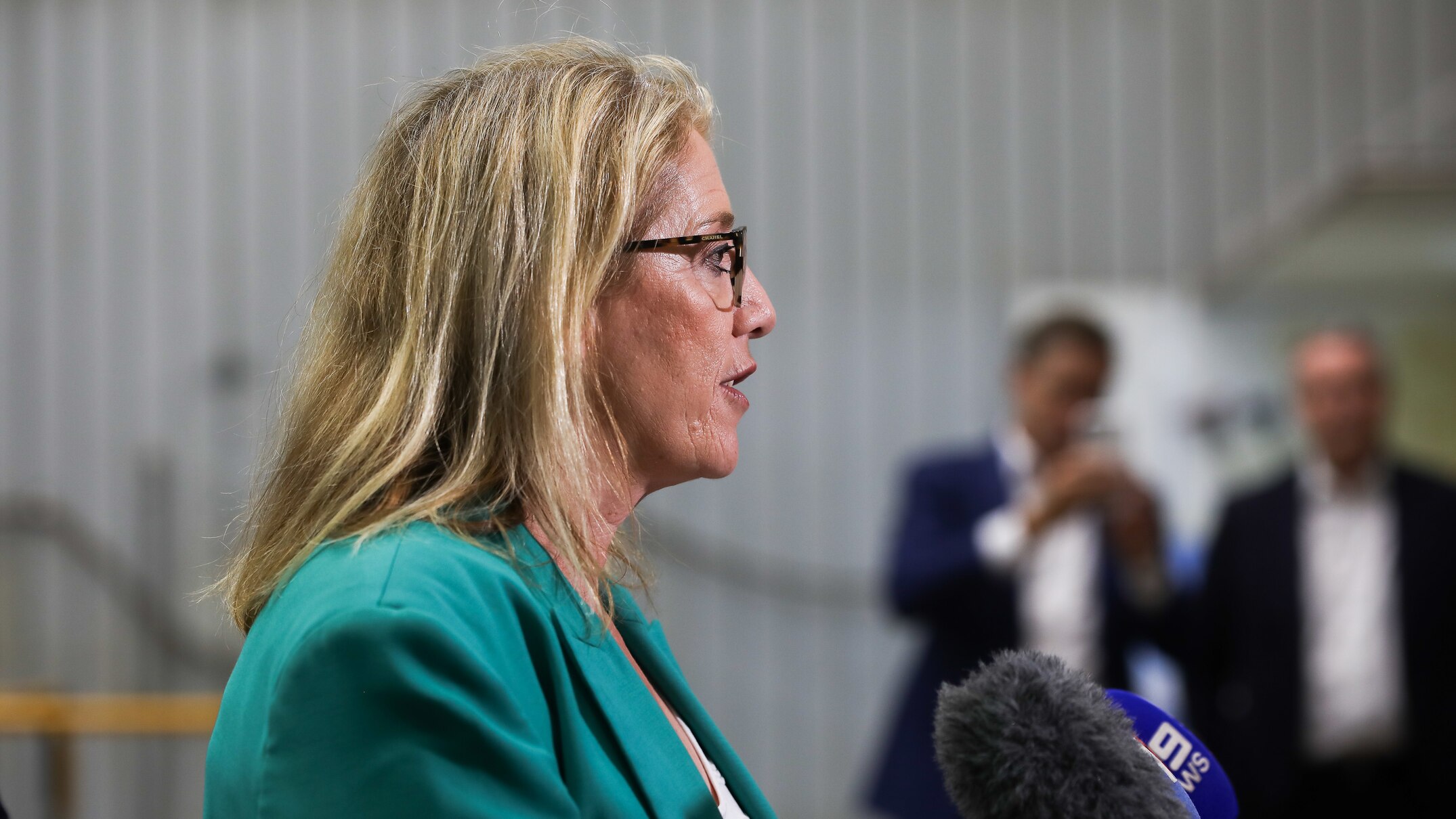
Given these arguments, and a wealth of other points detailed in its extensive 124-page submission, WA Treasurer Rita Saffioti maintains that the current GST deal should, at a minimum, be preserved.
Seeking a Mining Revenue Exemption
Beyond maintaining the current deal, Western Australia is also advocating for a specific concession should any changes to the GST distribution be implemented. The state is seeking a 25 per cent reduction in the value of mining revenue that factors into the GST distribution. The stated aim of this proposed exemption is to “improve states’ incentives to grow their mining industries.”
WA’s analysis suggests that such a reduction would halve the cost of the “no worse off” guarantee in the upcoming financial year and could potentially eliminate the need for it altogether by the end of the decade.
When questioned about WA’s stance on providing less support to less prosperous states, Ms. Saffioti reiterated that partial equalisation promotes greater “fairness” within the tax system. She emphasised WA’s significant economic contributions, stating that the state accounts for approximately 17 per cent of national economic growth and a substantial 50 per cent of national exports. Her message was clear: undermining the WA economy ultimately undermines the national economy.
Victorian Premier’s Counterpoint
Across the continent, Victorian Premier Jacinta Allan has expressed a different perspective. Ms. Allan appears unconvinced by WA’s arguments, asserting that she will “always advocate for Victoria to get its fair share.”
She points out that Victoria still collects less revenue per capita than Western Australia. Ms. Allan highlighted Victoria’s status as a larger, growing state that is actively investing in future infrastructure and delivering essential services for its population in public health and education. Therefore, she stated, she will continue to champion Victoria’s claim for its rightful share of national revenue.


